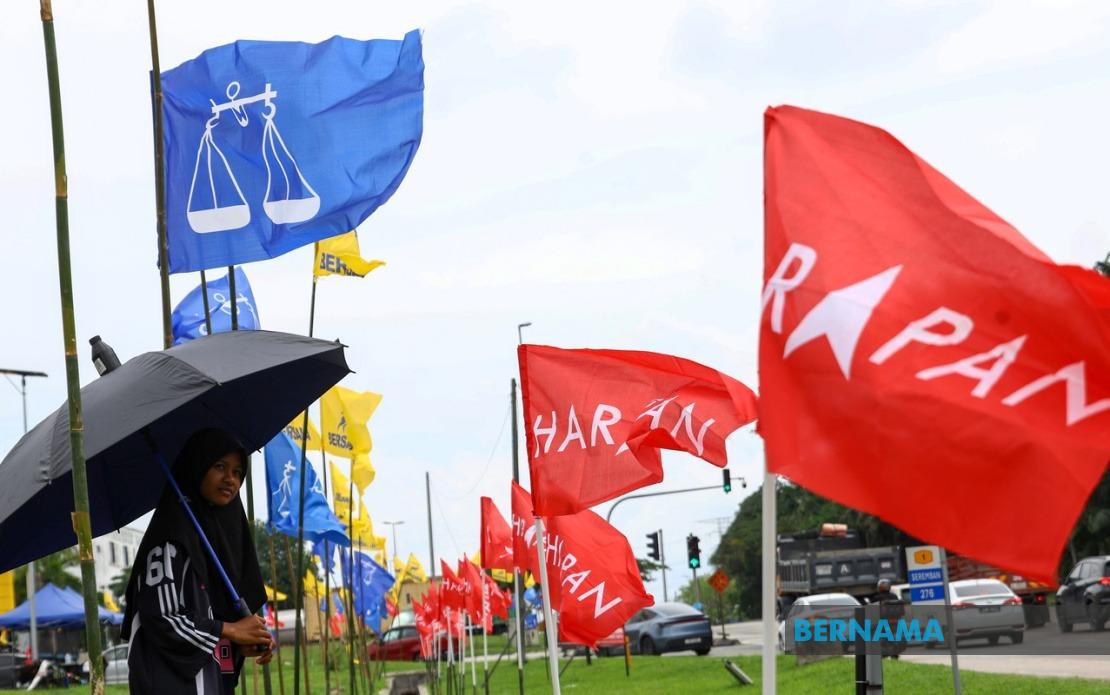
Pakatan Harapan's performance in the forthcoming Johor state election carries significance well beyond regional politics, acting as a potential counterweight to concentrated political power in Malaysia's southern powerhouse. Speaking at a campaign dinner in Kluang on July 3, DAP secretary-general Anthony Loke framed the coalition's push for multi-constituency victories as essential to preserving institutional safeguards that enable democratic accountability. His remarks underscore a broader concern among opposition figures about the concentration of power within individual states, a pattern that has emerged as one of the more contentious dynamics in Malaysia's federal system.
Loke's intervention highlights the fundamental tension between electoral performance and institutional design that characterises Malaysian politics at the state level. When a single political coalition commands overwhelming majorities in state assemblies, the traditional mechanisms through which minority voices can challenge government decisions—parliamentary questions, legislative committees, and scrutiny debates—become largely symbolic. The DAP secretary-general specifically cautioned against scenarios where administrative dominance translates into the absence of meaningful political competition, suggesting that such arrangements undermine the resilience of democratic institutions by eliminating the pressure that competitive opposition politics typically exerts on governance standards.
The Johor election assumes particular importance given the state's economic weight within the Malaysian federation. As the second-most populous state and a major industrial and commercial hub, Johor's political orientation influences development priorities, regulatory frameworks, and infrastructure allocation across the region. A fragmented state assembly in which multiple coalitions hold significant seat counts could theoretically introduce greater complexity into policymaking processes, though this may also generate opportunities for more granular representation of constituent interests. The electoral dynamics at play therefore extend beyond symbolic democratic exercises into substantive questions about how development resources are distributed and which communities exercise influence over state policy directions.
Pakatan Harapan's multi-coalition structure itself warrants examination when considering Loke's assertions about checks and balances. The coalition comprises PKR, DAP, and Amanah—three distinct political organisations with sometimes divergent regional bases and policy priorities. Whether a PH-dominated state assembly would actually generate the internal friction necessary to produce meaningful oversight mechanisms, or whether coalition discipline might simply displace checks-and-balances questions to the federal level, remains an open empirical question. Historical experience from states where opposition coalitions have held power suggests that internal coalition dynamics can be as consequential as inter-coalition competition in determining whether legislative scrutiny functions effectively.
The 2024 Johor election involves considerably broader competition than a simple PH-versus-incumbent dynamic. One hundred seventy-two candidates are contesting across 56 state assembly seats, indicating that multiple political organisations beyond the major coalitions are fielding candidates. This fragmentation of the ballot creates a more complex electoral environment than past contests, with potential implications for seat distribution that neither major coalition can entirely control. The presence of additional candidates and parties, whether independent or representing smaller political organisations, could independently shape whether any single political force achieves the overwhelming majorities that Loke characterises as problematic for democratic accountability.
Pakatan Harapan has committed to fielding candidates across all 56 state assembly constituencies, representing a comprehensive engagement with the electoral contest. This decision signals the coalition's ambition to compete seriously for control of the state government while simultaneously limiting the potential for independent or smaller-party candidates to occupy seats without facing organised opposition from major political forces. The timing of the election—with polling scheduled for July 11, with early voting on July 7—provides a defined window within which Johor voters will make their collective judgment about which political forces should exercise state authority and shape policy directions over the coming years.
Background context matters considerably when evaluating Loke's institutional concerns. Johor's political history includes extended periods of single-coalition dominance interspersed with more competitive phases, suggesting that the electorate's preferences regarding political concentration versus pluralism have fluctuated substantially across recent decades. Understanding whether voters in 2024 seek to return to patterns of consolidated power or whether they prefer a more fragmented assembly requires careful attention to campaign messaging, local grievances, and the specific candidates fielded by competing organisations across different constituencies. Loke's intervention appears designed to frame the institutional case for competitive politics rather than simply promoting partisan advancement, though the two objectives are clearly intertwined.
The implications of Johor's outcome would likely extend beyond the state itself, influencing calculations regarding opposition coalition prospects in other state contests scheduled for coming years. A strong PH performance would validate the coalition's argument that voters respond positively to campaigns emphasising democratic resilience and institutional checks, while a disappointing result might suggest that voters prioritise other issues or that consolidation remains electorally attractive in Malaysian contexts. These patterns would inform strategic decisions by political organisations across the peninsula regarding coalition partnerships, campaign positioning, and the emphasis accorded to democratic institutional arguments versus service-delivery and development narratives.
The presence of DAP deputy national chairman Nga Kor Ming and deputy secretary-general Steven Sim Chee Keong at the Kluang campaign dinner reflected the national significance that the DAP, as a component of PH, places on Johor outcomes. DAP's traditional urban and Chinese-Malaysian voting base intersects with broader Johor demographics in complex ways, and the party's performance in specific constituencies could provide important insights into whether particular demographic groups view opposition politics as credible agents of institutional accountability. The attendance of senior national figures at local campaign events signals to organisational members and volunteer networks that the contest warrants sustained effort and investment of organisational resources through the campaign period leading to the July 11 polling date.

