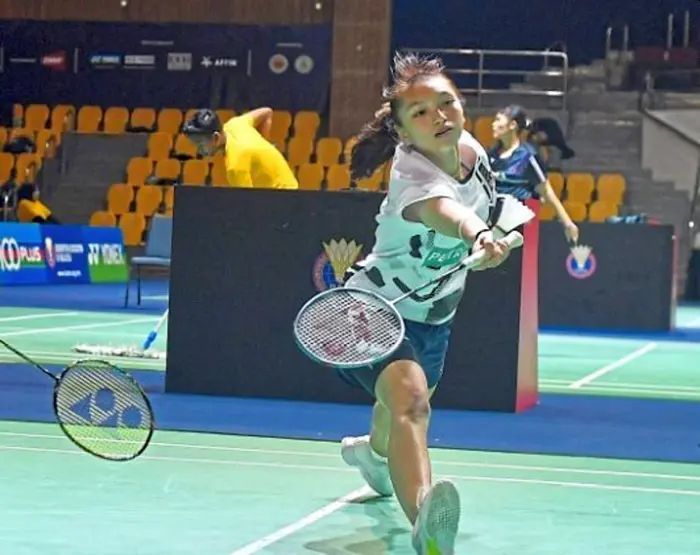
Rising badminton prospect Noraqilah Maisarah Ramdan has demonstrated remarkable adaptability across multiple disciplines and possesses undeniable talent on the court, yet her mixed doubles coach Nova Widianto contends that cultivating mental fortitude and personal resilience will prove equally vital to her long-term trajectory in the sport. The 19-year-old Malaysian shuttler has impressed observers with her performances in both women's doubles and mixed doubles competitions, but the coaching contingent remains cautious about accelerating her development despite her apparent potential.
Nova, who oversees Noraqilah's mixed doubles progression, has tracked her development since her early years in badminton and holds deep conviction about her fundamental aptitude. According to the coach, the technical dimensions of her play warrant no qualification—her skill level clearly distinguishes her from many peers. Yet Nova emphasises that raw ability alone does not guarantee sustained excellence at the highest competitive levels, particularly when external recognition begins to accumulate.
The challenge that Nova identifies centres on the psychological dimensions of athletic development. When emerging players experience early success and receive accolades from supporters and media, the mental impact can become destabilising if not carefully managed. The coaching team's primary responsibility, he suggests, extends beyond tactical refinement and physical conditioning into the realm of psychological preparation and character cultivation. This holistic approach reflects a broader understanding within Malaysian badminton that many talented young athletes possess considerable skill but falter when confronting the emotional complexities of professional sport.
Nova's perspective underscores a pertinent reality in Malaysian badminton development: the country has produced numerous players with exceptional technical abilities, yet not all translate potential into sustained high-level achievement. The differential factor often involves how players navigate psychological pressures, maintain focus through setbacks, and avoid complacency following early victories. For Noraqilah specifically, this means the coaching staff will work deliberately to ground her expectations and reinforce mental discipline alongside her improving game.
Noraqilah's adaptability has become increasingly evident through recent competitive performances. At the second leg of the Under-21 National Championship held in Kuantan, she partnered with scratch partner Ong Xin Yee to capture the women's doubles title, demonstrating her capacity to form effective combinations even with unfamiliar teammates. This flexibility represents a considerable asset in badminton, where partnerships often involve rotating partners depending on tournament format and strategic objectives.
Her achievements in women's doubles with her principal partner Low Zi Yu have been particularly noteworthy. The partnership recently reached the quarter-final stage at the Australian Open, a significant milestone that elevated their world ranking to a career-best position of No. 70. This result provides concrete evidence of their improving competitive standard and suggests the foundation for further progression exists. In mixed doubles, Noraqilah and partner Loo Bing Kun extended their reach to the second round in Sydney, establishing themselves within the world rankings at No. 115.
Despite his satisfaction with Noraqilah's current capacity to compete across multiple formats, Nova acknowledges an uncomfortable reality that confronts ambitious players seeking to reach elite status. Sustaining performances across both women's doubles and mixed doubles indefinitely becomes increasingly untenable as competitive demands intensify. Players pursuing Olympic qualification or world championship medals typically require concentrated focus on a single discipline, as the preparation requirements become mutually exclusive at the highest level.
Nova articulates this strategic dilemma with nuance. While her youth permits continued exploration across both formats—indeed, the coaching staff considers such versatility valuable at this developmental stage—the aspirational objective of Olympic competition would eventually necessitate disciplinary specialisation. The coach frames this not as an immediate concern but as an inevitable decision point that Noraqilah will eventually confront if she commits to pursuing the sport's pinnacle achievement.
This perspective aligns with broader patterns observed across badminton's elite tier, where players attempting to maintain competitiveness across multiple categories struggle to achieve breakthrough results in either. The physiological demands, tactical nuances, and mental preparation required for each format represent sufficiently distinct challenges that genuine excellence demands concentrated investment. Noraqilah's present positioning permits her to continue developing within both pathways while the coaching staff monitors her progression and readiness for strategic focus.
For Malaysian badminton observers, Noraqilah represents one component of an emerging generation of players attempting to sustain the country's competitive standing in international badminton. Her combination of technical skill and adaptability offers encouraging signals, yet the coaching staff's emphasis on character development reflects understanding that talent alone provides insufficient foundation for the demanding journey toward world-class performance. The delicate balance Nova describes—allowing younger players space for experimentation while instilling mental discipline—represents the central challenge confronting Malaysia's badminton development programmes as they cultivate the next generation of potential champions.

