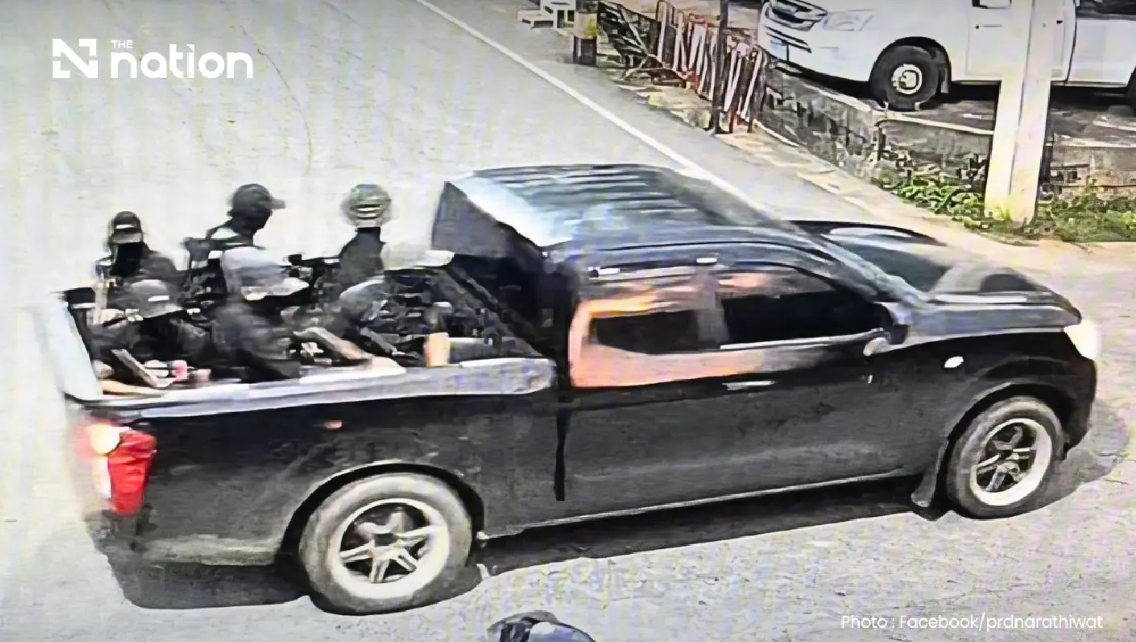
BANGKOK: Surveillance camera footage has provided crucial evidence into the mechanics of a devastating attack on the Bukeh Sami checkpoint in Narathiwat's Ra-ngae district, exposing how a nine-member assault force overwhelmed the lightly-defended post in less than two minutes on the evening of July 22. The raid resulted in five paramilitary rangers being killed and six civilians sustaining injuries, representing a significant security breach in Thailand's troubled southernmost provinces where militant activity has persisted for decades.
Initial police assessments underestimated the scale of the operation, with investigators first believing only six assailants were involved. However, detailed examination of camera footage from multiple vantage points—positioned both outside and in the vicinity of the checkpoint—later revealed a well-organised two-pronged assault structure. The discovery indicates the attackers possessed sufficient planning capability and coordination to stage what appears to have been a deliberately executed military-style engagement rather than a spontaneous incursion.
The main assault element comprised seven fighters who arrived in a black Nissan pickup truck bearing Songkhla province registration plates numbered ผน 6866. Six gunmen occupied the truck bed while a seventh operated the vehicle, with all assault team members dressed in dark tactical clothing and broad-brimmed headwear designed to obscure their facial features and complicate post-attack identification. This deliberate attention to concealment suggests the perpetrators anticipated media coverage and wanted to prevent visual recognition.
The secondary force consisting of two riders on a red-and-white Honda Wave motorcycle provided tactical support during the assault. The motorcycle driver, identified as wearing a white shirt and crash helmet, carried an 11mm pistol, while the rear passenger—disguised in a black women's hijab—was armed with an AK-variant rifle. This unconventional use of hijab as a disguise represents an unusual tactical choice and may indicate the perpetrators sought to exploit assumptions based on religious or cultural appearance in a region with significant Muslim majority populations.
The attack unfolded with striking efficiency at approximately 6:45 in the evening at the Village 7 checkpoint in Tanyong Mat subdistrict, where personnel from the 4509th Ranger Company, part of the 45th Ranger Regiment Task Force, were stationed. As the pickup approached from Tanyong Mat market at reduced speed, the three rangers positioned at the roadside checkpoint became the initial targets. Armed with M16 and AK-pattern rifles, the gunmen in the truck bed unleashed sustained fire that dropped all three officers within seconds, demonstrating either significant marksmanship capability or a willingness to inflict maximum casualties.
Following elimination of the forward-positioned rangers, attackers dismounted from the vehicle to maintain suppressive fire toward the checkpoint's fortified bunker, where two additional rangers were stationed. The assault team systematically advanced through the compound, maintaining their firepower discipline while simultaneously conducting what appeared to be a deliberate inventory of weapons and equipment. This combination of aggressive direct action and methodical searching suggests training beyond that typical of opportunistic insurgent cells.
Physical evidence collected during the overnight investigation revealed the intensity and volume of the engagement. Forensic teams recovered more than 100 spent cartridge cases scattered across the immediate vicinity, representing rounds fired from M16 rifles, AK-variant weapons, and the 11mm pistol. Among the spent ammunition, investigators discovered rounds consistent with clearing house procedures when weapons experience failures—evidence suggesting the assault team encountered weapon jams during the engagement and possessed sufficient organisational discipline to clear malfunctions and continue fighting.
The attackers secured multiple pieces of military hardware during their raid, including four folding-stock AK-type rifles, one 11mm pistol, four ammunition magazines, and four bulletproof vests. The removal of protective equipment suggests the perpetrators intended to arm themselves for subsequent operations rather than conducting a purely destructive raid. Authorities found themselves unable to verify complete inventory figures immediately, as early witness accounts provided conflicting details about the precise number and classification of items taken from the checkpoint.
Before departing the scene, members of the assault force detonated an improvised explosive device fashioned from a pipe bomb near an elevated structure adjacent to a bridge beside the checkpoint. This demolition appeared designed less for military effect than as a diversionary tactic to cover the withdrawal phase. The pickup and motorcycle subsequently retreated toward Dusongyo subdistrict, with security forces establishing multiple checkpoints and roadblocks along anticipated escape corridors shortly after the attack was reported.
The identified victims included Sergeant Major First Class Theerayut Somakerd and ranger volunteers Sakiriya Jena, Wimon Dabthong, Nattasit Kaewsena, and Salahuding Pi. The six wounded civilians, including a child of just ten years old, were transported to regional medical facilities. Initial casualty reports had fluctuated between two and five civilian injuries before the confirmed total of six was established following comprehensive assessment.
Narathiwat Governor Boonchuay Homyamyen coordinated with senior military and police leadership throughout the overnight evidence collection operation. Provincial Police Region 9 commissioner Pol Lt Gen Piyawat Chalermsri, Narathiwat police chief Pol Maj Gen Prayong Khot Sakha, and Col Witthaya Sariya—commander of the 45th Ranger Regiment Task Force—oversaw the deployment of bomb-disposal specialists, tactical police units, and forensic teams that systematically documented the crime scene. The checkpoint bunker bore multiple bullet impact marks confirming the intensity of the assault.
Following the assault, security forces located and secured the black Nissan pickup, which had been abandoned and deliberately incinerated in what appeared to be a calculated attempt to destroy forensic evidence including fingerprints, DNA material, and ballistic signatures. The severity of this attack, combined with its sophisticated planning and execution, underscores the continuing security challenges facing Thailand's southern border regions where militant groups have sustained operations despite decades of counterinsurgency efforts.

