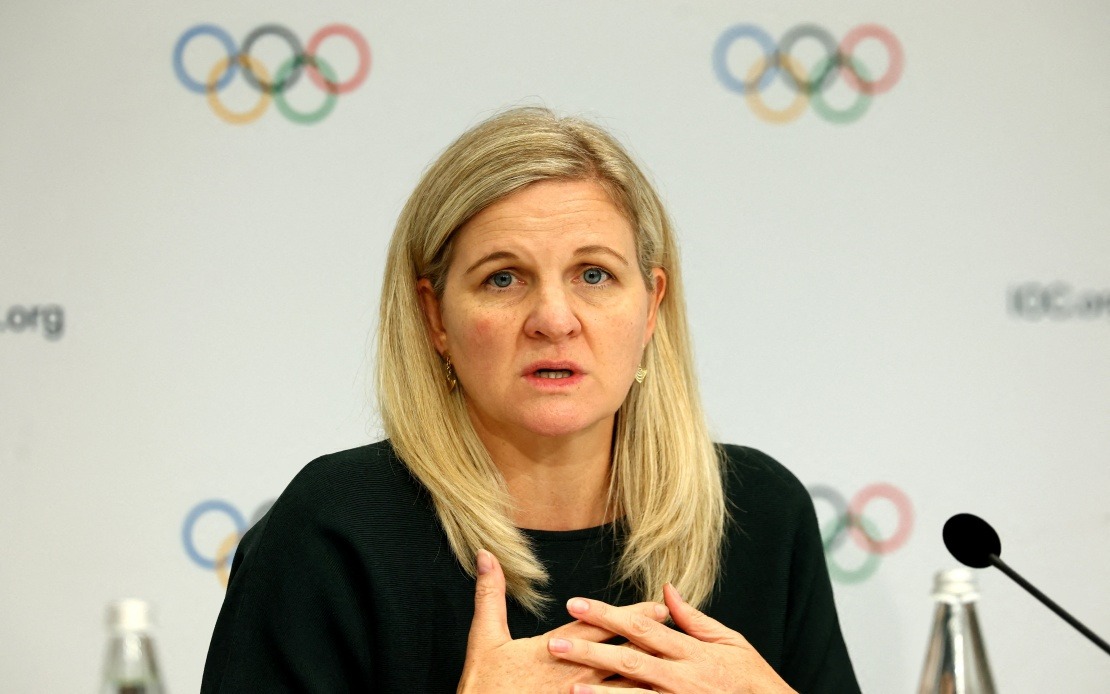
Concerns about potential political interference at the 2028 Los Angeles Olympics have prompted the International Olympic Committee to formally acknowledge that established legal mechanisms exist to manage such situations. IOC President Kirsty Coventry revealed that a specialized panel within the Court of Arbitration for Sport has been designated to handle any disputes arising from governmental or political involvement in the Games, underscoring the organization's preparedness for unprecedented intervention.
During a press conference on Tuesday in Moscow, Coventry outlined the IOC's existing dispute resolution framework. The CAS maintains an ad hoc division specifically designed to operate during Olympic competitions, tasked with resolving legal conflicts that emerge rapidly throughout the Games. This temporary structure allows for swift judicial review and decision-making when time-sensitive matters require immediate attention.
The IOC's proactive stance reflects growing anxieties within the international sports community about executive overreach. The organization has clearly been monitoring developments that could signal political pressure on sporting governance. By publicly confirming the availability of independent arbitration mechanisms, Coventry signaled that the IOC recognizes the urgency of protecting Olympic autonomy from political forces.
The backdrop for these remarks involves a recent incident that illustrated how political actors can influence international sports decisions. In early July, the disciplinary committee of the International Football Federation suspended a red card that had been issued to a United States national team player, Folarin Balogun, during a knockout stage match. This decision enabled the American footballer to participate in the Round of 16 contest against Belgium despite the original dismissal.
Following the disciplinary committee's reversal, Trump publicly stated that he had personally contacted FIFA regarding the incident. The US President explicitly thanked the organization for what he characterized as correcting an injustice. His direct involvement in a competitive matter raised alarms about the boundaries between political authority and sporting independence, prompting discussion within Olympic circles about how similar situations might unfold at upcoming Games.
The match proceeded with Balogun in the lineup despite Belgium's formal objection to the reversal. However, the Belgian side ultimately defeated the United States with a decisive 4-1 victory, rendering the card dispute moot in terms of competitive outcome. Yet the incident had already established a troubling precedent of direct executive intervention in sports decisions, creating a template that could extend to Olympic competitions.
For Malaysia and Southeast Asian nations participating in the 2028 Olympics, the IOC's preparedness carries particular significance. The region's athletes and officials have historically relied upon international sports governance to maintain fair competition standards. Should political interference become systematic, it could undermine the principles upon which the Games are founded, affecting smaller nations disproportionately who lack the diplomatic leverage of major powers.
The CAS mechanism that Coventry referenced operates with considerable independence from national governments, though critics have occasionally questioned its neutrality. The ad hoc division's track record demonstrates a capacity to render binding decisions quickly, often overruling national sports organizations when necessary. This independence makes it a crucial safeguard against precisely the type of governmental pressure that recent events have highlighted.
The IOC's implicit acknowledgment that Trump-era interference represents a genuine concern suggests that Olympic leadership has moved beyond dismissing such scenarios as hypothetical. The organization is essentially signaling to athletes, national Olympic committees, and the global sports community that it recognizes the real possibility of unprecedented political involvement and has prepared juridical responses.
As the 2028 Los Angeles Games approach, the procedures and frameworks now formally articulated by Coventry will face their most serious test in decades. The CAS ad hoc division may find itself adjudicating disputes that extend far beyond typical disciplinary matters into the realm of high-stakes political influence. The outcome of such cases could fundamentally reshape how the Olympic movement protects its autonomy from governmental pressure.
Southeast Asian stakeholders should monitor these developments closely. The principles of sporting independence and fair competition that the IOC is now defending protect smaller nations' athletes and their opportunities for international competition. Any erosion of these protections through political interference could disadvantage competitors from the region, who depend upon neutral arbitration and consistent rule application across all participating nations.
The fact that the IOC has publicly committed to utilizing the CAS to address potential Trump administration interference suggests institutional confidence in the court's capacity to withstand political pressure. However, the coming years will test whether this confidence is justified, and whether independent sports arbitration can ultimately prevail against determined governmental intervention at the world's largest sporting event.

