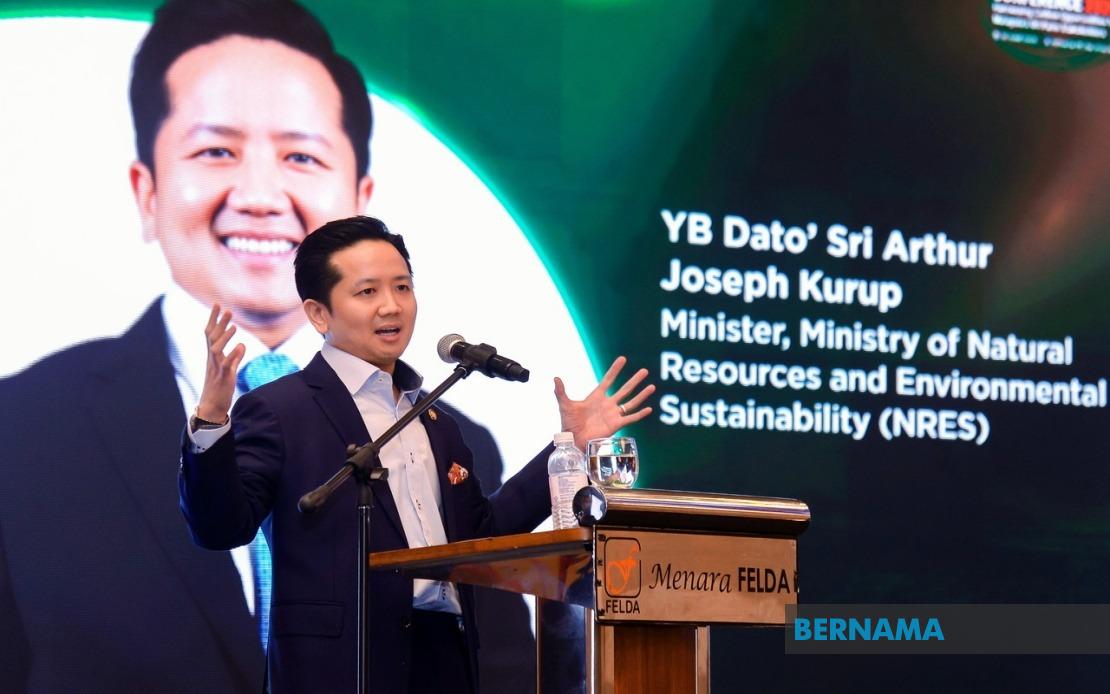
Malaysia's planned carbon tax remains in the development phase, with the government still working through implementation details before formal rollout, Natural Resources and Environmental Sustainability Minister Datuk Seri Arthur Joseph Kurup confirmed on June 16 in Kuala Lumpur. The mechanism has not been abandoned, but rather is being carefully calibrated to align with the country's industrial capacity and the broader policy framework being constructed by relevant agencies. Addressing reporters at the Malaysia Palm Carbon Conference (MPC) 2026, Arthur indicated that while no specific launch date has been set, the tax will eventually enter force once preparatory work concludes.
The government's measured approach reflects recognition of the complex landscape facing Malaysian industries in the near term. Rather than treating the carbon tax as a punitive regime designed to penalise high-emitting sectors, policymakers are positioning it as an incentive structure that rewards businesses adopting cleaner technologies and methodologies. This framing is significant for sectors traditionally reliant on carbon-intensive processes, including steel, cement, and construction—industries that were originally targeted for inclusion when the measure was first proposed for introduction during 2025. By emphasising the incentive dimension, the administration aims to build stakeholder support before implementation, addressing concerns from manufacturers who fear additional compliance burdens at a time of economic headwinds.
The timing question has become increasingly pertinent given rapidly shifting external conditions. In April, Arthur acknowledged that the government would reassess the carbon tax proposal in light of ongoing energy supply challenges and geopolitical instability affecting global markets. These factors created a case for deferral rather than proceeding with the originally planned rollout. Energy price volatility and supply chain disruptions have already strained many Malaysian companies, and introducing new environmental levies simultaneously risked compounding financial pressures. The decision to remain flexible on implementation timing reflects pragmatic governance that balances environmental imperatives against economic realities.
Beyond the mechanics of the tax itself, government attention is turning to how revenue will be deployed once collection begins. Several allocation proposals are currently under examination. One priority involves directing funds toward climate adaptation initiatives, recognising that Malaysia faces increasing vulnerability to extreme weather events, flooding, and other climate-related hazards. A second pathway channels revenues into forest conservation programmes, essential given deforestation pressures and the role Malaysia's forests play in regional carbon sequestration and biodiversity. A third stream supports sustainable land management practices across agricultural and industrial zones. This multi-purpose approach seeks to create a virtuous cycle wherein carbon pricing generates the financial resources necessary to build resilience and support the transition to lower-carbon economic models.
Arthur stressed that this allocation framework serves multiple objectives simultaneously. By ringfencing carbon tax revenue for climate-related spending, the government demonstrates that the tax is not merely a revenue-raising mechanism but a genuine component of Malaysia's climate strategy. The approach also strengthens the country's ability to withstand future climate impacts, an increasingly urgent consideration for a nation vulnerable to tropical storms, sea-level rise, and precipitation variability. Additionally, investing carbon revenues into sustainable practices and forest protection enhances Malaysia's standing in international climate negotiations and supports efforts to meet commitments under the Paris Agreement.
The legislative dimension of Malaysia's climate agenda is advancing in parallel. Arthur indicated that the National Climate Change Bill is scheduled to be presented to the Dewan Rakyat during the current parliamentary term. This legislation represents a foundational step toward strengthening Malaysia's climate governance architecture. The bill will establish clearer institutional responsibilities, set targets aligned with international commitments, and create enforcement mechanisms for climate-related policies. Taken together with the carbon tax framework, the bill signals that Malaysia is building a comprehensive legal and institutional scaffolding to address climate change systematically rather than through isolated measures.
For Malaysian businesses, particularly those in emissions-intensive sectors, the ongoing refinement period offers both risk and opportunity. The extended timeline allows companies to anticipate regulatory changes and begin adjusting operational practices and capital investments accordingly. Early movers in clean technology adoption may position themselves advantageously once the carbon tax becomes operative. However, uncertainty about final implementation details—including tax rates, scope, and exemptions—complicates strategic planning. Industry associations and individual firms are likely to intensify advocacy efforts during the consultation phase to shape parameters favourable to their sectors.
The Southeast Asian context adds further complexity to Malaysia's carbon tax deliberations. Neighbouring countries including Singapore and Indonesia are pursuing their own emissions reduction strategies, and policy divergence could create competitive disadvantages if Malaysia's approach proves significantly more onerous than peers'. Conversely, demonstrating climate leadership through robust carbon pricing could enhance Malaysia's appeal to multinational corporations increasingly subject to stringent environmental governance requirements from headquarters or investors. The carbon tax design thus carries implications extending beyond domestic policy into regional economic positioning.
International climate finance mechanisms also inform Malaysia's approach. The Global South faces pressure to accelerate decarbonisation while simultaneously mobilising resources for development. Carbon pricing revenues can partially address this tension by generating domestic resources for climate action without requiring external grants. As multilateral climate finance remains insufficient relative to developing countries' needs, Malaysia's strategy of using carbon tax proceeds for adaptation and mitigation reflects pragmatic self-reliance within existing international frameworks.
The involvement of the Federal Land Development Authority (Felda) chairman Datuk Seri Ahmad Shabery Cheek at the MPC 2026 underscores the agricultural sector's prominence in Malaysia's carbon discussions. Land use change, particularly related to plantation expansion and forest conversion, remains a critical emissions source. Carbon pricing mechanisms must account for incentives facing farmers and smallholders, who often operate under significant financial constraints. Integrating Felda's perspectives into carbon tax design helps ensure that policies do not inadvertently penalise smallholder livelihoods while genuinely reducing emissions.
Moving forward, the government faces the challenging task of balancing environmental ambition against economic pragmatism. The carbon tax cannot be so stringent that it triggers industrial relocation to countries with weaker climate policies, nor can it be so weak that it fails to drive genuine emissions reductions. The refinement period now underway offers an opportunity to calibrate these tensions through broad stakeholder engagement. Companies, civil society organisations, academic institutions, and international partners should all contribute insights to ensure the final framework achieves climate objectives while supporting sustainable economic development. The eventual carbon tax implementation will likely reveal much about Malaysia's capacity to navigate the green transition successfully.

