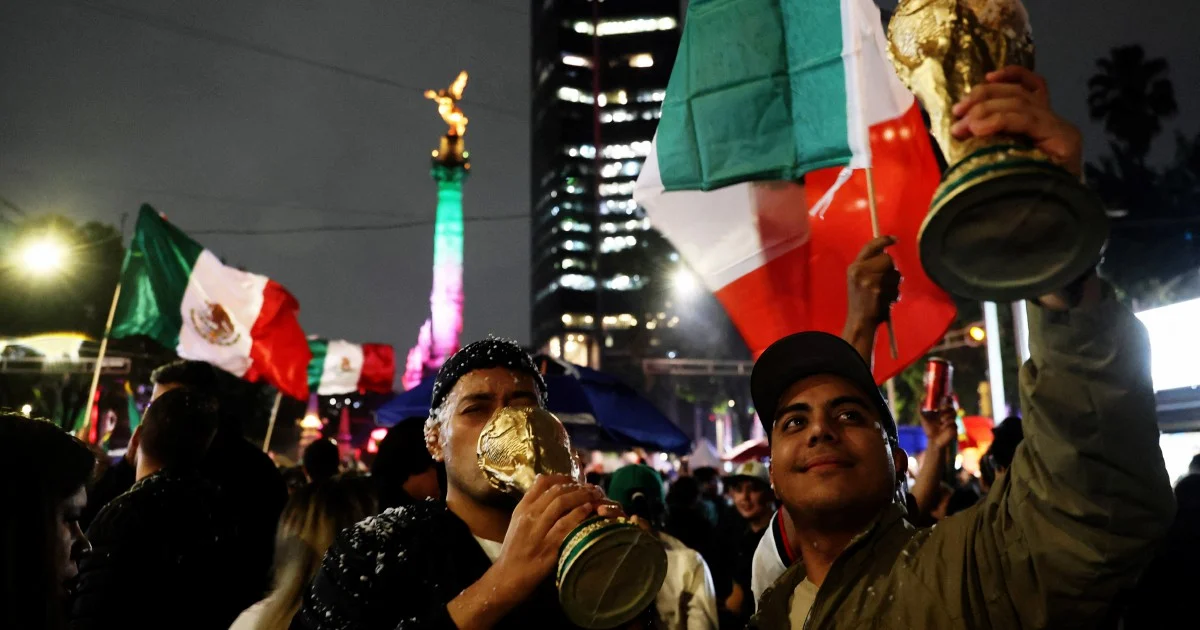
A joyous evening turned tragic in the beachfront resort town of Cabo San Lucas when a black automobile suddenly accelerated into a throng of Mexico national team supporters on Wednesday night. The incident unfolded as crowds gathered to celebrate the country's football triumph, transforming what should have been a moment of national pride into a scene of chaos and injury. Municipal authorities in Los Cabos confirmed that 17 individuals sought medical attention following the collision, among them the vehicle's operator, who was apprehended at the scene.
Social media footage authenticated by international news agencies captured the moments leading up to and immediately following the impact. Eyewitness videos show the dark-coloured sedan initially stationary amid the celebrating crowd, many wearing the distinctive emerald jerseys of Mexico's national side. Without apparent warning, the vehicle's engine roared to life and the car surged forward into the densely packed group, sending multiple people flying across the pavement with considerable force. The automobile continued its trajectory before colliding with protective bollards placed along the pedestrian area.
The aftermath proved equally disturbing, with verified footage revealing the immediate response from those present. Witnesses swiftly moved to extract the driver from the vehicle while expressing their fury at what had transpired. Multiple individuals were visible lying on the ground with visible injuries, though the precise nature and severity of their conditions remained unclear from the available documentation. The scenes underscore the unpredictability of public celebrations and the vulnerability of crowds, even in designated tourist areas considered relatively safe.
Cabo San Lucas, situated at the southern tip of the Baja California Peninsula where the Pacific Ocean meets the Sea of Cortez, draws hundreds of thousands of visitors annually seeking sun, beaches, and vibrant nightlife. The resort destination has built its reputation on catering to international tourists and hosting major sporting events, celebrations, and festivals. Wednesday's incident has cast a shadow over the municipality's safety infrastructure and crowd management protocols during large public gatherings.
The circumstances surrounding the driver's motivations remain unclear in the immediate aftermath. Whether the collision resulted from mechanical failure, driving error, or intentional action will likely form the basis of ongoing investigation by local authorities. The rapid apprehension of the driver at least provides investigators with a direct subject for questioning, distinguishing this incident from mass casualty events where perpetrators flee the scene.
For Malaysia and Southeast Asia, such incidents serve as sobering reminders of the risks inherent in large-scale sporting celebrations and the importance of robust crowd safety measures. Football remains a unifying passion across the region, with Malaysian fans themselves gathering in substantial numbers to support their national team and celebrate victories. The Cabo San Lucas event highlights how even well-established tourist destinations with modern infrastructure can experience unexpected violence during moments of peak public enthusiasm.
The incident also raises questions about vehicle access to pedestrian celebration zones. Many contemporary urban planning and security frameworks now emphasise the separation of vehicular traffic from areas where large crowds congregate, particularly during spontaneous celebrations. Bollards and barriers, which were present in Cabo San Lucas, represent one defensive measure, though their effectiveness depends on proper placement and the speed at which vehicles approach.
Mexico's football culture commands passionate support throughout the nation, particularly surrounding World Cup competitions. Celebrations following significant national victories typically draw expansive crowds into public spaces, streets, and plazas where control measures may be minimal. The balance between allowing free public expression of national pride and maintaining adequate safety protocols presents an ongoing challenge for authorities across sporting nations globally.
The physical and psychological trauma inflicted on those injured and witnesses will likely persist long after the immediate medical crisis subsides. Public spaces where citizens previously felt comfortable celebrating national achievements may now carry associations with violence, potentially dampening enthusiasm for future spontaneous gatherings. This psychological impact, though intangible, can fundamentally alter how communities engage with public expression around sports and national events.
As investigation proceeds, los Cabos municipal officials will face pressure to review their event management practices and implement enhanced protective measures for future large public gatherings. The city's reputation as a safe, welcoming destination for international visitors depends partly on public confidence in local authorities' ability to maintain order and prevent such incidents. The incident will likely prompt broader discussions about balancing public access to celebration spaces with the implementation of necessary protective barriers and security protocols.

