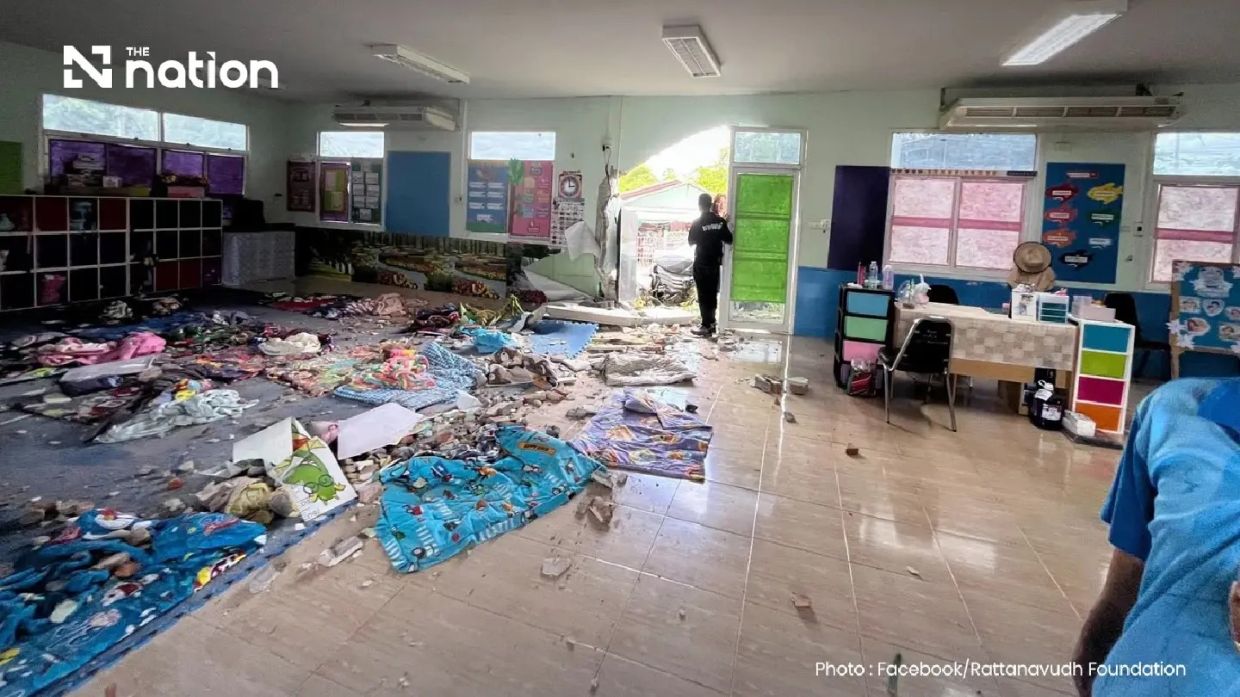
A distressing accident unfolded in Kanchanaburi on Friday afternoon when a private saloon car veered out of control and collided with the Ban Nong Song Ton Child Development Centre in Mueang Kanchanaburi district, leaving 15 children injured and prompting swift emergency response from local authorities and rescue organisations.
The vehicle struck a classroom where young children were lying down for their afternoon nap, a daily routine at the facility. The force of the collision damaged both the building's structural integrity and various items within the classroom, creating a chaotic scene that alarmed staff and neighbouring residents. Of the 34 children present at the centre that day, 15 sustained injuries ranging from head wounds to injuries caused by debris and structural fragments dislodged by the impact. Several children were also reported to be severely traumatised by the frightening incident.
Emergency responders and rescue personnel arrived swiftly at the scene following alerts from the Rattanavudh Foundation, a local organisation immediately notified of the accident. The foundation's team, working alongside personnel from the Phithak Kan Foundation, rapidly assessed the situation and administered first aid to the affected children. Recognising the seriousness of the injuries and the psychological distress caused to the young victims, rescue workers prioritised the urgent transfer of all 15 injured children to Phaholpolpayuhasaena Hospital for comprehensive medical examination.
Coordination between emergency services proved crucial in ensuring rapid response to the crisis. Local residents in Mueang Kanchanaburi district were requested to clear routes for emergency and rescue vehicles, allowing ambulances to transport the injured children to hospital with minimal delay. This organised approach reflected established protocols for handling mass casualty incidents involving vulnerable populations such as children.
The hospital assessment provided reassuring news for anxious families and caregivers. Medical examination of all 15 injured children revealed that their conditions were manageable and they were reported to be safe. While some children sustained head injuries requiring careful monitoring, and others experienced trauma from the frightening experience, none were in critical condition. This outcome was significantly better than could have been feared given the violent nature of the collision.
Investigation into the circumstances of the accident—specifically what caused the vehicle to lose control—remained ongoing at the time of reporting. Understanding whether the incident resulted from mechanical failure, driver error, or other factors would be essential for authorities to prevent similar occurrences at other childcare facilities across Thailand. The incident raises important questions about safety measures at centres caring for young children, particularly regarding vehicle access and protective barriers around vulnerable spaces.
From a broader perspective, this accident highlights the continuing vulnerability of childcare facilities to traffic-related hazards in Thailand. Unlike Malaysia, where building codes and safety regulations for childcare centres have been progressively strengthened following previous incidents, Thai facilities may operate under varying standards depending on local jurisdiction. The incident at Ban Nong Song Ton serves as a sobering reminder of the need for consistent, nationwide safety protocols covering vehicle control near facilities housing young children.
The psychological impact on the children involved should not be underestimated. Beyond physical injuries, young children who experience such traumatic events often require counselling and support to process the frightening experience. The childcare centre and hospital staff would likely have protocols in place to address this, but the long-term emotional wellbeing of the children and their families remains a concern warranting careful attention in the coming weeks.
For childcare operators and facility managers across Southeast Asia, the Kanchanaburi incident underscores the importance of implementing protective measures against vehicle intrusion. Installing proper bollards, barriers, or redesigning facility layouts to prevent vehicles from accessing areas where children congregate during vulnerable moments such as nap time represents a practical safeguarding approach. Many facilities remain inadequately protected against such accidents, leaving children unnecessarily exposed to risk.
The rapid response demonstrated by rescue organisations in Kanchanaburi suggests that emergency protocols for handling such incidents in Thailand are functional and reasonably well-coordinated. However, the incident also highlights the distinction between emergency response capacity and incident prevention. While rescue teams performed admirably in responding to the crisis, preventing such accidents from occurring in the first place would eliminate the risk entirely and spare children from trauma and injury.
The 19 children at the centre who escaped unharmed represent both fortunate chance and the reality that outcomes in such accidents are heavily influenced by factors beyond control. Their safety and that of the injured children depended partly on where children were positioned when the vehicle struck, underscoring how random such incidents can be and why preventive environmental design becomes crucial.

