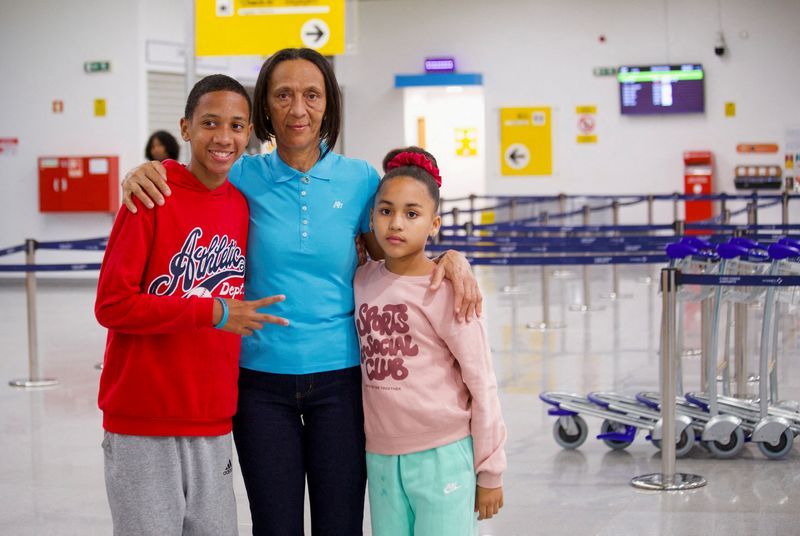
Cape Verde goalkeeper Vozinha's mother will finally attend a World Cup match after obtaining a long-awaited visa to travel to the United States, marking a dramatic turn in what had become a deeply personal story of separation during football's biggest tournament. Ana Candida Evora's approval came swiftly following her son's tearful public revelation that visa complications prevented her from witnessing his match-winning heroics against European champions Spain in Cape Verde's opening fixture, a result that has already etched itself into the tournament's compelling narratives.
The 40-year-old goalkeeper delivered a commanding performance in Atlanta, executing seven crucial saves that helped secure a stunning 0-0 draw against one of the tournament's strongest sides. His performance earned him Cape Verde's player-of-the-match honours and established him as a genuine bright spot for a nation making its World Cup debut. Yet the satisfaction was significantly diminished by a gnawing personal absence—his mother, who had raised him and supported his football journey, could not be present to celebrate this momentous achievement.
The emotional weight of Vozinha's situation resonated far beyond the sporting arena when he disclosed publicly how visa restrictions had made his mother's attendance impossible. His candid and emotional disclosure captured international attention, highlighting the intersection between immigration policy and personal dreams at a moment when the World Cup was supposed to be about celebration and national pride. For Evora, the barrier was not merely bureaucratic paperwork but represented a broader struggle facing citizens from smaller African nations seeking entry to the United States.
The US State Department moved with notable speed once Vozinha's story gained prominence, recognising both the humanitarian dimensions and the diplomatic implications. Officials from the State Department confirmed that their visa processing team stationed in Praia, Cape Verde's capital, had engaged directly with Evora and ensured she received all necessary services to complete her application. The approval came explicitly from senior department officials, who announced the decision in language suggesting expedited handling rather than standard processing timelines.
The broader context of Evora's initial struggle reveals deeper complexities in current American immigration policy. Cape Verde had been among dozens of nations whose citizens faced a requirement to post bonds reaching as high as $15,000 simply to secure entry to the United States under stricter immigration protocols introduced under President Donald Trump's administration. These financial barriers effectively transformed visa acquisition into a gatekeeping mechanism based largely on economic capacity rather than individual circumstances or the strength of visa applications themselves.
For working families in Cape Verde, a nation with per capita income significantly lower than Western standards, a $15,000 bond represented an impossible hurdle—often exceeding annual household earnings. Evora's initial decision to abandon her hopes of attending the match reflected this harsh economic reality rather than any deficiency in her application or creditworthiness. The financial requirement had created a situation where tens of thousands of potential visitors from developing nations simply could not afford to comply, regardless of their genuine intentions to attend the World Cup as ticketed spectators.
Recognising the damaging implications of blanket bond requirements for World Cup attendees, American authorities subsequently dropped this prerequisite specifically for individuals holding valid World Cup tickets. This policy reversal acknowledged the tension between immigration security concerns and the reputational damage of effectively barring ordinary citizens from attending the tournament. However, the damage to families like Evora's had already been inflicted during the months when the bond requirement remained in effect.
Evora will now witness her son's next challenge when Cape Verde faces Uruguay in their second group-stage match scheduled for Miami on Sunday. The fixture represents Cape Verde's opportunity to build on their impressive opening result against Spain, and Vozinha's performance will carry added significance knowing his mother can finally be in the stadium. For Evora, the journey to Miami represents not merely attendance at a football match but the realisation of a dream that had seemed foreclosed by circumstances beyond her control.
The resolution of Evora's visa situation carries broader implications for how powerful nations balance immigration security with welcoming international visitors during major sporting events. World Cups function as global spectacles that draw families and supporters across borders, yet restrictive immigration policies can undermine this inclusive vision. Vozinha's case demonstrates how personal narratives can penetrate policy discussions and create space for exceptions that rehumanise bureaucratic processes that often seem impersonal and unyielding.
For Malaysian and Southeast Asian readers, the situation resonates with familiar experiences navigating American visa requirements, which are notoriously demanding and sometimes subject to dramatic policy shifts. The story underscores how economic barriers embedded within immigration systems can exclude ordinary citizens from participation in global events, regardless of their legitimate intentions. It also highlights how diplomatic intervention and public attention can occasionally overcome systemic obstacles, though such outcomes remain exceptions rather than systemic solutions to structural inequities in global mobility.
The emotional arc of Vozinha's situation—from the despair of his mother's absence during his greatest professional moment to the joy of her belated inclusion—captures something universally human about family bonds transcending national boundaries and sporting achievement. His mother's delayed arrival may actually heighten the emotional intensity of watching her son perform under international pressure, transforming what could have been a simple attendance into a narrative of perseverance and triumph over obstacles.

