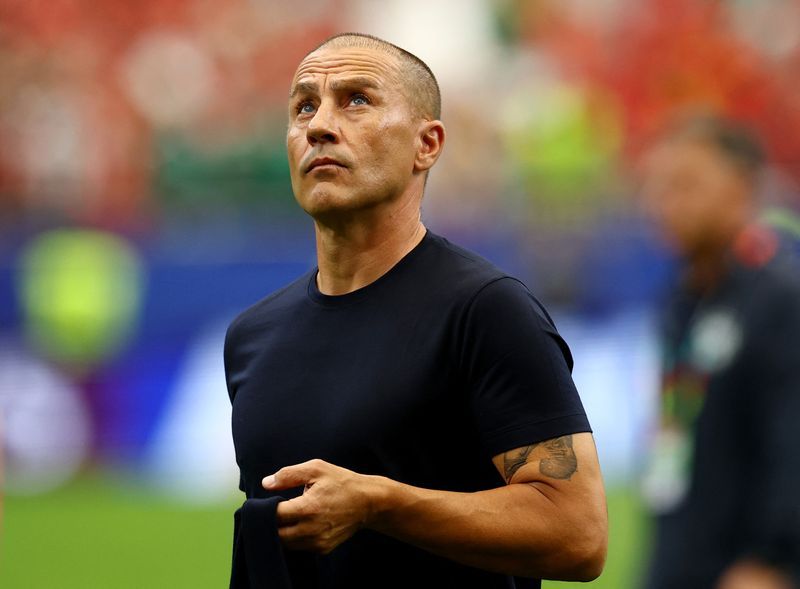
Uzbekistan's World Cup campaign suffered a devastating blow in Houston on Tuesday when they conceded five goals to Portugal, but coach Fabio Cannavaro moved quickly to shield his young squad from criticism by absorbing all accountability for the heavy defeat himself. The Italian tactician, who won the World Cup with Italy in 2006, made it clear to reporters that the responsibility for the lopsided scoreline rested entirely with his tactical decisions and preparation rather than with any shortcomings displayed by his players on the pitch.
Cannavaro's comments came as Uzbekistan confronts the grim reality of their debut World Cup campaign, which has already deteriorated beyond recovery in practical terms. The Central Asian nation entered Group K with genuine hopes of surprising observers, but back-to-back defeats—first a 3-1 loss to Colombia and now the heavy reversal against Portugal—have left them requiring nothing short of victory over the Democratic Republic of Congo on Saturday merely to preserve a theoretical chance of reaching the round of 32. With Portugal and Colombia both likely to advance from the group, Uzbekistan's mathematical hopes are paper-thin at best.
Despite the dire circumstances, Cannavaro refused to sound defeated in his postgame assessment. He told assembled media that his squad had demonstrated genuine effort and commitment throughout the encounter, praising their willingness to engage with a much stronger opponent despite being utterly outmatched in experience and technical quality. The coach's measured response reflected a broader philosophy about development and growth rather than immediate success, an approach that may prove crucial for keeping morale intact during what remains of their group-stage tenure.
The disallowed goal by Azizjon Ganiev proved to be a crucial turning point in the contest, Cannavaro explained. When the ball was ruled out due to a foul committed during the buildup, it arrived at a moment when Uzbekistan had managed to compete effectively against Portugal. The decision to deny what would have been a 2-0 deficit appeared to deflate his team's confidence significantly, and the subsequent collapse suggested that the psychological impact of that ruling damaged their ability to maintain their approach for the remainder of the match.
Cannavaro's philosophy of empowering young players rather than crushing them under the weight of expectation became evident in his comments about how he handles mistakes. He explained that he has deliberately instructed his players that wayward passes and errors are acceptable at this stage of their development, a conscious effort to build confidence and encourage them to take calculated risks rather than play within rigid constraints. This approach may have contributed to their defensive vulnerabilities, but Cannavaro appears convinced that allowing players to learn through mistakes represents the only realistic pathway for a team competing in its inaugural World Cup tournament.
The coach's willingness to accept personal blame carries particular weight given his pedigree and accomplishments at the highest level of the game. As a former Ballon d'Or winner and World Cup champion, Cannavaro's intervention to protect his players from outside criticism serves an important function in maintaining squad unity and resilience through a humiliating campaign. His public statements effectively signal to younger players that their coach values their long-term development over short-term results, a message that may prove essential for retaining their commitment and engagement during remaining fixtures.
Uzbek football exists in an unusual position within global soccer hierarchies. The nation has produced talented players and developed a respectable continental reputation, but the jump to World Cup competition against elite nations has exposed the vast gap between regional success and global competitiveness. Cannavaro's recruitment was itself an indication of Uzbekistan's ambitions to accelerate their development, bringing in a coach of demonstrated World Cup experience and tactical credibility to oversee their inaugural campaign. The paradox, however, is that his presence may have created higher expectations without necessarily providing the squad with the experience necessary to compete effectively against nations with decades of World Cup participation behind them.
Looking forward to Saturday's final group match against the Democratic Republic of Congo, Cannavaro will need to determine whether to persist with his philosophy of encouraging creative freedom or whether pragmatism requires a more defensive approach. The Democratic Republic of Congo's own difficulties in the tournament suggest that Uzbekistan possesses at least a fighting chance, though recent performances offer little optimism about reversing their fortunes. The coach's emphasis on learning and experience gains added resonance if Uzbekistan can salvage something from what has already become a deeply disappointing debut World Cup appearance.
For Malaysian observers and Southeast Asian football enthusiasts more broadly, Uzbekistan's struggles carry instructive lessons. The region's own ambitions to develop competitive World Cup teams rest partly on similar developmental pathways—recruiting experienced coaches, building younger squads gradually, and maintaining belief through difficult phases. Cannavaro's steadfast commitment to long-term vision rather than immediate results offers a template that other emerging nations might usefully consider, even if the immediate outcomes on the pitch prove deeply unsatisfactory.