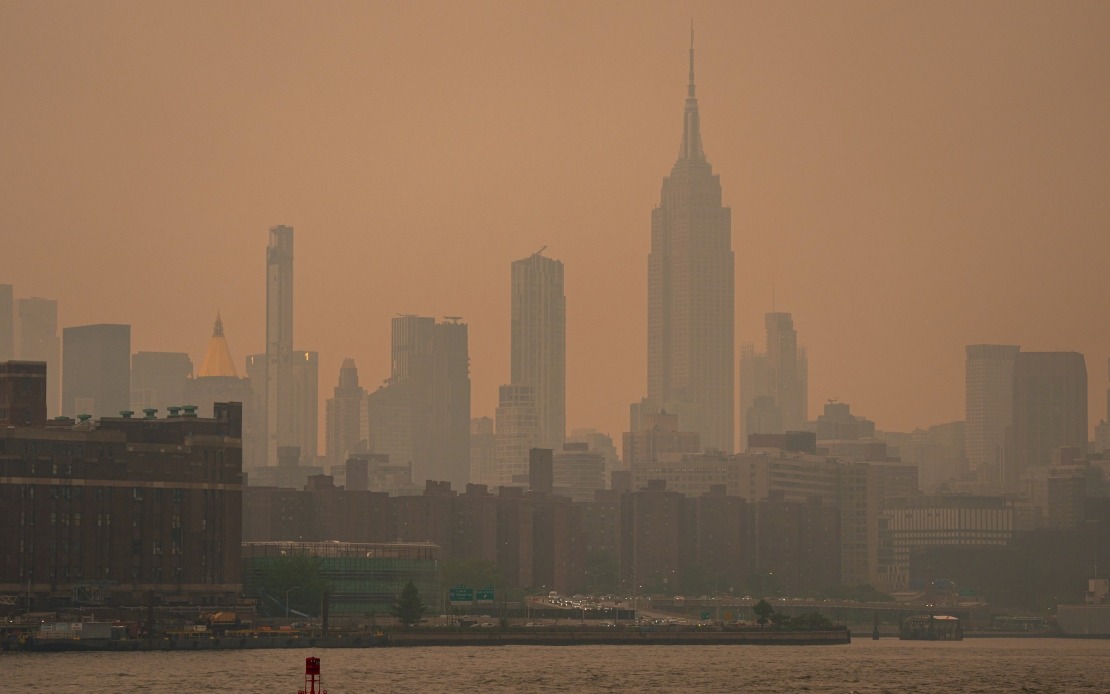
Mexican President Claudia Sheinbaum faced significant travel disruptions on her way to attend the Argentina-Spain World Cup final in New Jersey on Sunday, with poor air quality and weather conditions across the northeastern United States creating complications for her weekend itinerary. The cancellation of her initial flight reflects the far-reaching environmental consequences of the Canadian wildfire season, which has blanketed much of North America in thick smoke and hazardous air conditions in recent days.
Sheinbaum's originally scheduled flight from Cancún to New York was delayed by two hours on Saturday as authorities assessed the deteriorating atmospheric conditions. When it became apparent that smoke accumulation over New York would continue to impede flight operations, Mexican officials made the decision to cancel the commercial service entirely, forcing a change in transportation plans just hours before the nation's leader was expected to arrive on the East Coast.
Instead of proceeding with the delayed departure, the Mexican government arranged for Sheinbaum to travel overnight into Sunday morning aboard a Defence Ministry aircraft, ensuring her arrival in time for the high-profile sporting event. This emergency routing demonstrated the logistical flexibility available to heads of state when commercial aviation becomes untenable, though it underscored the genuine severity of air quality conditions affecting the region.
The invitation to attend the World Cup final came from US President Donald Trump, marking a diplomatic occasion that carried particular significance given the current state of Mexico-United States relations. Sheinbaum's attendance would place her alongside Canadian Prime Minister Mark Carney, creating a trilateral representation from the three nations that jointly hosted the 2026 FIFA World Cup tournament. This alignment reflected the tournament's continental scope and the political importance attached to the event by all three governments.
Bilateral relations between Mexico and the United States remain tense due to ongoing disagreements over trade policies and cross-border security matters. Despite these tensions, both nations have maintained engagement through official channels and sporting diplomacy. The World Cup platform has provided an opportunity for dialogue between the two leaders, though their interactions have been limited so far, with Sheinbaum and Trump having met only once previously—during the official draw ceremony in Washington last December.
The wildfire crisis affecting air quality across North America has become an increasingly significant transnational environmental issue, with smoke crossing borders and creating public health concerns across multiple jurisdictions. For Southeast Asian observers, the situation mirrors challenges faced in the region during dry seasons, when transboundary haze from land fires in Indonesia regularly affects air quality in Malaysia, Singapore, and other neighbouring countries. The disruption to high-level diplomatic travel demonstrates how environmental degradation can have cascading impacts on international engagement and planning.
The reliance on military aircraft to complete Sheinbaum's journey highlighted the essential role defence ministries play in maintaining governmental continuity and supporting executive operations when civilian infrastructure becomes compromised. Mexico's ability to mobilise its Defence Ministry resources ensured that the president's international commitments could be honoured despite environmental obstacles, though this solution remains available only to heads of state and their immediate delegations.
From a broader diplomatic perspective, the incident underscores how climate-related phenomena and environmental crises increasingly intersect with international relations and high-level state visits. The World Cup final, as a marquee sporting event, carried symbolic weight that made Sheinbaum's attendance a priority despite the logistical challenges. Her presence alongside Trump and Carney sent a message about continental cooperation, even as underlying tensions between Mexico and the United States persist on substantive policy matters.
The Canadian wildfire season and its consequences for air quality across North America have emerged as an urgent public health and environmental concern for millions of residents. The disruption to presidential travel, while significant, represents merely one visible consequence of a broader crisis that has prompted emergency alerts and health advisories across multiple American states and Canadian provinces throughout the summer months.

