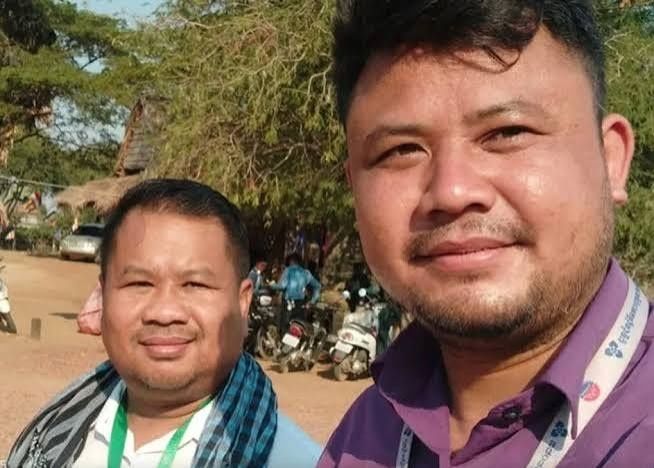
Cambodia's Supreme Court was expected to deliver its ruling on Thursday, June 25, on whether to uphold or overturn the treason convictions of two journalists whose fourteen-year prison sentences have drawn international condemnation and renewed scrutiny of the country's judicial system. The decision carries profound implications for press freedom in Southeast Asia at a time when media independence is already under considerable strain across the region.
Phorn Sopheap of Battambang Post TV Online and Pheap Pheara of TSP 68 TV Online were detained in July after returning from assignments covering military operations along Cambodia's disputed border with Thailand. Authorities charged them with uploading photographs taken in a restricted military zone to Facebook, allegations both men dispute by asserting they had authorisation to work in the area where they conducted their reporting. The case has emerged as a critical test of the independence of Cambodia's highest court, with observers noting that the institution faces mounting pressure to demonstrate impartiality from political interference.
The photographs in question became pivotal evidence in Cambodia's broader dispute with Thailand over military conduct during border skirmishes. One particular image documented land mines in the contested zone, which was subsequently republished extensively by Thai news organisations and featured prominently in Bangkok's assertions that Cambodian forces had installed new explosive devices along the frontier, resulting in casualties among Thai military patrols. However, Cambodia's government categorically rejected such claims, maintaining that the country strictly observes international treaties prohibiting landmine deployment. Officials suggested instead that any ordnance discovered originated from Cambodia's decades of internal conflict that formally concluded in the late nineteen-nineties.
The border confrontations between July and December of the previous year created a humanitarian catastrophe, displacing hundreds of thousands of civilians across both nations and resulting in approximately one hundred military and civilian deaths. The fighting halted following a ceasefire agreement in December, though underlying tensions between the neighbours persist. The timing of the Supreme Court's decision occurs amid this precarious regional stability, underscoring how judicial outcomes in individual cases can reverberate across broader geopolitical relationships.
When Siem Reap Provincial Court rendered its verdict last December, the judges determined that both men had committed treason by "supplying a foreign state with information prejudicial to national defense," a charge that journalism organisations worldwide have characterised as an abuse of ambiguous national security legislation. The conviction was subsequently upheld by an appellate court in March, prompting more than a dozen major journalism associations operating across national borders to issue a collective statement urging the Cambodian government to abandon the prosecution entirely. Such unified international advocacy reflects the gravity with which the global press freedom community views the case.
The Supreme Court's decision arrives just days after the same judicial body reconfirmed the incitement conviction of Rong Chhun, a fifty-six-year-old opposition figure of considerable political standing. Rong Chhun's legal troubles stem from his engagement with villagers displaced by state-sponsored infrastructure development, activities that authorities characterised as incitement to social unrest. The consecutive rulings have crystallised concerns among rights organisations that Cambodia's courts operate under significant pressure from the ruling establishment to suppress dissenting voices and investigative reporting.
Cambodia's trajectory under Hun Manet, who assumed office in August 2023 following nearly four decades of rule by his father Hun Sen, has generated initial hopes that the leadership transition might facilitate meaningful reforms protecting basic freedoms. The younger premier, educated in the United States, was expected by some observers to introduce modernising policies and greater democratic space. Yet the judicial record since his accession reveals minimal evidence of substantive political liberalisation, with prosecution patterns continuing along lines established during his father's tenure, which was consistently condemned by international monitors for extrajudicial executions, enforced disappearances, and systematic suppression of speech.
The Committee to Protect Journalists, headquartered in New York, characterised Cambodia's approach as deliberately weaponising vaguely worded national security statutes against journalists performing routine investigative work. This assessment aligns with findings from Reporters Without Borders, the Paris-based watchdog that ranked Cambodia one hundred sixty-first among one hundred eighty nations in its 2025 World Press Freedom Index, positioning the country among territories where journalists encounter "very serious" operational constraints and risk.
For Malaysian readers, the Cambodia case underscores regional patterns of judicial manipulation by ruling parties and the systematic erosion of press independence across Southeast Asia. While Malaysia's own democratic institutions and constitutional protections remain comparatively robust, the Cambodian example illuminates how quickly judicial systems can be compromised when political leadership prioritises regime security over institutional autonomy. The case also illustrates how allegations of national security breaches are increasingly weaponised against journalists undertaking legitimate reporting, a tactic that extends beyond Cambodia's borders and threatens the profession region-wide.
The implications extend beyond individual prosecutions to fundamental questions about whether courts across Southeast Asia can function as genuine checks on executive power. As Cambodia's Supreme Court contemplates its decision, it faces a choice between reinforcing perceptions that it operates as an instrument of political control or demonstrating meaningful independence through a verdict guided by law rather than political calculation. International observers will scrutinise the ruling not merely for its immediate impact on two imprisoned journalists, but as an indicator of the trajectory of judicial independence across a region where such autonomy remains perpetually fragile and contested.

