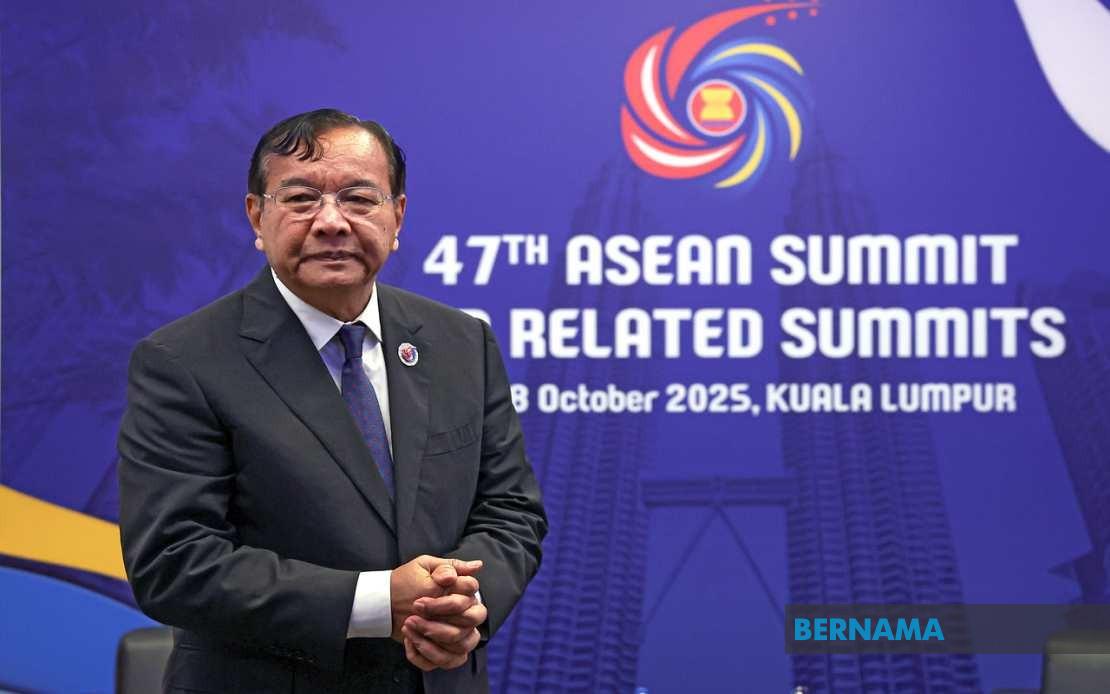
Cambodia's Deputy Prime Minister and Foreign Minister Prak Sokhonn has arrived in Malaysia for an official two-day visit that marks a significant diplomatic milestone for the region. The visit centres on the third Malaysia-Cambodia Joint Commission for Bilateral Cooperation (JCBC), which will be co-chaired by Prak Sokhonn alongside Malaysia's Foreign Minister Datuk Seri Mohamad Hasan. The resumption of this bilateral mechanism represents a watershed moment in relations between the two Southeast Asian neighbours, breathing new life into institutional frameworks that have lay dormant for two decades.
The last time the JCBC convened was in 2006 in Siem Reap, Cambodia, making the current meeting a symbolic reconnection after a 20-year interval. The Foreign Ministry's announcement emphasises that this revival reflects genuine momentum in Malaysia-Cambodia ties and a mutual determination to deepen cooperation across multiple sectors. The timing of the visit also carries historical significance, arriving as the two nations prepare to mark 70 years of diplomatic relations in 2027, a milestone that underscores the enduring foundations of their partnership stretching back to Cambodia's independence era.
During his time in the country, Prak Sokhonn is scheduled to hold a courtesy meeting with Prime Minister Datuk Seri Anwar Ibrahim, providing an opportunity for both leaders to reaffirm longstanding bonds and discuss regional and bilateral matters of mutual concern. Such high-level encounters typically serve to set the strategic direction for government-to-government engagement and signal political commitment at the apex of decision-making. This interaction between Cambodia's second-highest-ranking official and Malaysia's prime minister demonstrates the gravity with which both governments view their bilateral relationship and suggests that discussions will extend beyond routine administrative matters.
The third JCBC meeting itself is expected to generate substantial diplomatic output. Officials anticipate that both foreign ministers will sign Agreed Minutes at the conclusion of the meeting, a formal document that typically catalogues key decisions, identifies priority cooperation areas, and reaffirms both nations' commitment to advancing their partnership. Such minutes serve as a roadmap for government agencies and private entities seeking to strengthen ties in trade, investment, education, tourism, and security matters. The formality of this process indicates that Malaysia and Cambodia are treating the JCBC revival as a serious institutional renewal rather than a ceremonial gesture.
Economic ties between the two countries have accelerated markedly, providing strong impetus for revitalising diplomatic mechanisms. In 2025 alone, bilateral trade surged 27.4 per cent year-on-year to reach RM5 billion (US$1.17 billion), a robust figure that reflects genuine commercial dynamism. Malaysia's exports to Cambodia totalled RM4.13 billion (US$970 million), while imports from Cambodia amounted to RM880 million (US$200 million). This trade flow demonstrates that Malaysian manufacturers and suppliers have successfully penetrated the Cambodian market, whilst Cambodian producers are increasingly exporting to Malaysia, creating interdependencies that underpin the relationship.
Beyond trade flows, Malaysia has emerged as a consequential investment partner for Cambodia. As of 2024, Malaysia's cumulative foreign direct investment in the Kingdom stood at US$3.20 billion (RM13.07 billion) spread across 162 registered projects. This investment tally positions Malaysia as Cambodia's third-largest foreign investor, a ranking that reflects decades of Malaysian business confidence in Cambodia's economy and future prospects. The breadth of Malaysian investment—spanning 162 separate ventures—suggests diversification across sectors, likely including manufacturing, agriculture, infrastructure, and services. Such sustained capital flows create constituencies within both countries with vested interests in stable and expanding bilateral relations.
For Malaysia, the JCBC revival carries several strategic implications. Cambodia sits at the geographic and political crossroads of mainland Southeast Asia, bordering Thailand, Laos, and Vietnam. Maintaining strong bilateral ties with Phnom Penh provides Malaysia with influence in regional forums like ASEAN and helps advance Malaysian interests in broader Indochina affairs. Additionally, as Malaysia's economy becomes increasingly export-oriented, access to Cambodia's growing consumer market and investment opportunities represents valuable commercial territory. The resumption of the JCBC signals to Malaysian businesses that the government is actively creating diplomatic space for commercial expansion in Cambodia.
For Cambodia, engagement with Malaysia offers complementary benefits. Malaysia brings substantial capital and technical expertise that support Cambodia's development agenda, particularly in manufacturing and infrastructure sectors. Malaysian investors have demonstrated staying power in Cambodia, suggesting long-term commitment rather than speculative short-term ventures. Through renewed institutional engagement, Cambodia can potentially unlock additional Malaysian investment and technical cooperation in priority areas such as skills development and industrial capacity-building.
The two-decade gap in JCBC meetings raises questions about what circumstances prompted the earlier pause and what has shifted to enable revival now. While the original statement does not address this directly, the improved economic performance and political stability in both countries, combined with Cambodia's growing economic integration into regional supply chains, likely created conditions favourable for institutional renewal. The 2027 milestone of 70 years of diplomatic relations provides a symbolic target for both nations to demonstrate tangible progress in bilateral cooperation, potentially motivating accelerated action in the coming two years.
Moving forward, observers will watch whether the JCBC's revival translates into concrete initiatives or remains primarily ceremonial. The commission's effectiveness will depend on the willingness of both governments to assign implementation responsibilities to specific agencies, allocate resources, and establish monitoring mechanisms. Early signals suggest seriousness—the involvement of both foreign ministers and the scheduled signing of Agreed Minutes indicates this is not a perfunctory gathering. If maintained momentum leads to regular JCBC meetings and substantive outcomes, the mechanism could become a genuine driver of bilateral progress rather than a diplomatic formality.

