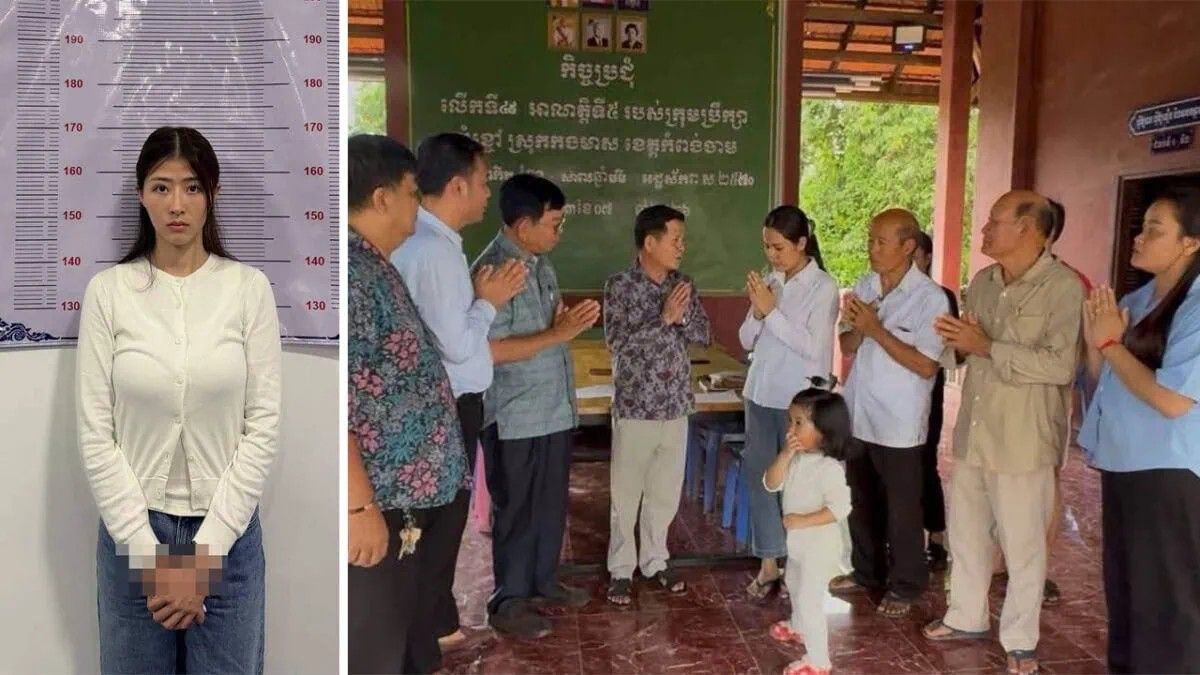
An out-of-court settlement has resolved the civil dispute stemming from a fatal traffic collision in Phnom Penh last month, with the victim's family receiving S$60,000 in compensation and agreeing to withdraw their civil complaint. The agreement, formalised on August 6, brings closure to the financial aspects of the case involving Kuoch Limhan, a construction laboratory official at the Ministry of Public Works and Transport, who was killed when struck by a motorcycle-driving suspect on the night of July 28. However, the agreement explicitly leaves criminal charges intact, meaning the accused driver, Sam Meychou, will continue to face prosecution for the fatal accident and leaving the scene.
The compensation was provided by Oknha Tong Hok Seng, the father of Meychou, directly to the victim's widow. Seung Kimhor, representing the victim's family, was instrumental in negotiating the settlement terms alongside the accused driver's family. Both parties signed the agreement with witnesses present, including Kong Sekleng, the local commune chief, and lawyer Phon Thearin, lending formal authority and transparency to the arrangement. The structured approach reflects a mechanism increasingly common in Southeast Asian jurisdictions where civil and criminal proceedings can be separated, allowing financial resolution without impeding justice system accountability.
According to the settlement terms, both sides committed to resolving the matter "amicably" through mutual understanding and goodwill. The agreement explicitly stipulates that neither party will pursue additional claims or lodge further complaints related to the incident, creating a binding closure on the civil aspects. By withdrawing the civil complaint filed under case number 4396 on July 31 with the Phnom Penh Municipal Court, the family has accepted the compensation package as full settlement of their civil damages claim. This separation of civil and criminal remedies reflects a pragmatic approach where the family receives immediate financial compensation while the state continues its criminal investigation independently.
The fatal collision occurred in Sen Sok district when Meychou allegedly crossed the centreline while overtaking another vehicle and struck Limhan's motorcycle. According to witnesses and video evidence presented at the scene, Limhan was returning home carrying milk for his young daughter when the accident happened, killing him instantly. The tragic circumstances were compounded by footage showing Meychou and a companion allegedly fleeing the scene in a tuk tuk, leaving the victim's body on the rain-soaked street—a detail that bolstered charges of leaving the scene of an accident.
Meychou surrendered to authorities on July 30, the afternoon following the collision, and was formally charged the next day with causing a fatal traffic accident and fleeing the scene. The Phnom Penh Municipal Court's investigating judge ordered her placement in pre-trial detention after questioning and evidence review. The decision to maintain detention reflects the seriousness with which Cambodian courts treat traffic fatalities, particularly those involving alleged flight from the accident scene. The criminal proceedings remain on their trajectory regardless of the civil settlement, a critical distinction that preserves the integrity of criminal accountability.
For Malaysian and Southeast Asian observers, this case highlights the complex intersection between civil compensation mechanisms and criminal justice in the region's developing legal systems. While rapid financial settlements can provide immediate relief to grieving families facing economic hardship, they simultaneously raise questions about whether such arrangements create incentives for wealth to influence criminal outcomes. The Cambodian approach of maintaining separate tracks appears designed to prevent civil settlements from compromising criminal prosecutions, yet the practical effectiveness of this separation depends on consistent judicial independence and rigorous law enforcement practices.
The settlement also reflects broader patterns in Cambodian traffic law enforcement, where hit-and-run collisions have become increasingly common in Phnom Penh's congested streets. Road fatalities remain a significant public health concern across Cambodia, with enforcement varying considerably depending on circumstances and parties involved. The case of Kuoch Limhan, a government official, likely attracted heightened attention from authorities and may have influenced the decision to pursue vigorous criminal charges despite the civil settlement.
For the victim's family, the S$60,000 compensation represents a concrete acknowledgement of their loss and provides immediate financial support during a period of acute hardship. However, the settlement does not erase the loss of Limhan or restore the family stability disrupted by his death. The widow must now navigate life as a single parent while raising their young daughter, challenges that financial compensation alone cannot fully address. The settlement's psychological significance for the family may lie in receiving formal acknowledgement of wrongdoing and commitment to amicable resolution, even as criminal justice processes continue.
The involvement of commune chief Kong Sekleng as a witness underscores the local administrative role in dispute resolution within Cambodian communities, where traditional mediation and reconciliation practices often intersect with formal legal procedures. This hybrid approach, combining government oversight with community-level negotiation, reflects Cambodia's legal culture where informal settlements frequently complement formal court proceedings. Such mechanisms can facilitate faster resolution and reduce court backlogs, though they also risk marginalising victims' broader interests in favour of expedient financial arrangements.
Looking forward, the criminal case against Meychou will proceed through Cambodia's court system with pre-trial detention potentially extending for months while investigations continue and prosecutors prepare their case. The conviction rate for traffic fatalities in Cambodia varies, with sentences ranging from suspended terms to several years imprisonment depending on circumstances and perceived culpability. The alleged flight from the scene substantially strengthens the prosecution's position, as it suggests consciousness of guilt and disregard for the victim's condition. The outcome of this criminal process will ultimately determine whether Cambodian justice systems adequately deter dangerous driving and protect public safety on roads that claim thousands of lives annually across the region.

