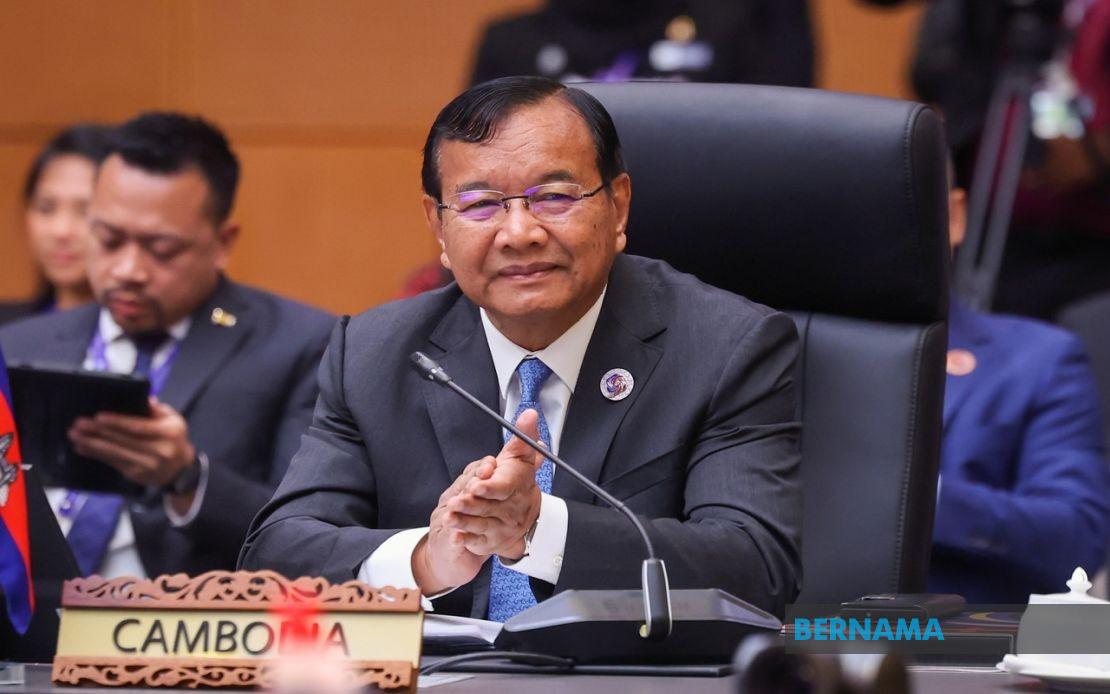
Cambodian Deputy Prime Minister and Minister of Foreign Affairs and International Cooperation Prak Sokhonn touched down at Kuala Lumpur International Airport Terminal 1 on August 3, marking the beginning of a significant two-day diplomatic engagement that underscores the deepening ties between Southeast Asia's two nations. The senior Cambodian official and his accompanying delegation landed at 1.48 pm, where they were received by Cambodian Ambassador to Malaysia Ouk Chandara and Malaysia's Government chief ceremony officer Datuk Rozainor Ramli, setting the formal tone for the visit.
This visit represents a strategic moment for bilateral relations at a time when both countries are navigating complex regional dynamics and seeking to strengthen economic and political partnerships. The timing is particularly significant given the evolving geopolitical landscape in Southeast Asia, where Malaysia and Cambodia—separated by their geographical positions and distinct development trajectories—have nevertheless cultivated a partnership built on shared interests and complementary economic strengths. The arrival of such a senior Cambodian official signals the importance Phnom Penh places on the relationship with Kuala Lumpur, especially given Sokhonn's prominent role overseeing Cambodia's foreign policy and international affairs.
The centrepiece of Sokhonn's itinerary is his scheduled courtesy call on Prime Minister Datuk Seri Anwar Ibrahim, a protocol meeting that carries considerable diplomatic weight. Such encounters between top-tier leaders provide opportunities to discuss bilateral matters at the highest level and set the strategic direction for diplomatic engagement. Following this courtesy call, Sokhonn will proceed with other officially sanctioned engagements designed to maximise the value of his presence in Malaysia and reinforce connections across government institutions and strategic sectors.
The most substantive element of this visit is the 3rd Meeting of the Cambodia-Malaysia Joint Commission for Bilateral Cooperation, scheduled for the following day in Kuala Lumpur. This trilateral mechanism serves as the primary institutional framework through which both nations coordinate development of their relationship and monitor implementation of mutually agreed initiatives. The meeting will conduct a comprehensive review of progress achieved since the second JCBC convening, examining how effectively both countries have executed the agreed minutes and honoured previously concluded bilateral agreements. Such structured dialogue has become essential for managing the intricate details of modern bilateral relations, which span trade, investment, security, education, tourism, and cultural exchange.
Beyond the formal JCBC structure, Sokhonn is expected to engage in bilateral discussions with Malaysia's Foreign Minister Datuk Seri Mohamad Hasan. These one-on-one conversations between foreign ministers often tackle sensitive political issues, regional security concerns, and emerging challenges that require direct, high-level engagement away from formal meeting procedures. The flexibility of such bilateral talks allows both officials to address matters that may not fit neatly into the structured JCBC agenda, creating space for candid exchanges on issues of mutual concern.
The economic dimension of the Malaysia-Cambodia relationship has experienced remarkable momentum in recent years. Trade between the two nations surged 27.4 per cent year-on-year in 2025, reaching RM5 billion (USD1.17 billion), demonstrating that despite global economic headwinds, the bilateral commercial relationship continues to expand. This growth trajectory reflects underlying complementarities in their economies and increasing business confidence in the stability and attractiveness of both markets. For Malaysian exporters and investors, Cambodia represents an important market in the ASEAN region; for Cambodian businesses, Malaysia offers technological expertise, capital, and access to regional supply chains.
Malaysia's investment footprint in Cambodia has become particularly substantial. As of 2024, cumulative Malaysian investments in Cambodia totalled USD3.20 billion (RM13.07 billion) distributed across 162 registered projects, making Malaysia the third-largest source of foreign direct investment in the Kingdom. This significant capital flow reflects Malaysian business confidence in Cambodia's long-term growth prospects and regulatory environment. The concentration of over 160 projects underscores the diversified nature of Malaysian engagement, spanning manufacturing, services, real estate, agriculture, and technology sectors. Such extensive investment creates mutual economic interdependence, generating employment in Cambodia while providing Malaysian firms with growth opportunities beyond the domestic market.
The third-largest investor position holds particular significance for Malaysia's strategic positioning in the region. It demonstrates that Malaysian businesses and institutions have successfully navigated Cambodia's investment landscape and identified profitable opportunities that justify sustained capital commitment. This standing also implies a degree of trust and established relationships between Malaysian and Cambodian counterparts that facilitates business transactions and reduces friction in commercial dealings. Maintaining this position requires continued diplomatic attention and policy coordination, both of which visits such as Sokhonn's help to sustain.
From a broader ASEAN perspective, the Malaysia-Cambodia relationship exemplifies the kind of bilateral deepening that strengthens the entire regional architecture. Enhanced cooperation between individual member states—whether through trade integration, investment flows, or institutional mechanisms like the JCBC—contributes to overall regional prosperity and political stability. For Malaysian policymakers, a robust Cambodian relationship diversifies strategic options and provides leverage in regional forums, while Cambodian leaders benefit from access to Malaysian expertise, technology, and market opportunities.
The visit also reflects mutual commitment to resolving any outstanding issues or grievances that might emerge in bilateral relations. Regular high-level engagement at the ministerial level provides an early warning system for potential disputes and creates forums for negotiating solutions before conflicts escalate. In an era of complex interdependence, such preventive diplomacy has become as important as crisis management, and visits like this demonstrate both governments' commitment to maintaining the positive trajectory of their partnership.
Looking forward, the outcome of the JCBC meeting and bilateral discussions will likely set the agenda for Malaysia-Cambodia cooperation over the coming year or two. Any new initiatives, expanded areas of collaboration, or revised agreements announced during Sokhonn's visit could reshape the scope and intensity of bilateral engagement. For Malaysian readers, the expanded economic relationship with Cambodia represents both opportunity and responsibility—opportunity to deepen market access and investment returns, and responsibility to conduct business and diplomacy in ways that strengthen rather than strain the relationship. The visit thus serves as a reminder that ASEAN integration remains a work in progress, requiring sustained diplomatic effort and strategic focus from major regional players like Malaysia.

