Twelve American states, led by California, have filed federal court proceedings to halt Paramount's planned $110 billion acquisition of Warner Bros Discovery, asserting that the transaction would consolidate too much power within a single entertainment conglomerate. The legal challenge, filed in Oakland federal court, represents a significant obstacle to Paramount CEO David Ellison's strategy to position his company as a formidable competitor against Netflix and Disney.
At the heart of the states' argument lies a straightforward economic concern: the merger would grant the combined entity extraordinary pricing leverage across the entertainment sector. According to the legal filing, the merged company would capture more than 25 cents of every dollar generated by wide-release theatrical films and basic cable channels throughout the United States. This concentration of market power, the states contend, would fundamentally reshape the competitive dynamics that currently constrain pricing and protect consumer interests.
The lawsuit identifies substantial risks for multiple stakeholder groups throughout the entertainment ecosystem. Theater operators face potential pressure from a vendor controlling 27 percent of film distribution markets and 30 percent of blockbuster releases, potentially leading to higher licensing fees and reduced selection. Pay-television subscribers could experience increased subscription costs as the combined entity gains control over major networks including CNN, MTV, HGTV, Cartoon Network, and Nickelodeon. Behind-the-scenes, Hollywood workers—writers, actors, and production crew members—worry that consolidation will suppress employment opportunities across thousands of positions.
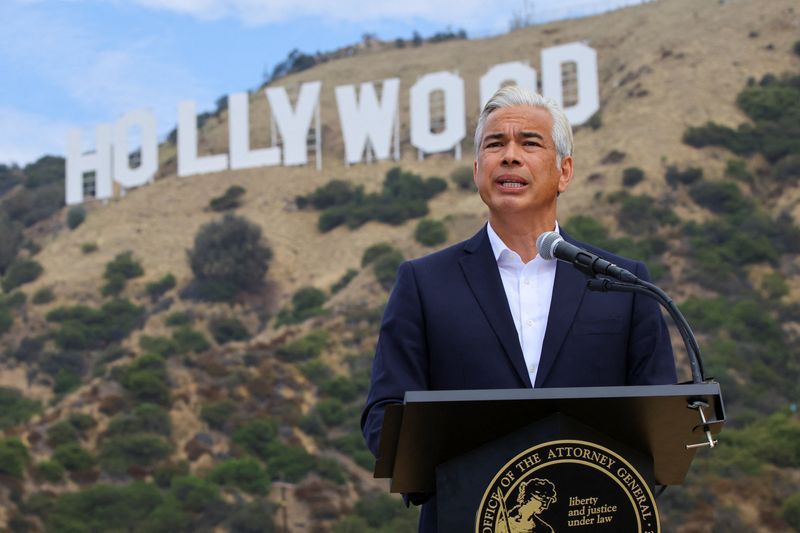
The political dimensions of this legal action deserve careful scrutiny for readers in Malaysia and across Southeast Asia. All twelve attorneys general pursuing the case are Democrats, and several have explicitly framed the lawsuit as part of a broader effort to counterbalance what they perceive as overly permissive antitrust enforcement by the Trump administration. California Attorney General Rob Bonta pointedly criticized federal regulators for what he termed "rubber-stamping" the deal, noting that the Department of Justice cleared the merger despite what state officials view as substantial competitive concerns. This partisan dimension underscores how antitrust enforcement has evolved into a tool for political contestation, particularly as frustration with corporate consolidation and rising consumer costs resonates across the electorate.
Paramount's connections to Republican leadership appear to have smoothed the path toward federal approval, a dynamic that has not escaped state officials' notice. CEO David Ellison's father, Oracle co-founder Larry Ellison, has cultivated relationships with President Donald Trump, and critics have suggested these connections influenced the Justice Department's decision-making process. Oregon Attorney General Dan Rayfield's statement that his office must "step up to protect families, small businesses, and Oregon's film industry" despite federal regulators' approval underscores the states' assertion that they bear responsibility for protecting constituent interests when federal oversight proves inadequate.
Paramount has defended its transaction through conventional antitrust arguments, contending that the lawsuit misrepresents competitive conditions within the entertainment industry and distorts settled legal precedent. The company projects that operational efficiencies from consolidation will enable it to increase production rather than contract it, pledging to release approximately 30 theatrical films annually following the merger completion. By eliminating $6 billion in redundant infrastructure, marketing expenditures, and corporate overhead, Paramount argues the combination strengthens both companies rather than weakening competition. However, the states characterize these production commitments as unenforceable promises that provide insufficient protection even if honored, since the combined entity would retain the ability to raise prices and degrade content quality regardless of output levels.
The financial consequences of legal delays will accumulate rapidly for Paramount, creating pressure toward resolution regardless of the substantive merits. The company has committed to paying approximately $650 million quarterly to Warner Bros Discovery shareholders if the transaction fails to close before October, establishing a ticking clock that amplifies the urgency of litigation outcomes. Historical patterns suggest judicial determinations in comparable merger cases typically require approximately eight months, meaning this case could impose substantial carrying costs before producing a judicial determination. Beyond direct payments, extended uncertainty threatens Paramount's stock price stability and financing arrangements, potentially rendering the entire transaction unviable if delays stretch sufficiently.
For Malaysian and Southeast Asian observers, this dispute illuminates broader patterns affecting media ownership and content distribution globally. The consolidation dynamics evident in America's entertainment sector mirror pressures in regional markets, where streaming services and traditional broadcasters increasingly compete for audience attention while confronting questions about appropriate market concentration. Malaysia's own regulatory framework governing media ownership reflects comparable tensions between enabling business efficiency and constraining corporate dominance, making the American regulatory debate relevant to domestic policy discussions. The litigation also demonstrates how antitrust enforcement has become intertwined with political ideology, suggesting that regulatory certainty—a critical concern for investors across Southeast Asia—increasingly depends on political composition rather than neutral legal analysis.
The lawsuit's success remains uncertain, but the proceeding itself represents what analyst Paolo Pescatore of PP Foresight characterized as the most credible threat yet to Paramount's acquisition plans. Even if Paramount ultimately prevails in court, the extended legal process will impose considerable costs through delayed closure, opportunity costs, and market uncertainty. The states have requested that Paramount suspend closing procedures pending complete legal resolution, and alternatively seek injunctive relief preventing transaction completion. This multifaceted pressure—political, financial, and legal—creates genuine jeopardy for deal completion on currently anticipated timelines, potentially forcing Paramount to renegotiate financing, revise transaction structure, or ultimately abandon the acquisition entirely.

