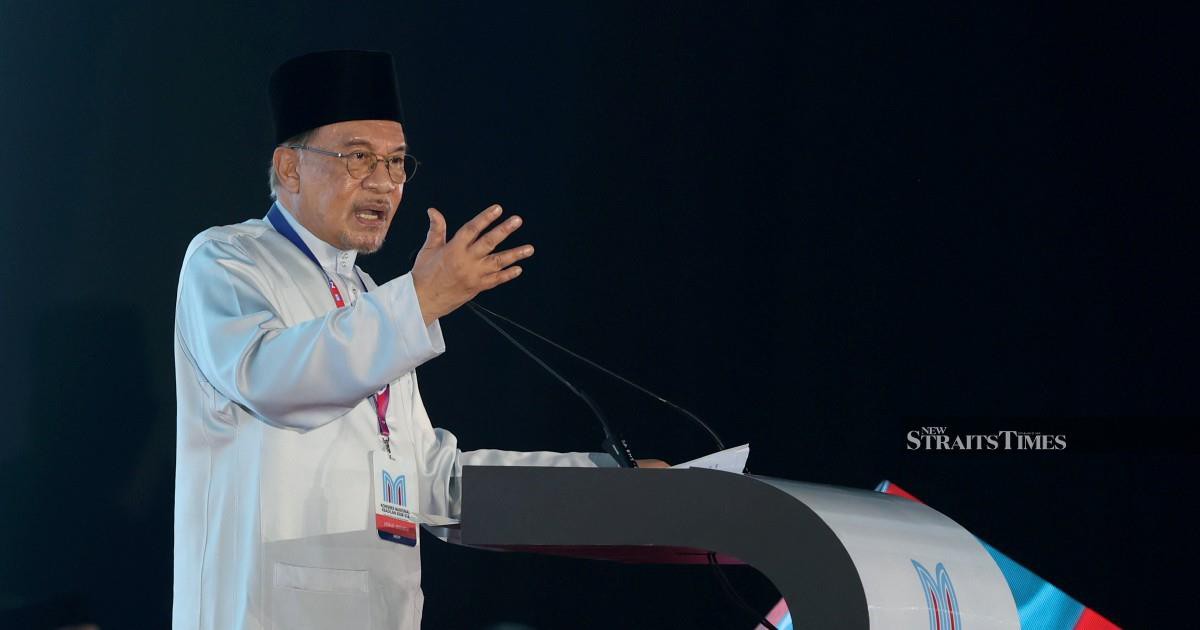
Prime Minister Datuk Seri Anwar Ibrahim has confirmed that the government's proposal to abolish the Universities and University Colleges Act 1971 (AUKU) will be submitted to the Cabinet for deliberation at this Wednesday's meeting in Ayer Keroh. The announcement signals that the long-anticipated move to reform Malaysia's higher education regulatory framework is moving into its critical approval phase.
The Universities and University Colleges Act, dating back over five decades, has been a persistent source of tension between the government and student activist communities, primarily due to its restrictions on student political activities and public assembly. For decades, the legislation has drawn criticism from civil liberties advocates, student unions, and international observers who argue that its provisions curtail fundamental freedoms guaranteed under the Federal Constitution. The act's prohibition on students engaging in political activity and its broad discretionary powers granted to university administrations have become increasingly contentious in a maturing democracy.
AUKU's continued enforcement has repeatedly sparked controversy and polarized public opinion. University students, long regarded as engines of democratic discourse and social progress, have chafed under restrictions that student organizations argue are outdated and incompatible with contemporary notions of academic freedom and democratic participation. Multiple student bodies have mounted campaigns demanding the act's repeal, framing it as an impediment to their development as informed, engaged citizens. These calls have resonated beyond campus boundaries, gaining support from human rights groups, educational reformers, and sections of civil society who view the legislation as anachronistic.
The move toward abolition reflects broader policy shifts within the current administration toward greater democratic liberalization. Anwar Ibrahim's government has signaled openness to revising legislation perceived as restrictive, positioning such reforms as essential to Malaysia's progression as a knowledge economy and maturing democracy. Educational leaders have similarly advocated for loosening constraints on campus speech and student organization, arguing that creativity, critical thinking, and civic engagement flourish when students enjoy greater institutional autonomy and freedom of expression.
However, the path to abolition remains politically complicated. University administrations have expressed concerns about maintaining campus order and institutional discipline without AUKU's regulatory framework. Conservative commentators have warned that removing the act without establishing alternative governance mechanisms could lead to disruption or misuse of campus spaces. These competing considerations will likely feature prominently in Wednesday's Cabinet discussion, as ministers weigh reform against institutional stability.
The abolition process also raises fundamental questions about what regulatory framework would replace AUKU. Stakeholders across the education sector have begun proposing alternatives, ranging from modernized institutional codes to entirely new legislative approaches that balance student freedoms with administrative authority. Any replacement framework must address the practical realities of managing diverse, complex university environments while respecting constitutional guarantees of fundamental liberties. These technical and philosophical questions will require careful deliberation.
For Malaysian higher education institutions, successful abolition could bring significant operational and reputational benefits. Universities constrained by AUKU face recruitment challenges when competing internationally, as prospective students and faculty often view the restrictions as limiting institutional dynamism. Removing the act could enhance Malaysia's attractiveness as a regional education hub, particularly for attracting talent and research partnerships. Southeast Asian universities, many of which operate under less restrictive frameworks, could no longer point to Malaysia's legislation as comparatively constraining.
The Cabinet's Wednesday decision will be watched closely by Malaysia's 1.8 million university students and the broader academic community. Student activist organizations have prepared responses to various potential outcomes, while university administrators are developing contingency frameworks should abolition proceed. The decision also carries implications for Malaysia's international standing on human rights and democratic governance, as regional and global observers track whether the country will loosen restrictions on civic freedoms.
Beyond universities, the abolition sends a broader message about the government's commitment to democratic reform. Civil society organizations view this as a test of whether Anwar's administration will follow through on promises to liberalize legislation that constrains public freedoms. The decision's implementation timeline and the nature of any transitional arrangements will significantly impact how successfully the reform achieves its intended objectives without triggering administrative chaos.
The Cabinet meeting represents a pivotal moment in Malaysian higher education governance. Whether ministers approve the abolition proposal Wednesday will determine the timeline for legislative reform and what mechanisms, if any, the government envisages as replacements. This decision could reshape the environment for university students for generations to come, making Wednesday's deliberations consequential for Malaysia's educational and democratic future.

