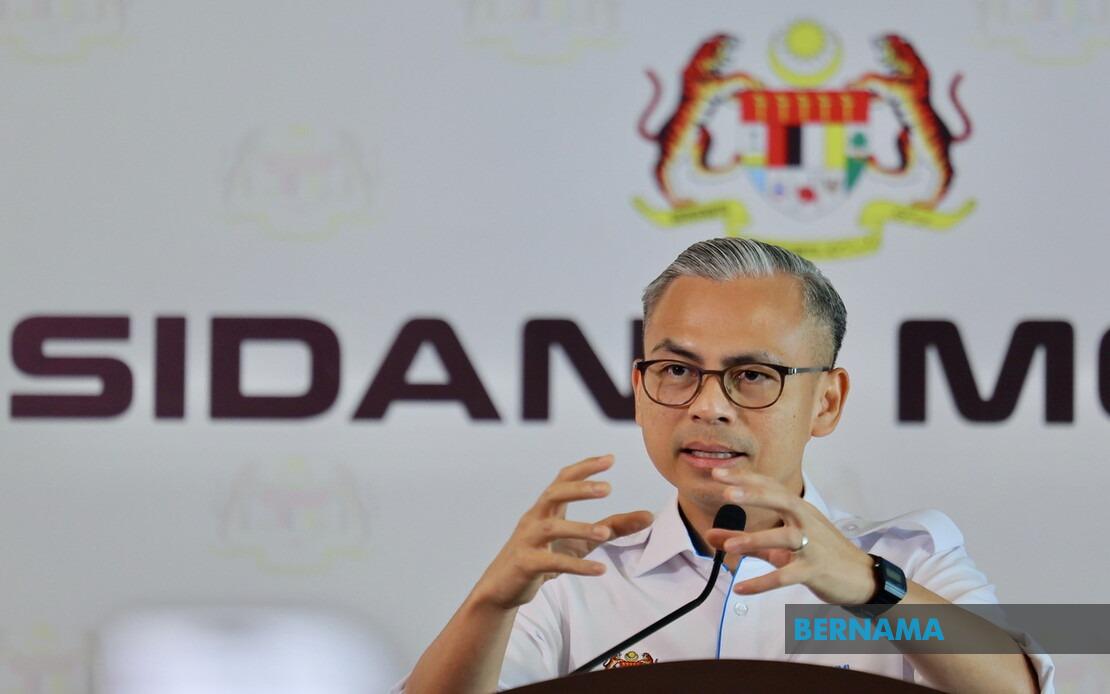
The Malaysian government is moving swiftly to establish a formal Cabinet Committee focused on managing foreign worker issues, with Communications Minister and MADANI Government spokesperson Datuk Fahmi Fadzil announcing that the inaugural meeting will convene as early as next week. The decision, ratified during the latest Cabinet session presided over by Prime Minister Datuk Seri Anwar Ibrahim, reflects growing recognition that labour-related challenges require coordinated governmental attention across multiple economic sectors.
Deputy Prime Minister Datuk Seri Dr Ahmad Zahid Hamidi will chair the new committee, positioning the initiative as a high-level priority within the administration. The designation of such a senior figure to oversee the committee underscores the gravity with which the government regards ongoing tensions and complications surrounding the employment of migrant workers throughout Malaysia's economy. Fahmi's comments, delivered during the routine weekly press conference, indicate that the timing and composition of the committee reflect immediate policy concerns that have accumulated among various business sectors clamouring for clearer direction.
The committee's scope extends explicitly to the food and beverage sector, an industry that has been particularly vocal about staffing constraints affecting operations nationwide. Malaysia's hospitality and dining establishments have struggled to maintain adequate workforce levels as pandemic-era disruptions gave way to operational recovery, leaving many establishments vulnerable to service interruptions and reduced capacity. The F&B industry represents a substantial component of Malaysia's service economy and tourism appeal, making labour availability a matter of broader economic consequence rather than a sectoral concern alone.
Government officials have acknowledged that several economic sectors are currently navigating genuine manpower difficulties, with foreign labour representing a critical component of workforce solutions in contexts where domestic recruitment proves inadequate or infeasible. These challenges span beyond hospitality into manufacturing, construction, agriculture, and other traditionally labour-intensive domains. The Cabinet's decision to establish a dedicated committee signals that policymakers view the current situation as requiring systematic problem-solving rather than ad hoc responses to individual sector complaints.
The committee framework suggests the government intends to develop comprehensive policies addressing multiple dimensions of foreign worker employment, potentially encompassing recruitment procedures, skills matching, wage conditions, accommodation standards, and integration with domestic labour market dynamics. Rather than issuing isolated directives, the Cabinet appears committed to formulating coherent strategies that simultaneously serve employer needs, protect worker welfare, and maintain social stability. This approach reflects international best practices in managing labour migration while acknowledging Malaysia's structural reliance on cross-border workforce mobility.
For Malaysian businesses, particularly in the F&B and hospitality sectors already operating under operational pressure, the committee's establishment offers prospect of clearer policy guidelines and potentially expedited resolution of labour sourcing barriers. Many establishments have reported difficulty navigating existing foreign worker recruitment and retention frameworks, with bureaucratic complexity and inconsistent enforcement creating unpredictability in workforce planning. A coordinated Cabinet-level approach could streamline procedures and establish uniform standards across government agencies involved in foreign worker administration.
The timing of this initiative carries significance within Malaysia's broader economic recovery trajectory. Following periods of disruption and uncertainty, businesses are actively rebuilding operations and reassessing staffing requirements. Providing clarity on foreign worker availability and eligibility during this phase enables more confident capital investment and operational planning. The committee's work could therefore directly influence the pace and sustainability of sectoral recovery across multiple industries.
Regional context also shapes the significance of Malaysia's foreign worker policy deliberations. As regional economies compete for cross-border talent and labour continues flowing across Southeast Asian borders in response to wage differentials and employment opportunities, Malaysia's regulatory approach influences its competitiveness relative to neighbouring countries. Thailand, Indonesia, Singapore, and other regional peers maintain their own foreign worker frameworks, creating de facto competition for migrant labour. Clear, reasonably accommodative Malaysian policies help sustain the country's attractiveness as an employment destination within the region.
The committee's deliberations will likely grapple with balancing multiple constituencies and competing priorities. Employers seek streamlined access to workers and labour cost stability; workers themselves deserve protection against exploitation and fair treatment; communities have interests in social cohesion; and the government must manage fiscal implications and administrative capacity. Constructing policies that navigate these tensions requires precisely the kind of cross-ministerial coordination that the Cabinet Committee framework facilitates, bringing together perspectives from labour, immigration, industry development, and other relevant portfolios.
Looking ahead, the committee's outputs will be closely monitored by Malaysia's business community and international observers tracking the country's approach to labour migration governance. Decisions emerging from these deliberations will shape operational conditions for firms across multiple sectors and influence perceptions of Malaysia's commitment to business-friendly policymaking. The government's demonstrated willingness to address these concerns through formal committee structures suggests recognition that managing foreign worker issues effectively is integral to sustaining Malaysia's economic competitiveness and sectoral vitality.

