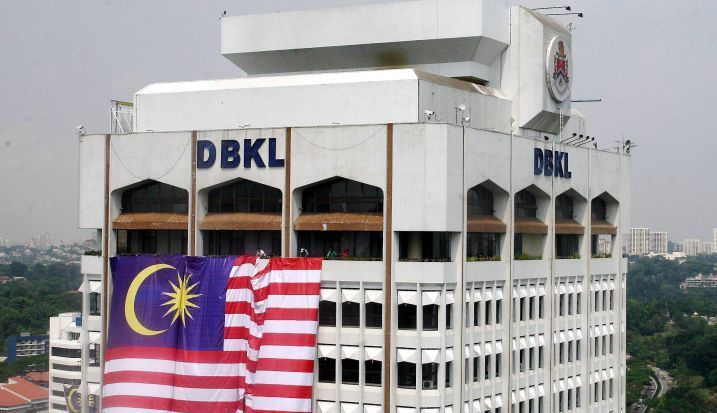
The Cabinet has instructed the Federal Territories Department to prioritise internal governance improvements and accountability measures within Kuala Lumpur City Hall before proceeding with any legislative amendments to the Federal Capital Act 1960. The directive, announced by Minister Hannah Yeoh in her capacity overseeing Federal Territories matters, follows presentation of a comprehensive feasibility study that examined the viability of changing how Malaysia's capital city is administered.
The study, commissioned to the International Islamic University Malaysia over a four-month period ending in March, undertook an extensive examination of DBKL's structural framework, operational decision-making, service delivery mechanisms, enforcement practices and institutional capabilities. During this research phase, the university conducted engagement sessions with Kuala Lumpur's parliamentary representatives and DBKL's management team, seeking to understand where current systems required strengthening and where structural changes might prove beneficial.
What emerges from the IIUM investigation is a nuanced conclusion that challenges the popular notion that DBKL's challenges stem primarily from legislative shortcomings. Instead, the study identifies the root causes as operational and procedural deficiencies, particularly the absence of clearly articulated internal guidelines, standardised operating procedures and formalised protocols governing institutional meetings and decision-making processes. This finding carries significant implications for policymakers, suggesting that legislative amendments alone would not resolve many of the governance difficulties that have prompted calls for administrative reform.
The research examined two competing proposals for restructuring DBKL's administrative framework. The Policy Advisory Committee to the Prime Minister had proposed establishing a Supreme Council to alter the legal structure governing the mayor's office, while several Kuala Lumpur MPs had separately suggested creating a City Council comprising the capital's seven parliamentary representatives to serve in an advisory capacity to the mayor. These proposals reflect ongoing tensions between centralised mayoral authority and desires for broader political representation in city governance.
However, the IIUM study explicitly cautioned against introducing a councillor system into DBKL's administration. The researchers determined that adding another institutional layer to the decision-making apparatus would likely create overlapping responsibilities and muddy accountability lines, making it increasingly difficult for residents and oversight bodies to identify which officials or structures should be held responsible for particular governance failures. This reasoning reflects international best practice in municipal administration, where clarity of authority and responsibility proves essential for effective accountability.
Under Section 5(1) of Act 190, Kuala Lumpur functions as a "corporation sole", a legal framework in which executive authority concentrates in the office of the mayor rather than dispersing through a council with collective decision-making power. The study cautioned that introducing councillors with formal powers would fundamentally transform Kuala Lumpur into a conventional local authority governed under the Local Government Act 1976, potentially conflicting with the original statutory framework established when the capital was transferred to federal administration in 1974. This constitutional tension underscores why the researchers counselled that any amendments to Act 190 require extraordinarily careful deliberation.
The study recommended instead that DBKL strengthen its existing Advisory Board rather than create wholly new administrative structures. To achieve this, the research proposed introducing a comprehensive governance framework that would establish transparent criteria and quotas for appointing professional expertise and non-governmental organisation representation to the board. This framework would simultaneously formalise meeting procedures, standardise how proposals are presented and evaluated, clarify reporting requirements and explicitly define working relationships between the advisory body, the mayor, the Federal Territories minister and DBKL management.
Regarding parliamentary engagement, the study concluded that Kuala Lumpur MPs should exercise enhanced monitoring and advocacy roles without receiving direct administrative powers or formal appointment authority. The research suggested establishing regular consultation mechanisms, creating dedicated monitoring committees, conducting structured budget reviews and formalising channels through which MPs can channel resident concerns and development matters to DBKL leadership and the responsible minister. Defining the scope, frequency and reporting requirements for these interactions would prevent the informal arrangements that sometimes characterise current engagement.
Minister Yeoh indicated that the Federal Territories Department and DBKL are now developing a comprehensive transformation strategy focused on improving institutional decision-making processes, strengthening internal checks and balances and enhancing overall city authority management. The Cabinet has committed to receiving periodic progress updates on these reforms, establishing a monitoring mechanism to track implementation of administrative improvements.
The timing of this Cabinet decision reflects broader concerns about DBKL's operational effectiveness and public service delivery, issues that have garnered significant attention from both parliamentary representatives and Kuala Lumpur residents. By insisting on governance improvements before considering legislative amendments, the Cabinet appears to be adopting a pragmatic sequencing strategy, recognising that structural laws cannot compensate for inadequate internal procedures and unclear institutional boundaries.
For Malaysian observers of public administration and governance, the IIUM study's findings carry implications extending beyond Kuala Lumpur itself. The research validates an approach emphasising internal administrative discipline and procedural clarity before pursuing legislative reform, a principle potentially applicable to other federal territories and local authorities throughout Malaysia. The emphasis on transparent appointment criteria, formalised decision-making processes and clarified accountability lines represents incremental yet meaningful progress toward modernising how Malaysia's public institutions operate.
The study's explicit recommendation against introducing multiple decision-making layers also provides evidence-based support for critics who have questioned whether fragmenting mayoral authority would genuinely improve city governance or simply create additional obstacles to efficient administration. As DBKL develops its transformation plan, the focus on strengthening advisory structures while preserving clear executive authority may provide a model for balancing democratic representation with administrative effectiveness.

