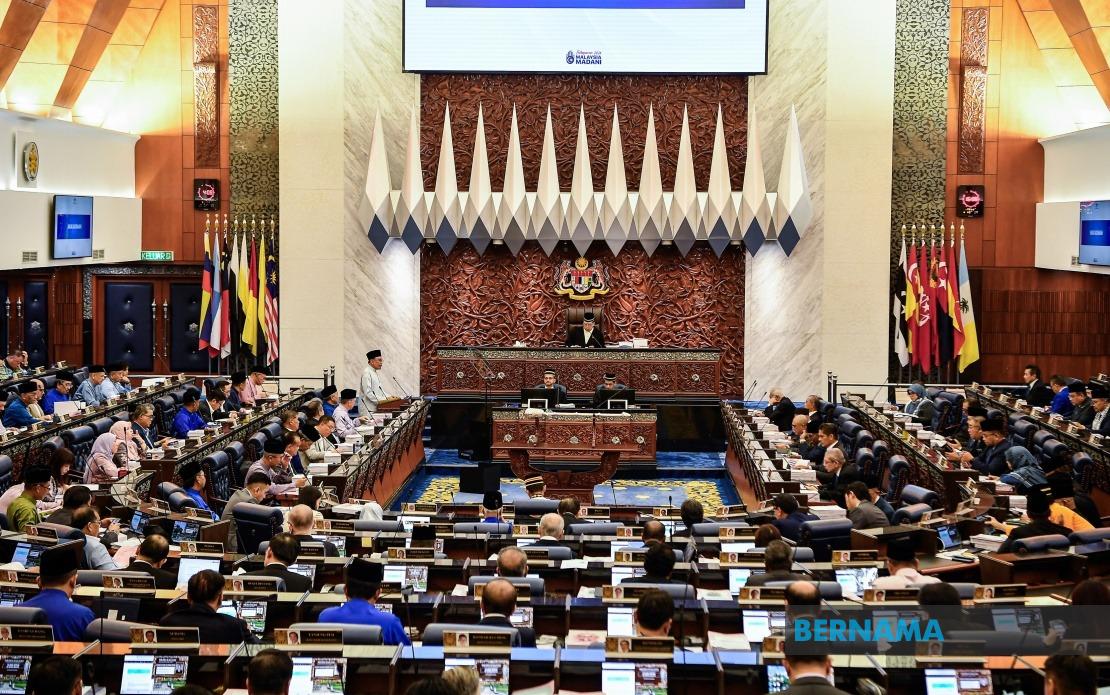
Malaysia's Cabinet has agreed to constitutional amendments that will substantially expand Parliament's involvement in the appointment of the Public Prosecutor, marking a significant step in the Government's broader institutional reform agenda. The decision, announced on July 8, represents the Government's commitment to clarifying and reinforcing the boundary between the Attorney General's advisory role and the Public Prosecutor's prosecutorial authority. These amendments are central to the MADANI Government's push to modernise Malaysia's legal infrastructure through what it describes as institutional reform centred on strengthening democratic accountability.
The proposed changes, contained in the Constitution (Amendment) (No. 2) Bill 2026, emerged from an extensive consultation process that began when the Bill received its first reading in the Dewan Rakyat on February 23, 2026. Subsequently, on March 3, 2026, Parliament approved a motion referring the legislation to a specially constituted Select Committee on Constitutional Amendments related to the separation of roles between the Attorney General and Public Prosecutor. This committee structure, operating under the Standing Orders of the Dewan Rakyat, ensured that the constitutional changes received thorough examination beyond the normal parliamentary process.
The Special Select Committee comprised eleven members drawn from both Government and Opposition benches, underscoring the bipartisan nature of this institutional reform. Over the course of seven meetings, committee members engaged in rigorous scrutiny of the proposed amendments, establishing detailed terms of reference and working through the technical parameters that would govern the new appointment mechanism. This approach reflects a deliberate effort to build consensus around changes that fundamentally alter how Malaysia's prosecutorial leadership is selected, ensuring that the process commands legitimacy across the political spectrum.
Among the key stakeholders who contributed to the committee's deliberations were legal experts and civil society organisations, whose input shaped the final framework now endorsed by Cabinet. The committee tabled its formal report in the Dewan Rakyat on June 22, presenting not only its findings but also the proposed new amendments that address concerns raised during the consultation phase. This inclusive process reflects international best practices in constitutional reform, where wide-ranging input helps ensure that institutional changes reflect the values and expectations of multiple constituencies within society.
The centrepiece of the Cabinet's approval concerns amendments to Clause 18 of Article 145A of the Bill. Under the revised framework, candidates for the position of Public Prosecutor will first be submitted to the Speaker of the Dewan Rakyat for tabling before Parliament. This innovation significantly elevates Parliament's initial role in vetting potential appointees. After candidates undergo scrutiny by a designated Select Committee, the full Dewan Rakyat will then make formal recommendations to the Judicial and Legal Service Commission, introducing a layer of democratic input into what has traditionally been an executive-dominated process.
The Judicial and Legal Service Commission will retain its advisory function under this new arrangement, advising the King on Public Prosecutor appointments based on the Select Committee's recommendations. This structure attempts to balance competing objectives: preserving the necessary independence of the prosecutorial authority while simultaneously embedding parliamentary scrutiny into the appointment mechanism. For Malaysian readers familiar with debates over judicial independence and governmental accountability, this represents a careful attempt to navigate between political influence on the one hand and total insulation from democratic oversight on the other.
The significance of these amendments extends beyond procedural adjustments. The underlying rationale—as articulated by the Legal Affairs Division of the Prime Minister's Department—centres on clarifying functional separation between the Attorney General, who serves as legal adviser to the Crown and Cabinet, and the Public Prosecutor, who exercises independent prosecutorial authority. This distinction matters because it addresses longstanding concerns about concentrating legal power in a single institution. By formalising the separation and introducing parliamentary checks into the appointment of the Public Prosecutor, Malaysia's legal framework moves closer to international standards for prosecutorial independence.
For Southeast Asian observers watching Malaysia's institutional evolution, these amendments carry broader implications. Malaysia's approach—emphasising parliamentary involvement while preserving judicial independence—offers a potential model for how elected bodies can meaningfully participate in appointing key judicial officials without compromising their impartiality. This is particularly relevant in a region where the calibration of prosecutorial independence versus democratic accountability remains contested across multiple jurisdictions.
The Government framed these reforms as essential to building public confidence in Malaysia's justice system. The statement issued by the Prime Minister's Department emphasised that administering justice independently, transparently, and with integrity serves Malaysia's international standing and fulfils the nation's commitment to standards that resonate globally. In a context where public trust in institutions has periodically wavered, connecting institutional reform to concrete improvements in prosecutorial oversight represents a deliberate messaging strategy.
The amendments will face parliamentary debate on July 13, 2026, when they are scheduled for discussion at the Second Meeting of the Fifth Session of the 15th Parliament. This timing allows both Government and Opposition MPs, alongside any interested stakeholders, to air views on the refined constitutional framework before final parliamentary votes. The debate itself will be noteworthy, as it provides an opportunity for legislators to explain to constituents how the changes affect the machinery of government and, more fundamentally, how prosecution powers will be exercised going forward.
Malaysian legal practitioners and observers have long debated the optimal structure for prosecutorial independence. These amendments represent an attempt to address critiques that emerged from civil society and legal quarters, suggesting that prosecutorial appointments required greater transparency and parliamentary input. By embedding a Select Committee stage and requiring Dewan Rakyat recommendations before the Judicial and Legal Service Commission proceeds, the framework creates multiple checkpoints in the appointment process—potentially filtering out candidates who lack sufficient cross-party confidence or who possess conflicts of interest.
The Cabinet's endorsement caps a lengthy consultation phase that, while procedurally complex, has produced amendments enjoying support from both Government and Opposition MPs. This consensus matters because prosecutorial independence—once politicised—becomes compromised. By securing cross-party agreement before finalising the amendments, the Government arguably strengthens the legitimacy of the resulting framework, making it less vulnerable to challenge or reversal as political circumstances shift.
Looking ahead, successful implementation of these amendments will depend on how the newly empowered Select Committee conducts its deliberations and whether the Dewan Rakyat's recommendations prove genuinely influential in the Judicial and Legal Service Commission's advice to the King. The framework is only as robust as the actors who operationalise it. If parliamentary input becomes perfunctory or if the Select Committee operates in partisan fashion, the amendments will have failed to achieve their stated objective. However, the inclusive design of the process—spanning Government, Opposition, legal experts, and civil society—suggests an intention to create institutional safeguards against such outcomes.

