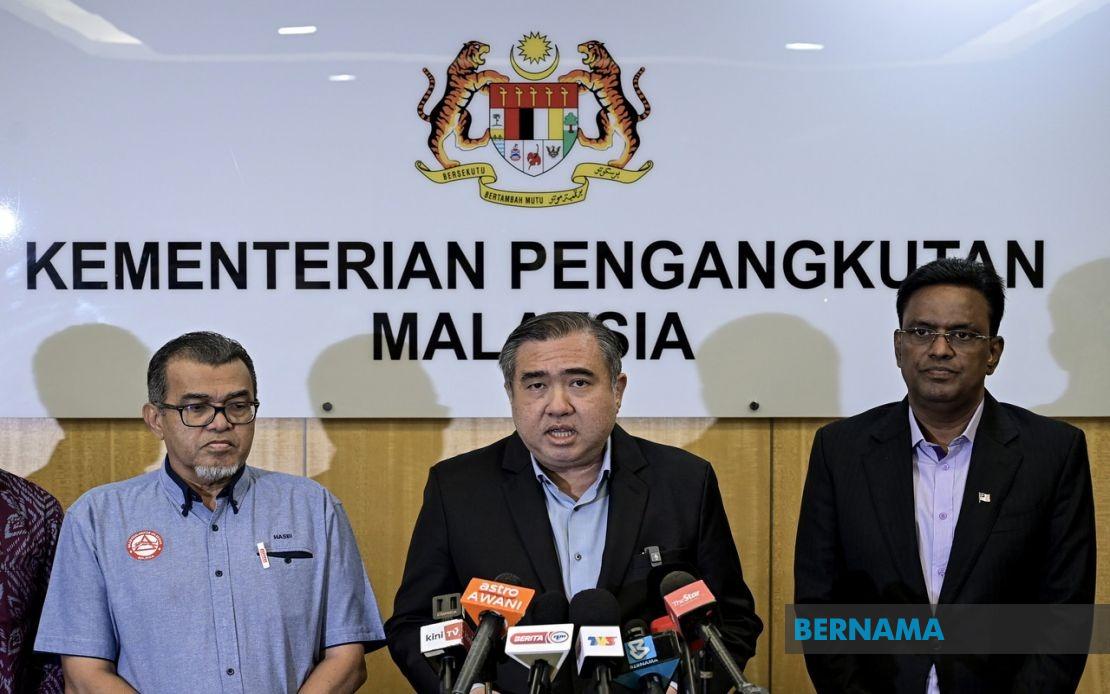
Malaysia's Cabinet has endorsed proposed amendments to the Road Transport Act 1987 that would fundamentally reshape how the justice system holds road offenders accountable for their actions. Under the new framework, courts would gain authority to impose compensation orders on drivers convicted of serious traffic offences, marking a shift toward victim-centred justice within the criminal process. Transport Minister Anthony Loke announced the Cabinet's in-principle approval on Wednesday, signalling the government's commitment to strengthening protections for accident victims and their families.
The amendment represents a meaningful expansion of the justice system's toolkit for road safety enforcement. Rather than limiting penalties to imprisonment, fines, and driving bans, courts would consider the circumstances of each incident and determine appropriate compensation based on factors such as the severity of the offence, the injuries sustained, financial losses incurred, and the offender's financial capacity. This individualised approach reflects growing international recognition that standardised penalties may inadequately address the real harm experienced by victims and their families. The compensation mechanism would operate as an additional layer of accountability, working in tandem with existing criminal penalties rather than replacing them.
The proposed reforms would extend across a range of driving offences that result in significant harm. Driving under the influence of alcohol or drugs, reckless driving, and similar conduct that endangers road users would all potentially trigger compensation requirements. This breadth indicates that the government views the compensation obligation as relevant whenever driver negligence or misconduct causes documented injury or loss. The inclusion of multiple offence categories reflects Malaysia's ongoing struggle with road safety, where alcohol-impaired driving and aggressive driving remain persistent contributors to fatalities and serious injuries. By tying compensation directly to the judicial determination of fault, the amendments create an incentive structure that complements educational and preventive road safety initiatives.
A critical dimension of the proposal involves protecting existing victim remedies within the civil and insurance systems. The amendments explicitly preserve the right of victims and their families to pursue insurance claims and launch separate civil proceedings against defendants. This layered approach acknowledges that criminal compensation orders and civil recovery mechanisms serve different purposes and may address different aspects of harm. Insurance protection remains unaffected, and affected parties retain full latitude to pursue all available legal channels for recovery. This carefully balanced architecture prevents the criminal compensation mechanism from displacing private law remedies that may yield more substantial or comprehensive recovery in complex cases.
The government has established a methodical implementation pathway to refine the proposal before formal legislative drafting occurs. The Ministry of Transport plans to conduct extensive engagement with relevant stakeholders, including other government agencies, insurance industry representatives, and specialist organisations. These consultation sessions will address practical operational questions that remain unresolved in the current framework. The scope of eligible cases, the precise definition of serious injury, and procedures for situations where offenders lack financial capacity to pay all represent areas requiring detailed exploration before legislative proposals reach Parliament.
The timing reflects both the government's legislative ambitions and the complexity of the reform. The Ministry aims to present the bill during the year-end parliamentary session, contingent upon completing the drafting and stakeholder consultation phases. This schedule demonstrates confidence in the proposal's direction while acknowledging that legislative quality depends on thorough preparation. The commitment to parliamentary deliberation through a special select committee indicates the government's intention to build cross-party consensus around road safety reform, recognising that effective traffic law depends on broad political support rather than narrow partisan backing.
Loke emphasised that the compensation element would function as an additional consequence rather than a substitute for traditional punishments. Custodial sentences, fines, and driving disqualifications would continue to apply with full force, while compensation orders would layer on further accountability. This additive approach prevents the criminal justice system from inadvertently reducing penalties in practice while introducing victim compensation. The emphasis on cumulative consequences reflects the government's view that serious traffic offences warrant multiple forms of accountability that address different aspects of wrongdoing. The offender's conduct still warrants traditional punishment reflecting societal disapproval, while the victim's harm warrants direct financial responsibility.
A significant procedural constraint affects implementation timing: the amendments would apply only to offences committed after the legislation passes Parliament, respecting the fundamental legal principle against retrospective application. This limitation means that the reform's impact will gradually accumulate as cases involving post-enactment conduct work through the courts, likely requiring several years before the full effects become apparent in judicial practice. The prospective-only approach also avoids reopening settled cases or creating unfair situations where defendants face penalties not in effect when their conduct occurred, protecting due process principles while enabling clean implementation going forward.
The proposal reflects Malaysia's evolving approach to victim protection and road safety governance. While many jurisdictions employ victim compensation funds or mandatory restitution schemes, the court-determined approach advanced here emphasises individualised assessment of harm and offender capacity. This reflects judicial values emphasising the importance of case-specific factors rather than formulaic responses. For Malaysian readers concerned about traffic safety, the reform suggests recognition that traditional enforcement mechanisms alone have not achieved desired road safety outcomes, prompting exploration of accountability mechanisms that more directly connect offender consequences to victim recovery.
The insurance industry's involvement in stakeholder consultations suggests awareness that comprehensive compensation reform must accommodate existing business models and risk distribution mechanisms. Malaysian insurers will need clarity on how court-ordered compensation interacts with coverage obligations, claims procedures, and subrogation rights. These practical questions lack obvious answers and require careful negotiation between judicial, regulatory, and commercial interests. The government's commitment to consulting insurers indicates recognition that broad-based implementation requires industry cooperation and that compensation reform cannot succeed through judicial innovation alone.
For Malaysian families affected by serious road accidents, the proposal potentially means greater access to compensation through criminal proceedings, reducing reliance on civil litigation with its inherent uncertainties and delays. However, the actual impact depends entirely on judicial implementation once the amendments take effect. Judges will need to develop consistent approaches to determining compensation levels across varying offence circumstances and victim situations, a task requiring guidance and training. The government's legislative process will shape these implementation dynamics, though ultimate effectiveness depends on judicial commitment to the reform's victim-protective objectives.
The proposal also carries implications for Malaysia's regional standing on traffic safety. Many Southeast Asian nations grapple with elevated road fatality rates, and Malaysia's willingness to experiment with victim-centred accountability mechanisms may influence neighbouring countries' policy discussions. The focus on compensation alongside punishment reflects emerging global standards recognising that traffic law serves not only retributive purposes but also victim recovery and restitution. By advancing this framework, Malaysia signals alignment with international best practices while responding to domestic demands for justice and accountability in the context of road trauma.

