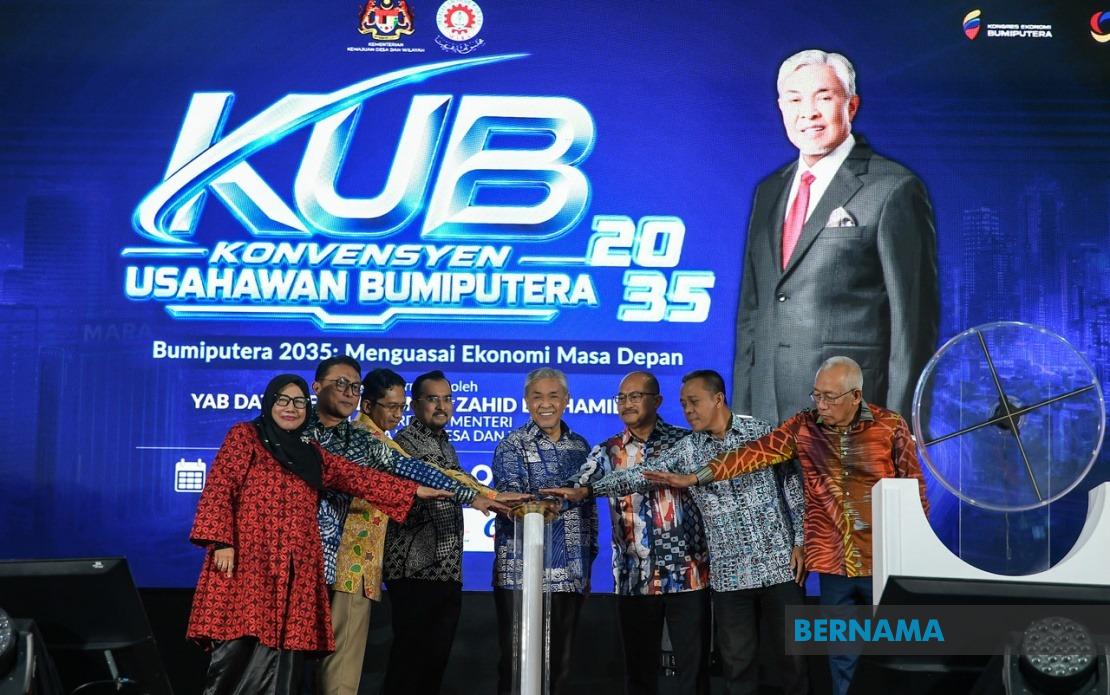
Deputy Prime Minister Datuk Seri Dr Ahmad Zahid Hamidi has signalled a strategic pivot in how Malaysia's government views Bumiputera entrepreneurship, moving the focus from simply ensuring participation in the economy towards fostering genuine business ownership and expansion. Speaking at the closing ceremony of the Bumiputera Entrepreneurs Convention (KUB) 2035 Declaration in Alor Setar on August 27, Ahmad Zahid articulated a vision where Bumiputera entrepreneurs graduate from being participants within existing economic structures to becoming proprietors and sector leaders capable of competing at scale.
The Deputy Prime Minister, who also holds the portfolio of Rural and Regional Development Minister, framed the transition as a natural evolution rather than a departure from existing policy. Decades of government effort have established mechanisms ensuring Bumiputera participation across various industries, he explained, but the present moment demands acceleration towards genuine business control. This represents a recognition that participation without ownership leaves entrepreneurs vulnerable to economic volatility and limits their influence over strategic decisions within their sectors.
The government's role, according to Ahmad Zahid, will continue encompassing opportunity creation, ecosystem development, and expanded access to resources. However, he placed equal emphasis on the responsibility of entrepreneurs themselves to demonstrate courage, pursue expansion aggressively, and establish competitive advantages through value creation. This framing suggests a partnership model where state support becomes a catalyst rather than a substitute for entrepreneurial initiative.
To operationalise this transition, Ahmad Zahid outlined three foundational shifts required within the Bumiputera entrepreneurship ecosystem by 2035. The first involves integrating what currently remains a fragmented support structure, where financing, training programmes, and market access channels operate through disparate mechanisms. This fragmentation, he suggested, creates inefficiencies that disproportionately burden small and emerging enterprises lacking resources to navigate multiple bureaucratic processes simultaneously.
The second shift requires transforming the government's approach from simply producing entrepreneurs to actively growing existing ones. This distinction carries significant weight in Malaysia's context, where successive waves of entrepreneurship initiatives have generated new business registrations without necessarily creating sustainable, scalable enterprises. The emphasis on growth suggests a more intensive, long-term engagement with entrepreneurs beyond initial establishment phases.
Third, Ahmad Zahid stressed ensuring that national economic expansion directly strengthens local companies rather than allowing growth benefits to concentrate among foreign or larger established players. This reflects regional concerns about whether developing economies capture sufficient value from their expansion, particularly when foreign investment and multinational enterprises dominate key sectors. For Malaysia, strengthening local Bumiputera-led enterprises becomes both an economic and sociological priority.
The fragmentation of the current ecosystem warrants closer examination, as it illustrates systemic inefficiencies that Ahmad Zahid identified. Financing institutions operate under one regulatory framework, vocational and business training providers function independently, while market access mechanisms through government procurement or export promotion agencies follow separate pathways. An entrepreneur seeking comprehensive support must navigate multiple institutions, each with distinct application processes, eligibility criteria, and timelines. This fragmentation particularly disadvantages entrepreneurs from rural areas or those operating outside major urban centres, potentially explaining regional economic disparities.
Integrating these support mechanisms would theoretically enable an entrepreneur to access capital, receive targeted training, secure market connections, and receive mentorship through coordinated channels. Such integration requires institutional restructuring, data sharing protocols between agencies, and potentially new legislative frameworks. For Malaysian policymakers, the challenge involves coordinating across federal and state authorities, as some development functions remain devolved, complicating centralised ecosystem redesign.
The transition from producing to growing entrepreneurs reflects global best practices emerging from successful entrepreneurship ecosystems in Singapore, South Korea, and parts of India. Rather than distributing resources thinly across numerous nascent ventures, this approach concentrates support on enterprises demonstrating viability and growth potential. This requires developing stronger mechanisms for identifying high-potential ventures, providing intensive mentorship, and facilitating scale-up capital access. For Malaysia's Bumiputera entrepreneurship agenda, this could mean concentrating resources on perhaps ten to fifteen percent of ventures capable of achieving significant scale rather than spreading support across broader populations.
The emphasis on local company strengthening during economic growth touches on a structural concern within Southeast Asian economies generally. Foreign direct investment and multinational operations often capture disproportionate shares of growth benefits, leaving domestic enterprises operating in less profitable niches. Building countervailing Bumiputera enterprises requires not merely existence but genuine competitiveness. Ahmad Zahid's framing suggests the government will support this through procurement preferences, export promotion specific to Bumiputera ventures, and potentially protective measures in certain sectors deemed strategically important.
For Malaysian business practitioners and policymakers, Ahmad Zahid's address signals a recalibration of priorities that could reshape how entrepreneurship support is structured and delivered. The timeline to 2035 allows sufficient runway for institutional changes, though implementation speed will determine outcomes. Entrepreneurs operating in traditional sectors where Bumiputera participation remains limited may find expanded opportunities emerging from this new emphasis on ownership and control. Simultaneously, the shift towards growing fewer, larger enterprises rather than producing numerous smaller ones may squeeze opportunities for marginal operators unable to demonstrate significant growth potential.
The convention's declaration presumably enshrines these principles in formal commitments, though Ahmad Zahid's remarks emphasise that government resources and policy support must align with entrepreneurial ambition and competitive determination. This partnership framework acknowledges that Malaysia's economic future depends not merely on maintaining Bumiputera participation quotas but on cultivating genuinely capable, competitive enterprises capable of operating successfully in regional and global markets while remaining rooted in Malaysian ownership and control.

