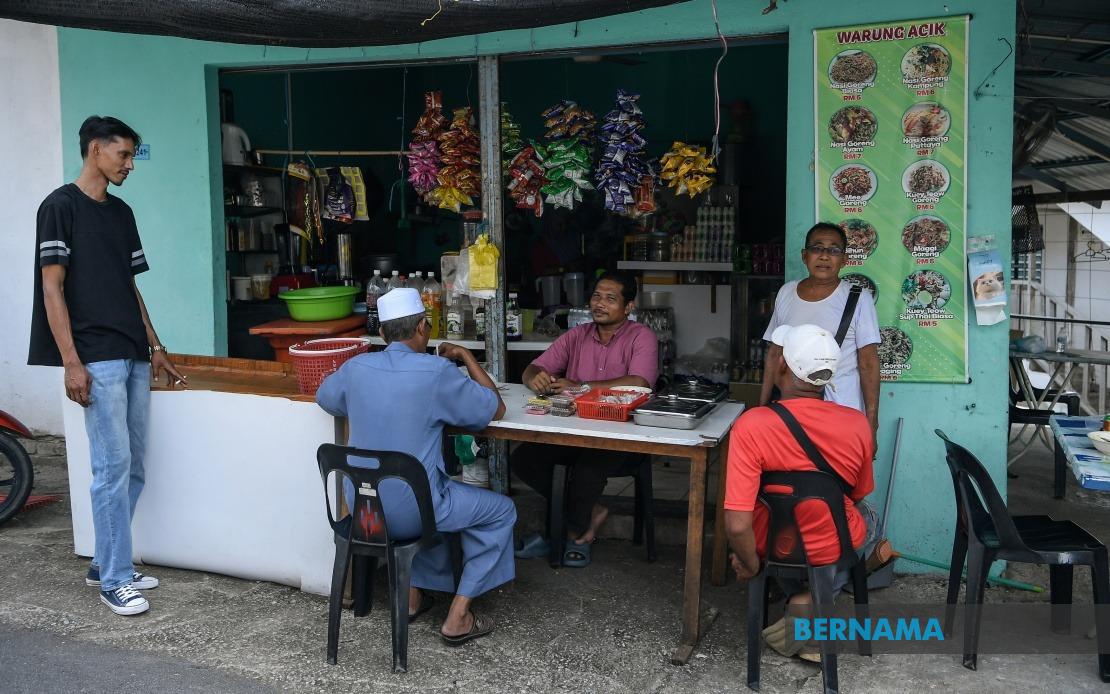
Residents of Bukit Malut in Langkawi have launched a concerted effort to combat deeply entrenched negative perceptions about their neighbourhood, particularly allegations suggesting the area functions as a settlement and entry point for refugees displaced from Myanmar. The community leadership contends that such claims are fundamentally without merit and have created a damaging stigma that affects residents' daily lives, their children's social experiences, and the settlement's broader reputation throughout the island district.
Mohamad Fadzli Abdullah, who chairs the Bukit Malut Neighbourhood Watch, emphasized that residents have endured years of baseless accusations whenever news emerges of irregular migrant arrivals in Langkawi. He described a pattern where authorities and media attention reflexively focus on Bukit Malut without substantive evidence, perpetuating a cycle of suspicion and misinformation. The neighbourhood watch leader articulated the frustration of residents who feel collectively blamed for immigration challenges affecting the broader Langkawi region, despite having minimal connection to such incidents.
Critically, Abdullah pointed to the strategic location of Bukit Malut as evidence contradicting smuggling allegations. The settlement sits in close proximity to Malaysian Maritime Enforcement Agency bases, Royal Malaysian Customs Department facilities, and Royal Malaysian Navy installations—a concentration of security infrastructure that would render clandestine maritime operations virtually impossible without detection. The presence of such authoritative oversight makes the claim that refugee landings routinely occur undetected in the area logically implausible and contradicted by operational realities on the ground.
Addressing another frequent allegation, Abdullah rejected claims that residents enforce entry restrictions or that Bukit Malut represents a security risk for visitors. He characterized such narratives as products of inaccurate reporting and social media circulation rather than factual observation. The neighbourhood watch leader emphasized that authorities maintain continuous security monitoring and that residents welcome public access to their neighbourhood, inviting scrutiny as a means of dispelling unfounded fears.
The demographic composition of Bukit Malut further undermines refugee settlement narratives. Approximately 85 per cent of residents work as fishermen, with the remainder engaged in legitimate commercial activities including trading, car rental operations, civil service, uniformed force employment, and professional roles across various sectors. This vocational profile reflects a working-class community with deep roots in Langkawi's maritime economy rather than a transient population of irregular migrants.
Hasanah Zakaria, a 42-year-old resident with over two decades of experience living in Bukit Malut, extended an invitation to members of the public and media to visit and directly observe community conditions rather than accepting unverified social media allegations. She characterized Bukit Malut as fundamentally identical to any other Malaysian village, with normal residential patterns and crime levels consistent with comparable settlements. The impact of stigmatization extends to family members: Hasanah described how her child's boarding school experience in Langkawi has been complicated by association with the settlement, though she actively encourages her offspring to disregard such prejudice and concentrate on academic achievement.
Abas Salam, aged 62, articulated the frustration of early settlers who established the community during its pioneer phase. Now representing over three decades of continuous residence in the Kampung Tanjung Lembung section of Bukit Malut, Salam has never encountered Myanmar refugees living in the area throughout his extended tenure. He emphasized that residents are overwhelmingly Malaysian citizens of Kedah Malay-Muslim heritage, not Rohingya or other foreign populations. Such distinctions matter considerably in the Malaysian context, where citizenship status carries significant legal and social implications.
Salam's historical perspective illuminates the community-building efforts undertaken by early residents who constructed homes, mosques, and religious schools with minimal external governmental or financial assistance during the settlement's formative period. This narrative of self-reliance and institutional development contrasts sharply with the transient, informal characteristics that typically characterize refugee encampments. Over subsequent decades, educational infrastructure and living standards have progressively improved, creating opportunities for younger generations to access formal schooling and professional advancement.
The stigmatization of Bukit Malut reflects broader challenges facing Malaysian communities adjacent to maritime zones and immigration enforcement priorities. Neighbourhoods located near ports, coastlines, and security installations frequently become subject to heightened scrutiny and associational narratives linking them to smuggling, trafficking, or irregular migration—patterns that can persist regardless of concrete evidence. Such stereotyping creates secondary social consequences distinct from actual security concerns, affecting property values, educational opportunities, and resident mobility throughout the broader region.
For Malaysian policymakers and media practitioners, the Bukit Malut case demonstrates the importance of evidence-based reporting regarding immigration-related claims and the potential harms caused by reflexive neighbourhood targeting. The concentration of security infrastructure surrounding the settlement actually supports residents' position that systematic monitoring would detect irregular landings. Community feedback suggests that accurate, site-specific investigation would more effectively serve both public interest and justice than perpetuation of unverified associations linking entire neighbourhoods to immigration violations.
The residents' campaign also highlights tensions between security imperatives and community reputation within Malaysia's administrative and social frameworks. While vigilance regarding irregular maritime activity remains legitimate governmental concern, blanket stigmatization of settlements near enforcement zones may actually complicate intelligence gathering and community cooperation by generating suspicion and defensiveness rather than collaborative civic engagement. Building trust between residents and authorities typically produces better security outcomes than externally imposed narratives of suspicion.
Moving forward, residents of Bukit Malut appear committed to public education campaigns and direct community engagement as mechanisms for counteracting entrenched misperceptions. The emphasis on inviting outside observation and facilitating personal experience represents a deliberate strategy to displace abstract social media allegations with concrete residential reality. Whether such grassroots efforts achieve meaningful shifts in Langkawi-wide perceptions will provide important lessons regarding community resilience and the reversibility of place-based stigmatization within Malaysian social contexts.

