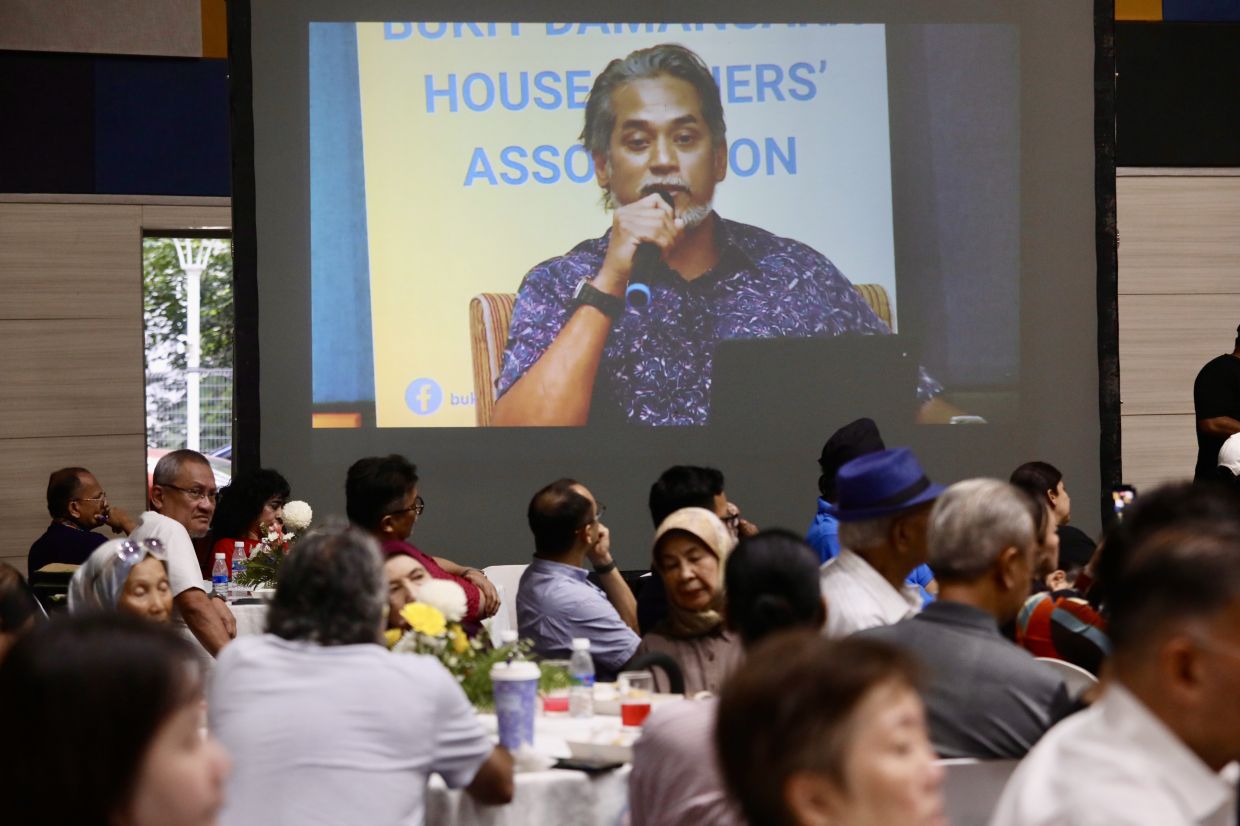
Residents of Bukit Damansara have mounted a formal challenge against a construction permit issued by Kuala Lumpur City Hall that would allow the renovation and vertical expansion of a semi-detached house into a three-storey structure. The protest took centre stage at a community town hall held at Pusat Komuniti Bukit Damansara, where approximately 400 neighbourhood residents gathered to voice concerns about the project and its implications for the residential character of their enclave.
The event marked the inaugural town hall under the leadership of newly elected Bukit Damansara Home Owners' Association president Khairy Jamaluddin, who took office in early August. Held under the theme "Your Voice Matters," the three-hour dialogue session brought together residents with officials from Kuala Lumpur City Hall's Planning Department and local law enforcement, creating a platform for direct community engagement on contentious neighbourhood issues.
At the centre of the dispute is a semi-detached residence that the City Hall approved for modification in December 2025, granting permission to add an extra storey that would transform the original double-storey design into a three-storey building. Resident A. Zakki, representing concerned neighbours, explained that the project contradicts the architectural uniformity that defines the neighbourhood. The community mounted a signature campaign that garnered opposition from 19 neighbouring households, all expressing reservations about the structural and aesthetic implications of the renovation.
The construction timeline reveals a pattern of regulatory inconsistency that has frustrated residents. Work proceeded until January 2026, when a stop-work order was issued in response to neighbourhood complaints. However, the project received renewed approval approximately two months ago in June, allowing construction to resume. Zakki noted that the building is currently about ten percent complete, with structural pillars already in place on the adjoining properties, raising immediate concerns about potential structural damage.
Physical damage to surrounding homes has emerged as a pressing concern alongside architectural objections. Residents have documented visible cracks appearing in adjacent houses, which they attribute directly to the construction activities. This structural deterioration underscores the material impact of the renovation beyond its visual effects on the neighbourhood's cohesion. Zakki articulated the community's position clearly: residents seek immediate withdrawal of the construction permit and a halt to all ongoing works.
City Hall Planning Department town planner executive director Rosli Nordin acknowledged the neighbourhood's grievances, committing that the department would document the issues residents face due to the renovation. However, Rosli did not immediately commit to permit withdrawal, instead suggesting that City Hall would consider the complaints within its regulatory framework. This cautious response reflects the tension between individual property rights and collective community interests in urban planning decisions.
Beyond the central renovation dispute, residents used the town hall to address several interconnected quality-of-life issues affecting the neighbourhood. Traffic congestion occurs with predictable regularity during school drop-off and pick-up periods, specifically from seven to seven-thirty in the morning and again from two to four in the afternoon outside SK Bukit Damansara and Stella Maris International School Damansara. Brickfields deputy police chief Supt Ahmad Firdaus Mustafia Kamal assured residents that traffic management measures were being implemented appropriately, though specifics were not detailed.
School representatives provided additional context on the traffic challenges. SK Bukit Damansara Parent-Teacher Association chairman Ameirul Azraie Mustadza reported that the association has repeatedly reminded parents about proper drop-off and pick-up protocols to reduce double-parking outside the school premises. While the association had considered engaging Rela, the volunteer civil defence corps, budgetary constraints prevented this initiative. Ameirul appealed for increased police presence, noting that traffic officers currently provide monitoring only on select days rather than daily oversight.
Infrastructure concerns also featured prominently in resident feedback. Multiple pipe burst incidents throughout Bukit Damansara have prompted calls for Air Selangor to conduct comprehensive inspections of the water distribution network. An Air Selangor representative acknowledged awareness of the recurring pipe failures and indicated that the company has formulated plans to replace the aging pipeline infrastructure serving the neighbourhood. Such deteriorating utilities point to broader maintenance gaps that extend beyond individual development projects.
Khairy characterised the town hall as an essential mechanism for bridging divides between residents and decision-making authorities. He portrayed the forum as an open space where community members can articulate local concerns directly and collaboratively develop practical solutions with government officials. Khairy committed to following up on the issues raised, pledging to expedite problem resolution across the various concerns surfaced during the dialogue.
The Bukit Damansara situation reflects broader tensions within Malaysian urban neighbourhoods where rapid development pressures encounter established residential communities seeking to preserve their character and quality of life. The renovation dispute, coupled with infrastructure and traffic challenges, illustrates how single development decisions can catalyse broader conversations about neighbourhood governance and resident consultation. For policymakers, the case underscores the importance of robust consultation mechanisms prior to permit approval, potentially preventing the costly regulatory reversals and community fractures that have emerged in this instance.
The outcome of this dispute may set important precedent for how Kuala Lumpur City Hall handles future renovation permits in established residential areas, particularly regarding the weight given to neighbourhood objections and architectural harmony concerns. As urban densification pressures intensify across Malaysian cities, the mechanisms through which communities can exercise influence over their physical environment become increasingly consequential for both development outcomes and social cohesion.

