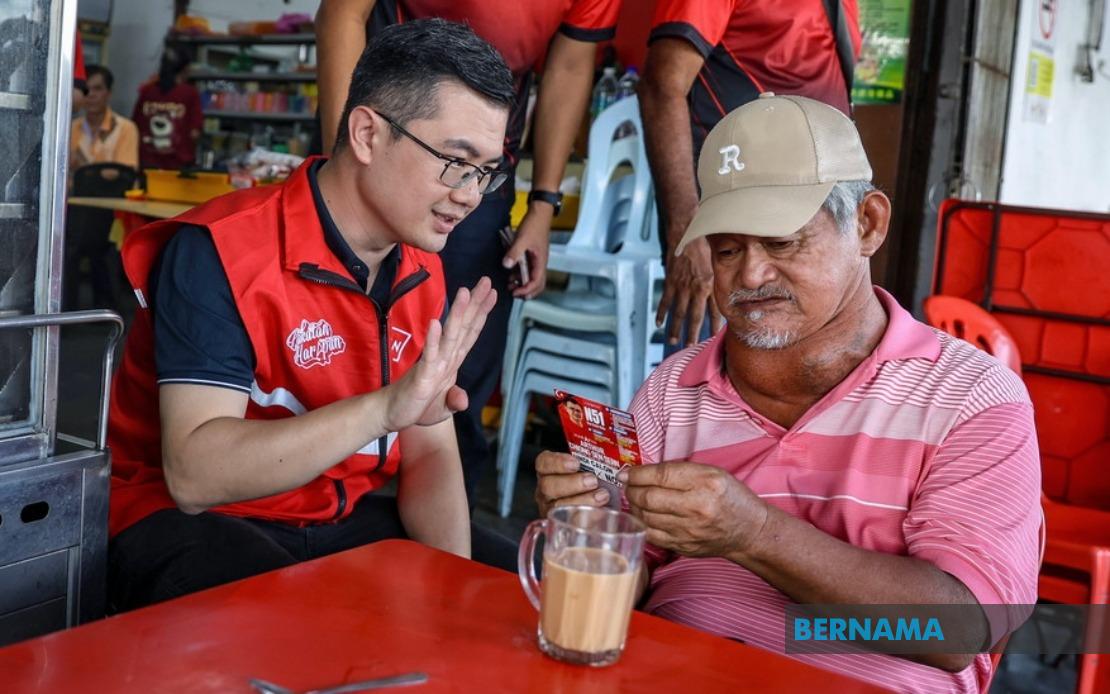
Arthur Chiong Sen Sern, the Pakatan Harapan candidate contesting the Bukit Batu state constituency in the Johor state election, has taken formal action against those responsible for damaging his campaign materials. The PKR politician lodged a police report at Air Bemban police station following incidents of vandalism targeting his campaign infrastructure across multiple sites in the constituency.
The sabotage incidents have affected the candidate's campaign presence in several residential areas. In Kampung Sri Paya, party flags bearing the PH symbol were deliberately thrown into a drain, while multiple campaign billboards were torn down in what appears to be a coordinated effort to disrupt his electioneering activities. The damage was discovered recently, prompting the decision to escalate the matter to law enforcement. A separate incident occurred in Taman Putri, where similar vandalism targeting billboards and party flags occurred, though the perpetrators remain unidentified at this stage.
Despite the frustration such actions would typically generate among candidates and party workers, Arthur has adopted a measured public response. Speaking at a press conference held at the Main Operations Room for his constituency headquarters, he expressed regret at what he characterised as irresponsible and treacherous conduct by unknown actors. Rather than allowing the incidents to derail his momentum, the candidate emphasised his commitment to pressing forward with campaign activities regardless of the provocation faced.
The timing of these sabotage incidents underscores the increasingly contentious nature of the Johor state election campaign as polling day approaches. The Bukit Batu seat has evolved into a notably competitive contest, with five candidates vying for voter support. Beyond Arthur representing Pakatan Harapan through the People's Justice Party platform, the race includes R. Kumaran standing for the Barisan Nasional coalition via the Malaysian Indian Congress, M. Premanand campaigning as a MUDA representative, G. Tamili representing Bersama, and Kamaruzaman Ali contesting as an independent candidate. This five-way split presents both opportunities and challenges for each contender.
Arthur's call for elevated standards in political conduct reflects broader concerns about campaign ethics during the Johor election period. He publicly urged all competing parties and candidates to embrace mature democratic practices, emphasising the importance of conducting campaigns in a harmonious manner that eschews hostile or deceptive tactics. Such appeals are particularly significant in a state where political competition has historically been intense, and where maintaining electoral integrity remains crucial for public confidence in the democratic process.
The incident also highlights vulnerabilities in campaign infrastructure that candidates must manage during election periods. Political parties typically invest considerably in billboard placement, flag installations, and other visible campaign materials designed to maintain voter awareness and demonstrate organisational reach throughout constituencies. When such materials are systematically damaged, it not only represents financial loss but also disrupts the strategic communication efforts candidates rely upon to reach voters in their target areas.
Police investigation into the sabotage will be important in determining whether these incidents represent isolated acts of mischief or part of a more systematic campaign of intimidation. The involvement of law enforcement lends official credibility to Arthur's grievances and creates a formal record of the incidents, potentially facilitating identification of perpetrators through evidence collection and witness statements. Authorities will likely examine CCTV footage from the affected areas and interview residents who may have witnessed the vandalism.
The broader Johor state election remains a significant political contest with substantial implications for state governance and coalition dynamics in Malaysia's southern region. With polling day set for July 11 and early voting scheduled for July 7, the campaign period is entering its final intensive phase. A total of 172 candidates are contesting across all 56 state assembly seats, making this a comprehensive electoral exercise that will determine the composition of the Johor state legislature.
For Pakatan Harapan, Bukit Batu represents one of several constituencies where the coalition is attempting to expand or maintain its foothold in Johor. The presence of alternative opposition candidates from MUDA and Bersama, alongside the independent contestant, fragments the anti-BN vote in ways that could either benefit or disadvantage PH depending on local voter preferences. Arthur's campaign will need to consolidate support among voters seeking change while competing against experienced representatives from Barisan Nasional, which has governed Johor for extended periods and maintains significant machinery advantages.
The sabotage incidents may inadvertently draw additional media attention to the Bukit Batu contest, potentially benefiting Arthur's campaign by increasing visibility and generating sympathy among voters opposed to such tactics. Political sabotage and election-related violence or vandalism typically generate public disapproval when documented, potentially mobilising voters who prioritise democratic fairness and orderly conduct of elections. How the candidate leverages these incidents in his remaining campaign messaging could prove influential in the final weeks before polling.
Moving forward, Arthur and other candidates will likely increase security measures protecting their campaign assets, including more frequent monitoring of billboard locations and potentially coordinating with community leaders to report suspicious activities. The police investigation will provide important signals about electoral security and the authorities' commitment to protecting candidates from harassment during the campaign period. For Malaysian voters observing the Johor contest, these incidents serve as reminders of the importance of vigilant electoral oversight and civic engagement in maintaining democratic standards.

