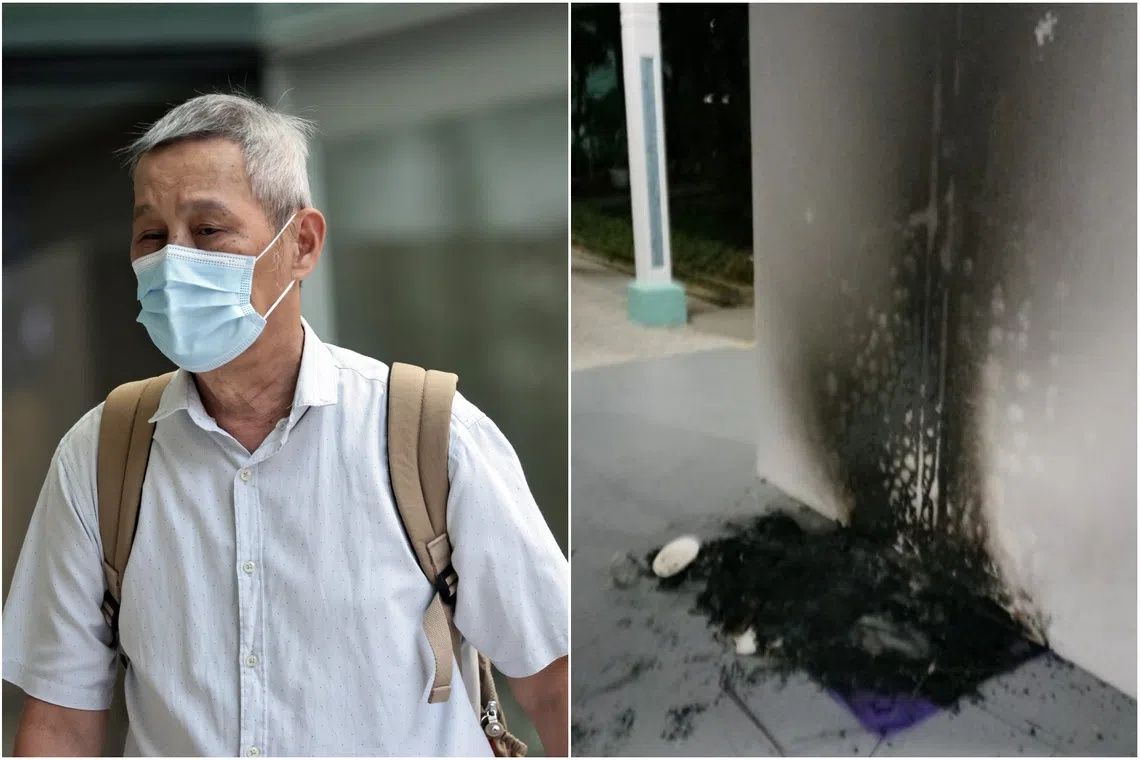
A Bukit Batok retiree has been handed a three-month prison sentence after deliberately igniting cardboard structures erected to shelter stray cats near his residential block, resulting in property damage exceeding S$900. Koh Teng Boo, 68, pleaded guilty to committing mischief by fire in Singapore's subordinate courts on Tuesday, August 4, facing consequences for his repeated acts of arson targeting the feline welfare installations.
The controversy centred on cardboard cat houses that appeared around a pavilion and void deck in the Bukit Batok East Avenue 4 vicinity beginning in September 2025. These structures, maintained with food and water supplies, functioned as sanctuaries for stray and community cats in the public housing estate. The presence of these shelters, however, generated friction with at least one resident who harboured mounting frustrations about their placement and perceived consequences.
Koh's grievances stemmed from ecological and sanitary concerns rather than animosity towards the animals themselves. He observed that the cat houses attracted birds to the vicinity and claimed the cardboard constructions functioned as pest magnets, creating conditions he deemed unhygienic for the residential community. Rather than accepting the situation, he escalated his complaints through official channels, approaching his Member of Parliament with detailed objections about the appropriateness of maintaining such installations in a shared residential space.
Disgusted by what he perceived as official inaction, Koh embarked on his destructive campaign in October 2025, throwing three cat houses into an incense burner bin and igniting them. Deputy Public Prosecutor Stephen Yeo explained that this initial act reflected Koh's frustration that no visible remedial steps had been undertaken despite his parliamentary intervention. Yet the removal of three shelters proved temporary; fresh cat houses materialised around the block within two days, suggesting either replacement efforts or renewed construction by animal welfare advocates.
Undeterred by his initial arson, Koh pursued his grievance again through official means. On November 17, 2025, he visited his MP a second time, reiterating his concerns with added emphasis on hygiene standards. He stressed that his opposition centred on the practice itself rather than malice towards cats, yet he remained troubled by what he characterised as unsanitary conditions. He further complained that residents were depositing refuse into the cat houses, compounding the litter problem in the common areas.
Frustration boiling over into criminal action, Koh resumed his incendiary activities in the early hours of November 19, 2025. Returning home after consuming alcohol around 1.30 in the morning, he ignited another cat house with a lighter before departing the scene, leaving the fire unattended. The outcome of this abandoned blaze remains undocumented in official records, with no investigation determining precisely when or through what means the fire was extinguished.
Undeterred by this second incident, Koh struck again the following day, November 20, 2025, setting fire to yet another shelter. This time, two witnesses intervening as passersby discovered the burning structure and acted to suppress the flames, preventing potential escalation. His persistent arson campaign ended shortly thereafter when authorities apprehended him later that same day, bringing his destructive streak to a halt through police intervention.
The material consequences of Koh's actions were calculated with precision by the Jurong-Clementi-Bukit Batok Town Council, which itemised S$913 in necessary repairs to flooring and wall surfaces adjacent to the incinerated cat houses. This expense reflected damage to the broader communal infrastructure rather than loss of the cardboard structures themselves. Significantly, Koh demonstrated financial responsibility by completing full restitution to the town council following his arrest, acknowledging monetary liability even as he contested the legitimacy of the cat welfare installations.
From a legal perspective, Koh's offence carries substantial potential penalties. Singapore law prescribes that persons committing mischief by fire with intent to damage property face imprisonment extending up to seven years and financial fines, making his three-month custodial sentence a moderate disposition within the statutory framework. The relatively lighter sentencing possibly reflected mitigating factors including his guilty plea, advanced age, clean record, and swift financial compensation.
This case illustrates broader tensions within high-density urban residential environments where animal welfare initiatives intersect with community concerns about hygiene, pest management, and shared space usage. Public housing estates like Bukit Batok house diverse populations with competing priorities and philosophies regarding animal care in common areas. The episode exposes the challenges authorities face mediating between residents opposed to animal welfare projects and those advocating for stray cat protection, particularly when grievances escalate into criminal conduct.
For Malaysian observers, the Singaporean precedent underscores how unresolved neighbourhood disputes can metamorphose into serious offences with legal consequences. The case demonstrates that criminal responsibility attaches firmly to those destroying property, regardless of subjective justifications about environmental or sanitary concerns. It similarly highlights that official channels for complaint—parliamentary representation, administrative recourse—provide appropriate forums for addressing grievances rather than self-help remedies involving property destruction.

