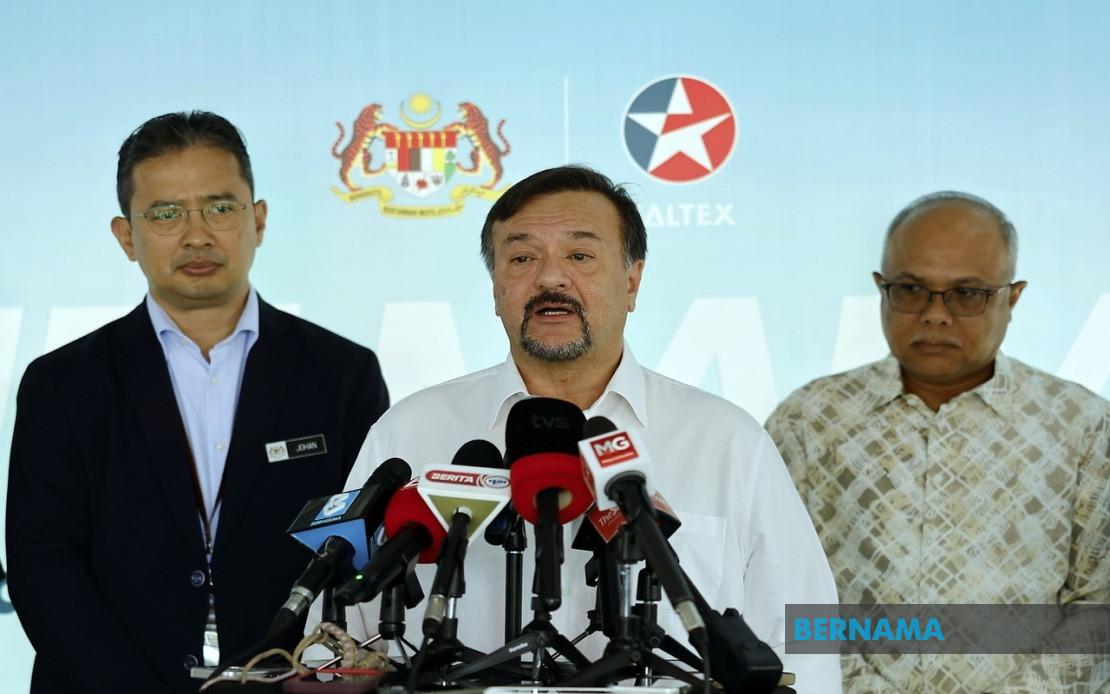
Malaysia's consultation phase for the 2027 Budget has officially commenced across the country, according to Finance Minister II Datuk Seri Amir Hamzah Azizan. The Ministry of Finance is collaborating with relevant government departments to solicit feedback and proposals from various stakeholders and sectors, with the comprehensive budget package expected to be presented to Parliament in October. The nationwide engagement approach underscores the administration's commitment to crafting a budget that reflects diverse economic interests and regional considerations across the nation.
Amir Hamzah made the announcement after observing the BUDI Diesel programme at a petrol station in Putrajaya, indicating that budget formulation encompasses not only macroeconomic targets but also practical government initiatives affecting consumers and businesses. His remarks reveal a deliberate tempo in budget preparation—rather than rushing to completion, the government is building comprehensive input from multiple agencies to ensure the 2027 allocation reflects current economic conditions and forward-looking policy priorities.
The finance ministry's approach centres on the MADANI Economy framework, which has become the governing philosophy for Malaysia's medium-term fiscal strategy. This framework operates on a dual mandate: strengthening competitiveness and innovation at the upper end of the economy while simultaneously expanding opportunity and support systems at the foundation. This dual-ceiling-and-floor approach attempts to address Malaysia's persistent income inequality and productivity challenges while maintaining the nation's standing in global competition. For Malaysian policymakers, this represents a deliberate pivot from trickle-down assumptions toward more direct intervention in creating broad-based prosperity.
The 2027 Budget will necessarily integrate several recently crystallised government strategies that collectively shape Malaysia's development trajectory. The 13th Malaysia Plan provides the overarching medium-term framework for national development priorities. The National Semiconductor Strategy signals the government's determination to capture high-value manufacturing segments within the global electronics supply chain—a critical opportunity given Malaysia's established electronics industry and regional positioning. The National Energy Transition Roadmap addresses the parallel imperatives of economic growth and environmental sustainability, reflecting both international climate commitments and Malaysia's need to reduce fossil fuel dependence while maintaining energy security and affordability.
These interlocking strategies create complexity for budget architects. Semiconductor ambitions require substantial investment in research infrastructure, workforce development, and potentially incentives for foreign and domestic investors. Energy transition involves transitioning power generation portfolios, managing stranded assets in conventional energy sectors, and ensuring industrial competitiveness during the transition. These commitments must be balanced against immediate social spending pressures, debt servicing obligations, and the fiscal space available after revenue collection. The engagement sessions represent an attempt to forge consensus around difficult trade-offs rather than impose top-down decisions.
Amir Hamzah carefully refrained from disclosing specific budget allocations or policy announcements, stating his preference not to pre-empt the formal October presentation. This restraint reflects both parliamentary convention and political strategy—controlling the narrative around a major budget requires careful timing and presentation. However, his public confirmation of the MADANI Economy framework's continuing centrality provides substantive guidance to markets, businesses, and civil society organisations seeking to anticipate government direction. The consistency he emphasised—that the budget will remain grounded in established frameworks rather than introducing disruptive new directions—itself constitutes reassuring information for planning purposes.
Context from the 2026 Budget illuminates the scale of Malaysia's fiscal operations and allocation priorities. The 2026 allocation totalled RM419.2 billion, with RM338.2 billion directed to operating expenditure covering salaries, administrative costs, and ongoing programmes, while RM81 billion supported development projects including infrastructure, equipment, and capability building. Beyond the direct budget, the government mobilised an additional RM50.8 billion from government-linked investment companies, statutory bodies, and public-private partnerships. This figure reveals the importance of off-budget mechanisms in Malaysia's development finance—traditional budget constraints are supplemented through state-owned enterprises and quasi-governmental vehicles that operate with greater flexibility in capital deployment and risk-taking.
For Malaysian businesses and investors, the ongoing consultations signal that budget formation reflects not merely technical economics but political deliberation. The engagement sessions provide formal channels through which industry associations, trade unions, state governments, and civil society organisations can present cases for sectoral support or programme adjustments. Companies dependent on government contracts or incentive schemes benefit from understanding which agencies are advocating for their sectors. State governments anticipate what federal transfers may be available for their development priorities. This consultative approach, while extending the budget timeline, typically produces more durable allocations enjoying broader stakeholder support.
The government's commitment to achieving developed-nation status by 2030 provides the ultimate anchor for the 2027 Budget's ambitions. This target—now less than six years distant—requires sustained productivity growth, rising per-capita incomes, and structural economic transformation. The World Bank's classification thresholds for developed status rest partly on per-capita income metrics and institutional capacity measures. Malaysia's progress depends significantly on whether the 2027 Budget and subsequent allocations effectively mobilise resources toward high-productivity sectors, human capital development, and governance improvements. The semiconductor and energy transition strategies represent specific channels through which these objectives might be advanced.
Regional dimensions also warrant consideration. Southeast Asian peers including Vietnam, Thailand, and Indonesia are pursuing similar strategies to climb global value chains and diversify from commodity dependence. Malaysia's budget choices—particularly around semiconductor investment, digital infrastructure, and skilled workforce development—will influence the nation's competitive position within the region. Budget decisions that mobilise private investment through pragmatic public-private arrangements may prove more consequential than pure government spending, given the region's dynamic business environment and capital availability.
The October presentation will reveal whether the consultation process yielded material shifts in budgetary priorities or largely confirmed existing trajectories. Budget speeches typically include rhetorical flourishes and symbolic allocations alongside substantive fiscal measures. The true test will lie in implementation—whether promised allocations reach implementing agencies on schedule, whether off-budget mechanisms genuinely mobilise supplementary resources, and whether the MADANI Economy framework translates into tangible improvements in business competitiveness and household opportunity. The consultation phase underway now establishes baseline expectations that the October announcement will either exceed or disappoint.

