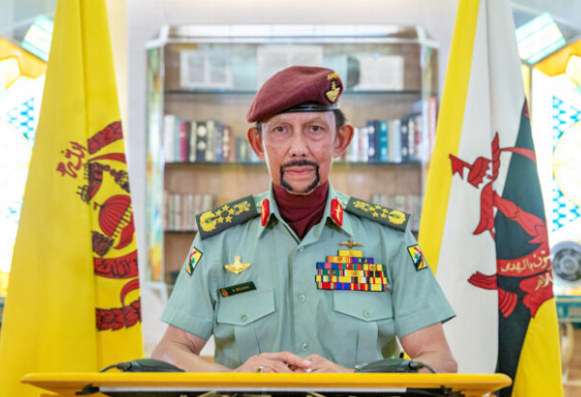
Sultan Hassanal Bolkiah has used the Islamic New Year 1448 Hijrah as an occasion to call for renewed commitment to national progress, stressing that meaningful advancement requires sustained dedication across both material and spiritual dimensions. In his address marking the occasion, the Brunei monarch articulated a comprehensive vision for the nation that balances economic development and infrastructure with religious education and moral fortitude, positioning these as complementary rather than competing priorities.
The Sultan's message reframes how societies should approach annual milestones, suggesting that the turn of the new year should catalyse a deeper examination of existing commitments rather than serve as a prompt to initiate fresh endeavours. This philosophical distinction underscores his emphasis on continuity and perseverance—themes particularly resonant across Southeast Asia, where nations like Malaysia, Indonesia and Singapore similarly grapple with maintaining momentum in development programmes whilst preserving social cohesion. The monarch identified the material sphere as encompassing economic vitality and physical infrastructure, while defining the spiritual realm to include intellectual advancement, formal education and dakwah, or the propagation of Islamic teachings.
Central to the Sultan's remarks was acknowledgement of the turbulent global environment, where armed conflicts persist across multiple regions and their humanitarian consequences ripple outward. He noted that warfare produces suffering that transcends geographical and political boundaries, affecting civilian populations regardless of which side they inhabit. This sobering assessment serves as a backdrop to his expression of gratitude for Brunei's continued peace and freedom from major natural disasters—conditions that many commentators attribute to the sultanate's strategic geographic position and the authority's ability to maintain internal stability. For Malaysian observers, the contrast is particularly instructive, given the region's susceptibility to phenomena ranging from haze pollution to flooding, which periodically disrupt economic activity and daily life.
Yet the Sultan's satisfaction with Brunei's external security and environmental resilience was tempered by domestic concerns, particularly surrounding criminal activity. He specifically identified drug-related offences, theft and other crimes as erosive forces that diminish national reputation and contradict Islamic principles. This acknowledgment reflects a pragmatic understanding that prosperity and stability remain incomplete if undermined by lawlessness. The issue carries particular relevance for other Southeast Asian nations, where drug trafficking remains a transnational challenge requiring coordinated enforcement and prevention strategies. The Sultan's framing of crime as a religious and moral failure, rather than merely a legal matter, reflects Brunei's Islamic governance framework and suggests an integrated approach to public safety.
In response to these criminological challenges, the Sultan called for expedited and coordinated action from government agencies responsible for security and religious instruction. He specifically elevated the role of the religious sector, arguing that strengthened Islamic education and outreach programmes could nurture societal awareness and foster individual resistance to drug use and other unlawful behaviour. This approach aligns with evidence from crime prevention studies suggesting that community-based and faith-centred interventions can complement conventional law enforcement. For Malaysia, where the government has similarly invested in rehabilitative and educational approaches to drug dependency, the Sultan's emphasis on religious instruction as a preventive tool merits consideration within ongoing policy debates.
The monarch further emphasised that collective spiritual vigilance—expressed through prayer, remembrance of Allah and conscious rejection of complacency—constitutes an essential component of national security. This fusion of faith-based resilience with institutional responsibility reflects a worldview wherein religious devotion and governmental action operate synergistically. He explicitly cautioned against negligence and apathy, implicitly arguing that a population engaged in continuous self-examination and spiritual practice is more likely to resist criminal temptation and support enforcement efforts. The concept of shared responsibility for the ummah, or Muslim community, extends beyond governmental structures to encompass family units and individual believers, creating a distributed accountability framework.
Brunei's particular context—a small, wealthy sultanate with a relatively homogeneous Muslim population and significant petroleum revenues—shapes the applicability of the Sultan's message to the broader Southeast Asian region. However, the underlying principles regarding the integration of material development with spiritual vitality resonate across Muslim-majority nations in Southeast Asia. Indonesia, Malaysia and Brunei share historical, cultural and religious commonalities that make cross-national lessons instructive, particularly concerning the balance between modernisation and Islamic values, a tension evident in policy discussions spanning everything from education curriculum to financial regulation.
The royal family's extension of New Year wishes to both citizens and residents signals inclusive national sentiment, acknowledging that Brunei's stability and prosperity depend upon the contributions of migrant workers and foreign residents alongside the indigenous population. This recognition carries significance in a region where labour migration patterns significantly influence demographic composition and economic output. For Malaysia, which hosts several million migrant workers, similar questions regarding social integration and collective responsibility warrant ongoing attention.
Fundamentally, the Sultan's address articulates a governance philosophy wherein the state's role encompasses not merely the provision of security and economic opportunity but also the cultivation of moral and spiritual consciousness. This holistic approach to statecraft—emphasising values alongside infrastructure, and collective responsibility alongside individual effort—offers perspective for other regional leaders contending with the challenges of rapid modernisation, social diversity and external instability. The emphasis on constant vigilance and renewed commitment, rather than complacency born of past achievements, constitutes a call to sustained national exertion that transcends the ceremonial occasion of the Islamic New Year.

