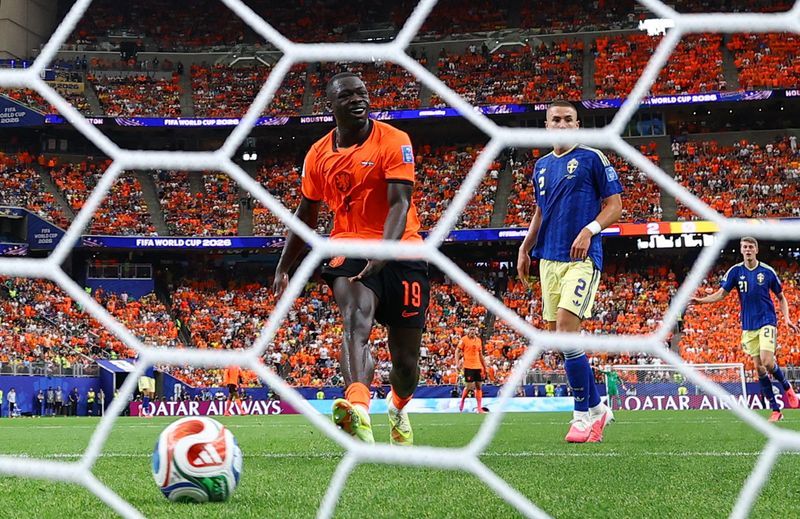
Ronald Koeman's tactical gamble paid handsome dividends on Saturday when the Netherlands demolished Sweden 5-1, a remarkable turnaround that vindicated the coach's decision to make bold attacking changes after drawing criticism for his substitutions in the opening match. The Dutch manager had faced considerable scrutiny following the 2-2 stalemate with Japan in Dallas, where observers felt his in-game adjustments failed to elevate the team's performance. Yet Koeman demonstrated the mercurial nature of football management by earning widespread plaudits just seven days later, a testament to how swiftly fortunes shift in the sport based on results and tactical execution. His controversial selection of Brian Brobbey as the focal point of the Dutch attack proved to be a masterstroke, transforming the 24-year-old into an unlikely protagonist in Netherlands' group stage success.
Brobbey's clinical finishing in the opening 17 minutes, where he netted twice, immediately established the dominance that would characterise the entire encounter against Sweden. These early strikes served as a launching pad for the Netherlands' overwhelming second-half performance, effectively settling the contest before halftime and allowing Koeman's side to control proceedings with increasing confidence. The dual-goal display represented far more than mere statistics in the team sheet; it announced Brobbey's arrival as a genuine contender for the primary striker role that the Dutch have sought to fill for some time. His willingness to operate intelligently in attacking positions, combining physical presence with technical awareness, created multiple opportunities for teammates and demonstrated the multidimensional skill set required at the highest level of international football.
The path to Saturday's breakthrough had been uncertain and circuitous for Brobbey, who found himself marginalised in recent squad selections and absent from the national setup for an extended period. His exclusion from qualifiers for the 2026 World Cup suggested the coaching staff viewed him as a peripheral figure, yet his recall to the squad in March signalled a reassessment of his potential. This redemption narrative gained considerable momentum through his stint in English football, where a season at Sunderland in the Premier League exposed him to a more competitive domestic environment. The demanding nature of English football's intensity and pace appeared to sharpen Brobbey's instincts as a striker, adding layers of sophistication to his game that had previously been questioned by critics and selectors alike.
Brobbey himself articulated this evolution in his abilities during conversations with media representatives at the Dutch training base earlier this month, explaining that his development transcended the stereotypical profile of a physical centre-forward. Rather than relying solely on the muscular contests typical of the position, he emphasised his improved capacity to make intelligent off-the-ball movements, detecting passing lanes and positioning himself strategically to receive possession in dangerous areas. His willingness to operate deeper in the attacking formation, moving beyond the traditional idea of a number nine planted in the penalty box, demonstrated sophisticated understanding of contemporary offensive football. These attributes collectively represent the evolution that modern strikers require, particularly for a team like the Netherlands that values technical excellence and positional fluidity across all outfield areas.
The support infrastructure available to whoever operates as the Dutch lead attacker provides substantial encouragement for Brobbey's continued development in the role. Cody Gakpo's creative menace from the left flank, combined with the aggressive overlapping runs by fullback Denzel Dumfries on the opposite wing, ensures consistent opportunities for an alert striker. The addition of Crysencio Summerville to the attacking unit further enriches the Netherlands' offensive options, creating a sufficiently well-stocked inventory of playmakers and creative facilitators that any competent finisher should flourish. This abundance of supply contrasts sharply with the situation facing Memphis Depay, whose status as the recognised lead attacker has been complicated by a prolonged injury layoff that has diminished his sharpness and match fitness.
The comparison with Depay, who holds the distinction of being the Netherlands' all-time leading international goalscorer, is both inevitable and instructive. Depay's accumulated body of work for his country demands respect, yet the physical demands of recovery from significant injury and the natural ageing process have created a window of opportunity for emerging talent. Brobbey's demonstrated capacity to convert chances with clinical precision, allied with the physical vitality that comes with youth, positions him as a viable alternative to a player who has served the Dutch exceptionally well over many years. The transition between eras of Dutch football represents a complex negotiation between honouring established figures and embracing fresh talent capable of sustaining competitive performance over an extended period.
From a Malaysian and Southeast Asian perspective, Brobbey's emergence as a leading candidate for the Dutch striker position holds tangible relevance to regional football audiences following European club structures and international competitions. The pathway demonstrated by a player rehabilitating his reputation through overseas football in English football, subsequently translating that improvement into international recognition, mirrors experiences encountered by talented Asian players who seek elevation through European clubs. Brobbey's story reflects broader global football dynamics where domestic league performance increasingly determines international selection, a principle that resonates across football confederations regardless of continental boundaries. The Netherlands' pragmatic approach to squad management, demonstrated through their willingness to reassess and reintegrate players who have improved their performances, offers instructive lessons for football programmes throughout Asia seeking to optimise talent identification and player development strategies.
The broader narrative surrounding the Dutch squad's group stage performance and their exploration of new attacking personnel suggests a team in transition, managing the generational shift from established figures toward fresh talent. Koeman's coaching decisions, both the questioned substitutions against Japan and the inspired selection of Brobbey against Sweden, reveal a manager engaged in active experimentation designed to identify the optimal balance between experience and emerging ability. This process of tactical refinement and personnel evaluation continues throughout tournament football, with each match providing data points that inform subsequent decision-making. Brobbey's double-goal display furnished compelling evidence that the investment in his rehabilitation and reintegration represents a sound strategic decision for Netherlands football planning.
Looking ahead, Brobbey's continued performance trajectory will determine whether Saturday's impressive beginning translates into sustained opportunity at the highest level. The Netherlands face forthcoming fixtures that will test the durability of their attacking approach and the consistency of their lead striker in converting created opportunities. Additional goals in subsequent matches would substantially strengthen the case for Brobbey as the long-term successor to Depay's illustrious legacy, cementing his position as the recognised focal point of the Dutch forward line. Conversely, a return to inconsistent finishing would resurrect questions about whether Saturday represented an aberration or the beginning of sustained excellence. For now, however, Brobbey has emphatically answered the question regarding his suitability for the demanding role of leading the Netherlands attack, a conclusion that few observers would dispute following his incisive performance against Sweden.

