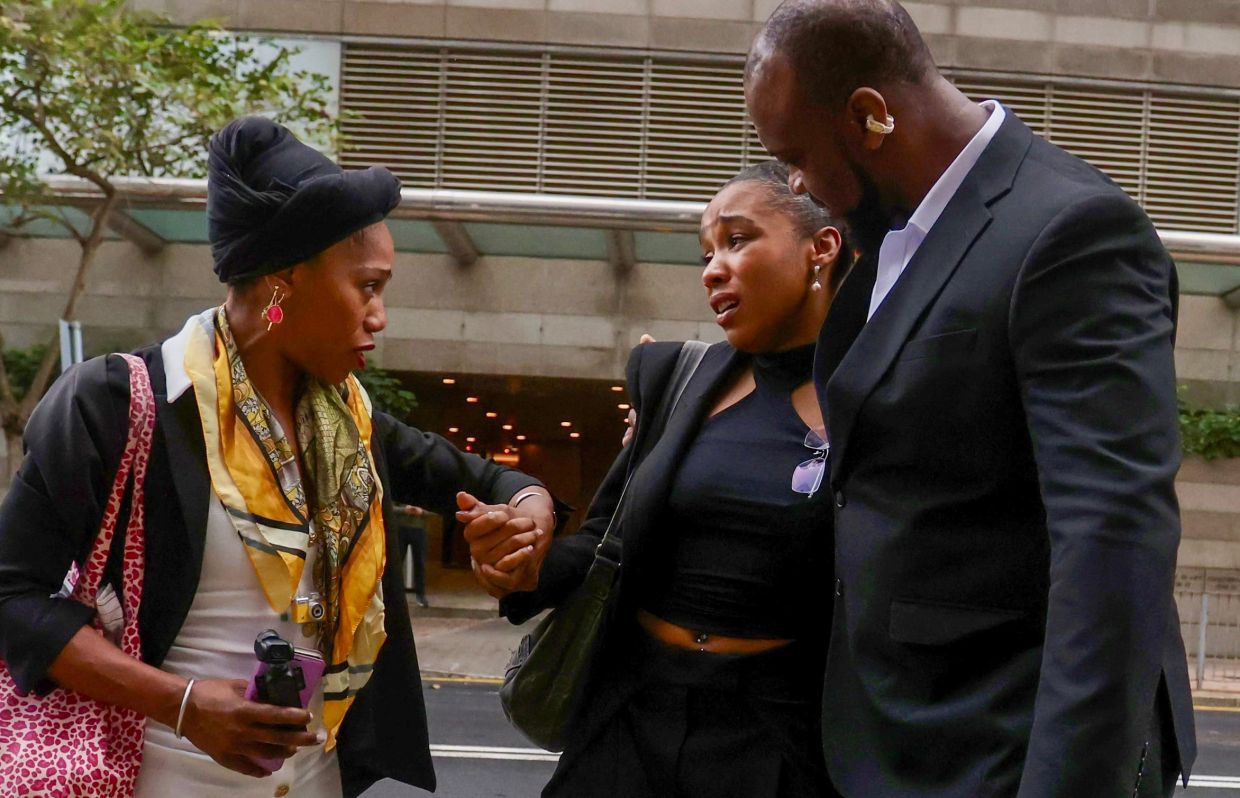
A Hong Kong district court has handed down a six-year prison sentence to a British woman convicted of orchestrating an elaborate blackmail scheme centred on fabricated rape allegations against a compatriot. Isabel Anonia Barbra Eudora Rose, 26, faced conviction on charges of blackmail and perverting the course of public justice following a trial that laid bare the mechanics of a calculated extortion attempt conducted over just 48 hours.
The sequence of events unfolded with striking speed after Rose, an event management professional based in London, arrived in Hong Kong on January 31, 2024. She had journeyed to the city to visit a man she had met during a previous trip to Thailand, and the pair spent the night together at his one-bedroom flat in the Central district. What followed in the subsequent hours would form the basis of both a police investigation and, ultimately, a conviction that raises uncomfortable questions about the weaponisation of sexual assault allegations.
On the morning after their encounter, Rose and the man began exchanging messages that would prove instrumental in the court's assessment of events. Rather than immediately confronting him with accusations, the pair discussed what had transpired between them and broached the subject of financial compensation. In one message, Rose wrote accusingly that he had essentially violated her, to which the man responded with evident distress, claiming that such conduct was completely contrary to his nature and that he felt physically ill. These exchanges, which the judge would later scrutinise in detail, created the evidentiary foundation for challenging Rose's subsequent allegations.
Rose filed a police report on February 3, initiating an official investigation that initially resulted in the arrest and questioning of the man. However, the police's own inquiry led them to a different conclusion. Rose herself was arrested the following day and subsequently charged, a reversal that underscored the weakness of her original claim. Judge Adriana Noelle Tse Ching, in her verdict, determined that the man's account was credible and that Rose had entirely fabricated the rape allegation.
The judge's reasoning rested heavily on the contemporaneous messages exchanged between the pair. According to the man's testimony, he had requested that Rose perform oral sex but she declined. He acknowledged apologising for what he characterised as misinterpreting her signals and moving too quickly. Rose's response in their messages—asking whether he was frustrated by her refusal—struck the court as fundamentally inconsistent with someone who believed she had been assaulted. The man, for his part, stated that he respected her boundaries, though he admitted to feeling mildly frustrated. These nuanced exchanges, the judge concluded, undermined any credible assertion of rape.
A medical examination provided further evidentiary support for the court's scepticism. Forensic investigators identified bruising on Rose's neck but discovered no genital injuries, a finding that suggested the nature of the physical contact differed markedly from a rape scenario. The judge determined that the pair had engaged in intimate acts but had not had penetrative intercourse, a conclusion that substantially narrowed the factual dispute.
What emerged most strikingly, however, was the pattern of escalating financial demands that followed. Initial discussions about money focused on what might be characterised as legitimate reimbursement for accommodation and travel expenses. The man agreed to provide £2,000 at Rose's request, yet this proved merely the opening gambit. She rapidly increased the demand to £5,000, and her language shifted to reveal an underlying sense of entitlement. In one message, she wrote that he had provided merely ten percent of what she was owed while her soul had been completely consumed, language suggesting she expected substantially more.
The full extent of Rose's extortion scheme became apparent as the financial discussions intensified. The man repeatedly expressed his inability to provide the sums being demanded, informing her directly that he simply lacked £100,000. Rose's response was chillingly pragmatic: she suggested he send half immediately and the remainder the following day, as though the logistics of his financial limitations were irrelevant to her demands. Although the £100,000 figure did not appear in the text records presented at trial, the judge accepted that Rose had mentioned this sum through disappearing messages or voice communications that she subsequently deleted—a deliberate act of evidence destruction that underscored her consciousness of wrongdoing.
Judge Tse found that Rose had issued explicit threats alongside her financial demands, stipulating a deadline by which payment must be received and threatening to escalate the matter to police if he failed to comply. This combination of threats and demands constituted the blackmail offence. The judge characterised the conduct as profoundly cruel, describing it as an abuse of the man's demonstrated kindness, his relative naivety, the emerging friendship between them, and his romantic interest. Most damning was the court's conclusion that Rose had targeted him for his money from the moment she decided to visit Hong Kong, and that she had weaponised their brief relationship within two days of arrival to extract payment through coercion.
In imposing sentence, the judge established a starting point of five years' imprisonment for the blackmail conviction and added a consecutive year relating to the perverting course of justice charge, resulting in the six-year total. The decision to impose consecutive rather than concurrent sentences reflected the court's assessment of the gravity and deliberation evident in Rose's actions. Judge Tse reserved particularly harsh language for the false police report, calling Rose's conduct vengeful and wicked, and observing that she had essentially punished the man for his refusal to accede to her extortion demands.
Rose's reaction to the guilty verdict in March—breaking down in tears in the dock before being remanded in custody—presented a stark contrast to the calculated behaviour the court had documented. When speaking subsequently to the South China Morning Post from detention, Rose expressed disbelief at her circumstances, suggesting that nothing about the outcome made sense to her. She emphasised that she had filed a rape report, yet within 24 hours, according to her account, the rape allegations had effectively vanished from consideration as police redirected their focus toward the blackmail investigation. She claimed that officers had indicated they would treat the blackmail matter more seriously, implying that the shift in investigative focus had surprised her. Now facing a substantial prison sentence, she reflected resignedly that she had simply had to accept the consequences of her actions.
The case carries particular significance for Southeast Asian jurisdictions, where confidence in sexual assault reporting mechanisms remains fragile in many quarters. While Hong Kong's courts took seriously the man's account and the documentary evidence before them, the case serves as a cautionary reminder of the real damage inflicted when allegations are weaponised for financial gain. For Malaysian readers and those across the region, the verdict underscores that robust judicial systems capable of distinguishing between genuine victims and those making false claims remain essential to maintaining the integrity of sexual assault law and protecting both complainants and the accused from abuse.

