Fay Manners has etched her name into mountaineering history by establishing a groundbreaking route on one of the world's most formidable peaks. The British alpinist, working alongside Swiss climbing partner Roger Schaeli, spent 13 days on the Eiger North Face this summer to create "Solar Eclipse," a 900-metre route comprising 33 pitches. In doing so, Manners became the first British woman to forge a new path on this legendary Swiss Alps formation, a milestone that extends far beyond the physical achievement of reaching the summit.
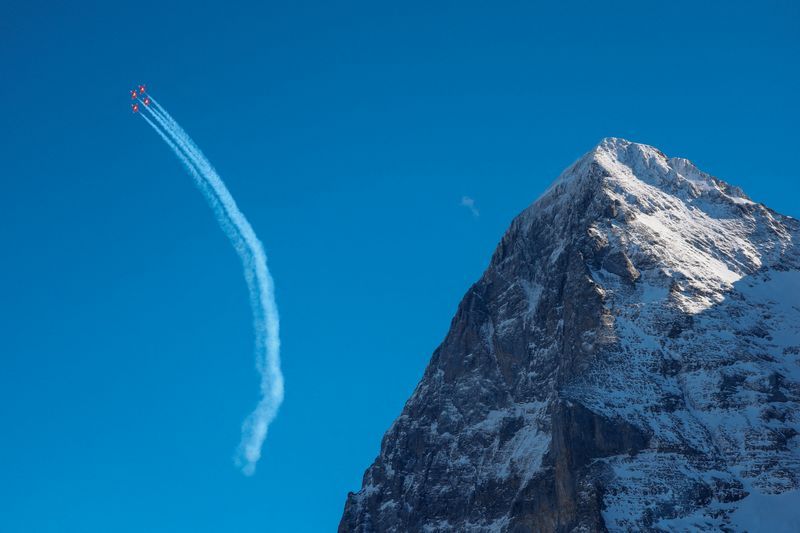
The Eiger North Face stands as a monument to climbing ambition and human endurance. Soaring 1,800 metres above the surrounding landscape, this wall of rock and ice presents climbers with an unforgiving environment where exposure to extreme weather and rockfall pose constant threats. The face earned its fearsome reputation through a succession of tragic attempts during the early twentieth century, before a German-Austrian team finally succeeded in 1938. Its significance in climbing culture makes any new route established here a matter of considerable importance to the wider mountaineering community.
Manners' journey to this achievement began four years earlier when she tackled the established Heckmair Route on the same face. That experience proved transformative, sparking an intensive study of the wall's geography and characteristics. Rather than returning simply to repeat a known passage, she became determined to discover and develop her own line through previously untouched terrain. This distinction marks a fundamental shift from climbing as repetition to climbing as creative exploration and problem-solving.
The differences between repeating an established route and establishing a new one illuminate why Manners' accomplishment resonates beyond the mountaineering world. When climbers follow established paths, they benefit from accumulated knowledge stored in guidebooks and climbing databases. They understand the difficulty grades, know the protection requirements, and can mentally prepare for known challenges. Opening a new route obliterates these certainties. Climbers must navigate uncertainty at every pitch, deciding where to place protection equipment, assessing whether the chosen line will lead to dead-ends, and confronting the very real possibility that their attempt might fail despite weeks of effort.
"You don't know how hard it's going to be, you don't know the sort of protection that you'll need to put in, you really don't know if you're going to be able to make it to the top," Manners explained to Reuters, capturing the psychological weight of such expeditions. This uncertainty transforms route-establishment from a physical challenge into an act of faith and perseverance. The 39-year-old climber recognises that the creative dimension of opening routes carries significance that transcends sport itself, particularly in an arena historically dominated by male climbers.
Manners articulates a powerful observation about representation in mountaineering culture. When aspiring climbers consult guidebooks seeking inspiration and information, the overwhelming preponderance of male names attached to newly established routes sends a subtle but persistent message about who belongs in this sphere. "If you're looking in the guidebook and every single name of the person that's opened a route is male... somehow that's telling you that men are opening routes and women aren't," she noted. This invisibility compounds structural barriers, shaping the assumptions young climbers internalise about their own potential. By adding her name to the record of route-setters, Manners contributes to a gradual rebalancing of that narrative.
Women have participated in Eiger climbing longer than many realise, though their contributions often remain marginalised in popular accounts. Daisy Voog achieved the first female ascent of the North Face in 1964, having previously been denied entry to an all-male mountaineering club despite her obvious capabilities. Japanese climber Michiko Imai became the sole woman on the six-person team that established the "Japanese Summer Direttissima" route five years later. Yet these precedents remained isolated achievements rather than catalysts for systemic change. Manners' emphasis on the importance of "women go and do that creative process, opening new routes, putting all the hard work in" directly challenges the persistent underrepresentation of female names in mountaineering's historical record.
Manners traces her own experience of gender-based limitations to childhood assumptions about capability and possibility. Growing up in England, she harboured ambitions to pursue sport professionally, but encountered repeated discouragement from people around her who insisted women could not build careers in athletics. The doubts these voices planted proved resilient, shaping her decisions for years. She pursued data science instead, a more conventionally acceptable path, though she eventually relocated to Chamonix, France, to dedicate greater attention to climbing while maintaining consulting work on the side. When The North Face approached her about becoming a sponsored athlete, she initially negotiated a split arrangement between data science and mountaineering. Only after this opportunity materialised did she permit herself to believe that a female climber might actually sustain a professional career.
Manners identifies a particularly insidious aspect of gender socialisation in sport: the subtle, barely perceptible stereotypes that become self-limiting beliefs. "Maybe if I never grew up with someone saying to me, 'You can't carry as much as me, so I'll carry more,' maybe if it was just always equal from the beginning, then you just never have that doubt in your mind," she reflected. These small, everyday assertions about physical differences accumulate to create a psychological architecture of self-doubt. Climbers internalise limiting assumptions without consciously recognising their source, which means the barriers persist even when objective circumstances might permit their crossing. Breaking these patterns requires deliberate challenge through visible action—precisely what Manners has accomplished.
Looking forward, Manners envisions further opportunities to expand women's participation in route-establishment. She plans to return to "Solar Eclipse," potentially to refine the route or tackle adjacent sections of unclimbed terrain. Yet her ultimate aspiration extends beyond personal achievement. "I would love to see all-female teams go try to repeat the route," she said. "That would be the next thing for me—the dream." This vision reflects a mature understanding of how individual breakthroughs transform into systemic change. When women climbers can point to established routes pioneered by female teams, when guidebooks record the names of women alongside men, when young climbers see themselves reflected in mountaineering's creative achievements, the subtle barriers Manners describes will begin to dissolve.
For Malaysian and Southeast Asian mountaineering communities, Manners' achievement carries particular relevance. The region produces accomplished climbers increasingly active on international peaks, yet gender disparities in route-establishment and expedition leadership persist here as elsewhere. As climbers from Malaysia, Indonesia, and neighbouring nations pursue increasingly ambitious alpine objectives, the normalisation of female leadership in technical climbing and route design becomes progressively important. Manners' example demonstrates that barriers to women's full participation in mountaineering are cultural rather than physical, and therefore subject to change through deliberate action and visibility. Her "Solar Eclipse" route stands as both a technical achievement and a signpost for future generations of climbers—women and men alike—who will navigate terrain that previous generations deemed impossible.

