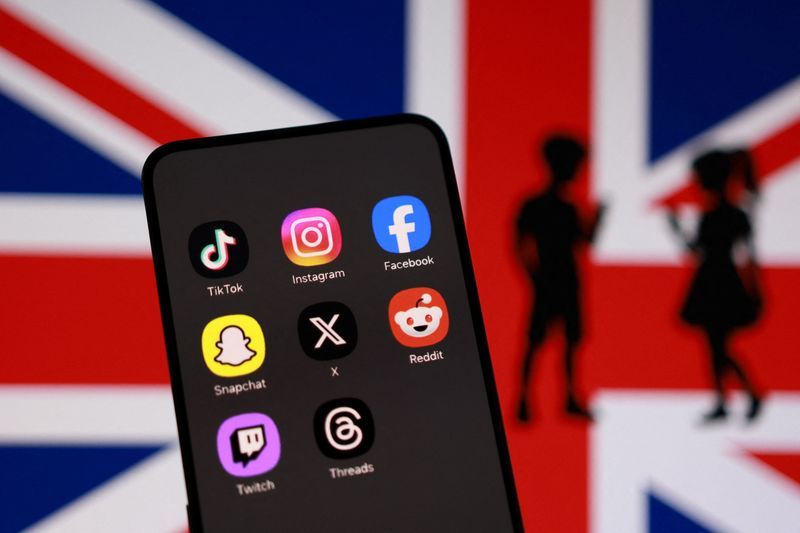
Britain's government is moving forward with fresh measures to restrict teenage access to social media, announcing a default overnight curfew that will affect users aged 16 and 17 across all major platforms. The initiative comes just weeks after the government unveiled its more contentious plan to outright prohibit social media use among those under 16, signalling an aggressive stance on digital safeguarding that is reshaping policy discussions across the Commonwealth and beyond.
Under the new regulatory framework, teenagers in this age bracket will find themselves unable to access social media applications between midnight and 6 a.m. unless they actively modify their account settings to override the restriction. The government plans to make this lockout the default configuration, placing responsibility on individual users to enable after-hours access rather than forcing platforms to implement blocking mechanisms by default. Additionally, algorithmic features specifically designed to encourage prolonged engagement—what industry insiders refer to as "doomscrolling" mechanics—will be automatically disabled during these hours, a move intended to disrupt patterns that research suggests contribute to sleep disruption and diminished academic performance.
Technology Minister Liz Kendall framed the curfew as a protective mechanism addressing multiple dimensions of teenage wellbeing. She suggested that restricting late-night access would create space for adequate sleep, improve concentration during school and college hours, and foster face-to-face interactions with family and peers. This rationale reflects growing scientific evidence documenting correlations between late-night social media consumption and adverse effects on adolescent mental health, sleep architecture, and academic outcomes. The minister's comments echo broader international anxiety about the societal consequences of unrestricted platform access among developing populations.
Online Safety Minister Kanishka Narayan indicated that the curfew would operate as a legal obligation imposed on technology companies rather than a voluntary commitment. Speaking to LBC Radio, Narayan emphasised that platforms would be compelled to implement the measures, underscoring the government's determination to move beyond voluntary industry self-regulation. He further stressed that companies must substantially strengthen their age-verification processes, warning that organisations failing to conduct robust identity checks would face severe regulatory penalties that could jeopardise their operational licenses within the United Kingdom.
The enforcement mechanism represents a significant escalation in government power over digital platforms. Unlike previous attempts to regulate social media through softer guidance, this approach treats the technology companies as legally liable entities responsible for implementing specific technical and procedural safeguards. This shift signals recognition that industry self-regulation has largely failed to protect young users and that statutory intervention is now deemed necessary. For Malaysian policymakers considering their own regulatory approaches, the British model demonstrates how governments can mandate specific platform functionality changes backed by enforceable legal consequences.
Major technology companies including Meta (Instagram's parent), ByteDance (TikTok's owner), and Google (YouTube's operator) have not publicly commented on the proposed restrictions, though their silence may mask significant concerns about implementation complexity and international precedent-setting. These firms operate across multiple jurisdictions with varying regulatory requirements, and conceding to British demands for age-verification and curfew functionality could establish templates for regulation in other markets. The lack of immediate response may indicate a period of strategic assessment before the companies determine their legal and operational positions.
Political opposition has emerged from unexpected quarters, with Laura Trott, education policy chief for the Conservative Party, dismissing the curfew as ineffective. Trott's critique highlights a fundamental logical inconsistency in the government's approach: if 16 and 17-year-olds are deemed capable of using social media at all, then permitting them to simply disable a default restriction seems merely performative rather than substantively protective. This objection raises uncomfortable questions about whether the measure represents genuine safeguarding or symbolic policymaking designed to satisfy public concern without implementing more disruptive regulations.
The regulatory timeline suggests that Parliament will receive the formal legislative proposals by the end of the current calendar year, with actual implementation anticipated in spring 2027. This extended timeline allows industry time for lobbying and technical preparation but also means that current teenagers aged 16-17 will largely age out of the restrictions before they take effect—an irony that critics may exploit in opposing the measure. The delay also permits observation of how regulatory efforts proceed in other jurisdictions, particularly Australia, which became the first nation to implement comprehensive social media restrictions for minors.
Australia's experience offers sobering lessons for Britain and other nations pursuing similar strategies. A review team examining Australia's age-ban implementation discovered that major platforms fundamentally failed at the initial verification stage, undermining the entire regulatory structure. If companies struggle with basic age-checking mechanisms in a country with mandatory requirements, scepticism about their capacity to implement more nuanced restrictions like time-based curfews appears warranted. This precedent suggests that technical limitations, rather than regulatory unwillingness, may render Britain's curfew substantially ineffective.
Recent legal developments in the United States also inform the regulatory environment. Both Google and TikTok have recently settled litigation brought by a minor alleging that social media exposure caused significant mental health damage, a resolution that acknowledges—albeit through settlement rather than formal judgment—potential causal links between platform use and psychological harm. These settlements, combined with mounting research evidence and parental advocacy campaigns, have created political momentum for statutory intervention that would have seemed unlikely just years ago.
For Malaysian readers and policymakers, the British approach represents one model among several emerging regulatory philosophies. Unlike the Australian prohibition strategy or the American litigation-driven approach, Britain is attempting a middle path involving default restrictions that users can override. This model respects teenage agency while imposing friction designed to discourage impulsive use. Whether this balance proves effective or merely creates compliance theatre remains to be determined, but the British experiment will likely influence regulatory conversations throughout Southeast Asia as countries grapple with similar concerns about teenage digital wellbeing.
The broader implication extends beyond individual curfews or bans. Governments worldwide are increasingly willing to exercise direct control over how technology platforms function, treating digital service providers as quasi-public utilities subject to statutory obligations. This represents a fundamental shift in regulatory philosophy that could reshape the technology industry's operating assumptions. For multinational companies and developing economies alike, the precedent established through Britain's safeguarding framework will reverberate through international technology governance for years to come.

