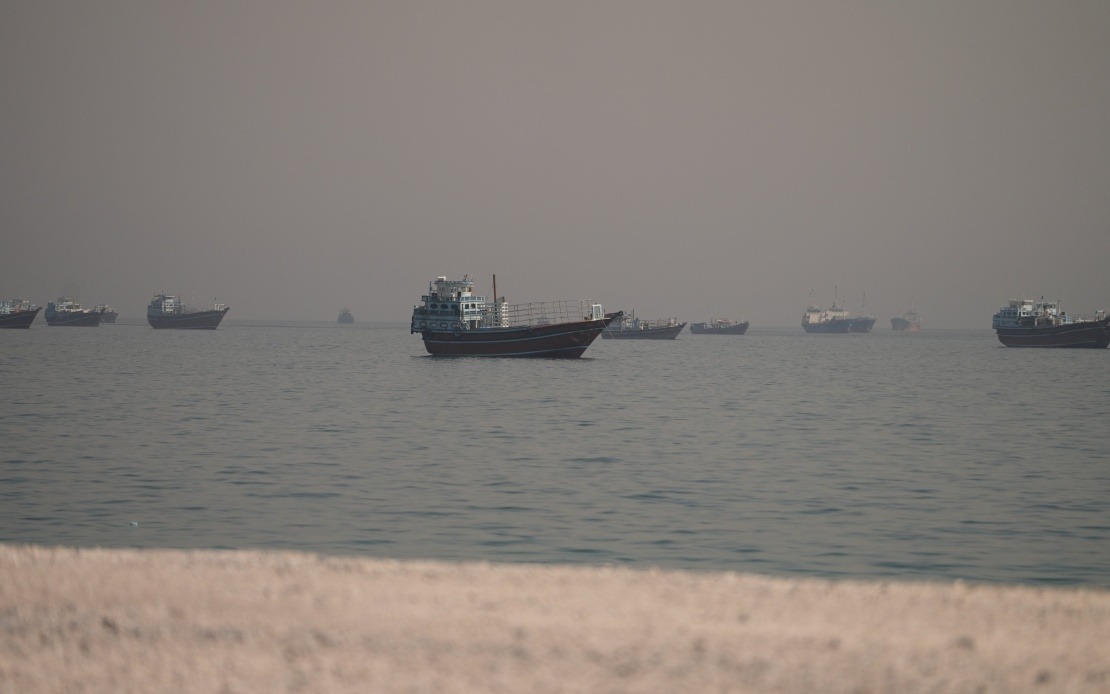
Britain and France have signalled their willingness to establish a multinational military deployment designed to guarantee safe passage through the Strait of Hormuz, one of the world's most strategically important maritime corridors. The announcement, made jointly by Prime Minister Keir Starmer and President Emmanuel Macron on Friday, represents a coordinated European response to deteriorating regional security conditions and reflects mounting international concern over unimpeded commerce through the contested waters.
The two leaders framed their initiative in explicitly economic terms, emphasising that the Strait of Hormuz functions as a critical conduit for global trade and energy supplies. Their joint statement underscored that restoring reliable merchant vessel transit represents not merely a regional interest but a matter of worldwide consequence, positioning the European commitment as fundamentally protective of international commerce rather than confrontational in character.
Central to the Anglo-French strategy is the cooperation of Oman, which has agreed to work alongside London and Paris in coordinating security operations within its territorial waters. This arrangement appears designed to provide the initiative with regional legitimacy and legal grounding, anchoring the multinational mission within the framework of the coastal state's sovereign authority rather than presenting it as an extra-regional imposition.
The joint declaration emphasises both nations' commitment to regional stability, state sovereignty, and international law—language that appears calculated to distinguish their approach from unilateral military interventionism. By framing their actions as defensive measures aimed at upholding established maritime conventions and freedom of navigation principles, Britain and France seek to cast themselves as custodians of an international order rather than as powers imposing their will on the region.
For Malaysian and Southeast Asian observers, this European initiative carries significant implications. Roughly one-third of global seaborne trade transits the Strait of Hormuz, and Malaysia's position as a trading nation and energy consumer means that disruptions to this vital passage directly threaten regional prosperity. The security of these waters affects shipping costs, energy prices, and supply chain stability across Asia, making the European commitment relevant to Malaysian economic interests even as geopolitical responsibility remains principally with regional actors.
Iran's consistent rejection of foreign military presence in the Strait of Hormuz creates the fundamental tension underlying this initiative. Iranian officials have repeatedly asserted that maritime security in these waters belongs exclusively to littoral states—a position rooted in resistance to what Tehran perceives as Western military overreach in the Persian Gulf. The Iranian argument draws on principles of sovereignty and regional autonomy that resonate throughout the developing world, presenting the dispute as fundamentally about who controls strategic waterways and under what authority.
This confrontation reflects deeper questions about power distribution in maritime governance. The Strait of Hormuz, though vital to global commerce, lies within the territorial and strategic sphere of Gulf states. International law grants coastal nations broad authority over their territorial waters, yet the volume of international traffic and the global consequences of disruption create pressures for multinational involvement. Balancing these competing claims—regional sovereignty versus international commercial interests—remains unresolved, and the Anglo-French proposal does not fundamentally address this underlying tension.
The European initiative also signals subtle shifts within the Western alliance regarding burden-sharing in maintaining global order. Rather than relying on American naval dominance in the region, Britain and France are proposing a distinctly European contribution to maritime security. This reflects both the practical constraints on American resources and a desire among European powers to demonstrate independent capability in matters affecting their own security and economic interests.
For Southeast Asia, the European approach offers a potential model for maritime security cooperation. Nations throughout the region, including Malaysia, face similar challenges in maintaining freedom of navigation and protecting critical sea lanes. The emphasis on coalition-building, respect for coastal state sovereignty, and cooperation with regional partners provides an instructive template, even if the Gulf context differs substantially from Southeast Asian waters.
The timing of the announcement, amid escalating regional tensions, reflects Western determination to signal resolve and commitment to maintaining the post-World War II maritime order. However, the initiative's success depends not merely on military deployments but on diplomatic settlements that address underlying regional grievances and power competition. Without accompanying diplomatic initiatives addressing the root causes of Gulf instability, military measures alone may prove insufficient to resolve the underlying conflicts.
Looking forward, the outcome of the Anglo-French initiative will likely influence how other maritime powers approach similar security challenges. If the multinational force successfully operates without triggering further escalation, it may establish a precedent for European involvement in critical shipping corridors beyond European waters. Conversely, if tensions intensify, the episode may demonstrate the limitations of military solutions to fundamentally political problems about regional power and global order.

