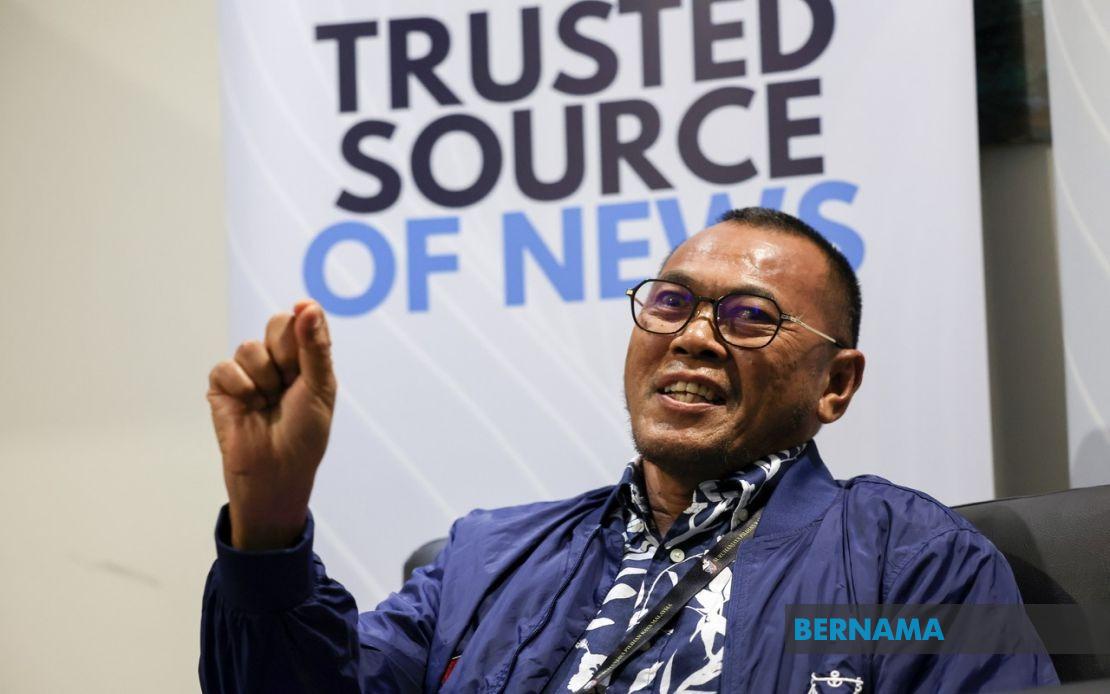
Datuk Pandak Ahmad, the Barisan Nasional candidate defending the Kota Iskandar state seat in Johor's upcoming election, frames his political philosophy around a simple but potent idea: serving as a conduit between constituents and solutions. In interviews ahead of polling day on July 11, the incumbent assemblyman articulated a leadership approach rooted in listening to residents' grievances, comprehending their underlying causes, and mobilising administrative resources to address them systematically. This framework, he suggests, distinguishes his tenure from a transactional political relationship, instead positioning his role as one of stewardship over a public trust that demands accountability even beyond his electoral term.
The constituency of Kota Iskandar, with 132,579 registered voters, presents a diverse demographic landscape that Pandak has sought to service across multiple fronts. His administration points to the completion of 12,000 housing units under the Johor People's Housing Programme as a flagship achievement—a programme that specifically targets the middle-income bracket often squeezed between prohibitive private market prices and limited subsidised options. This scale of delivery addresses one of Malaysia's persistent urban challenges: affordable homeownership for professionals and skilled workers whose incomes exceed subsidised housing thresholds but fall short of market-rate expectations. The programme's emphasis on accessibility for this demographic represents a strategic attempt to retain economic stability and social cohesion in Johor's rapidly urbanising constituencies.
Beyond housing, Pandak's administration has overseen infrastructure and institutional developments that shape daily community life. A new mosque constructed in Pulai Emas caters to religious observance within the constituency, whilst the establishment of the Tunku Mohkota Ismail Youth Centre (TMIYC) provides recreational and developmental facilities for younger residents. These projects reflect a deliberate strategy to address community needs across generational and religious lines, acknowledging that electoral mandates require attention to multifaceted constituent expectations. Simultaneously, administrative reforms with the Iskandar Puteri City Council (MBIP) have streamlined licensing procedures for small traders, reducing approval timelines from weeks to a single day—a seemingly technical achievement with significant ramifications for petty commerce and entrepreneurship in the area.
The transformation of Kampung Sungai Melayu exemplifies a development model that Pandak's administration has championed: converting traditional economic structures into tourism-oriented attractions whilst ostensibly preserving community livelihoods. Once a fishing village exceeding 160 years of continuous settlement, the kampung has been rebranded as a tourism destination following nearly RM22 million in infrastructure investment. The initiative has reportedly attracted over 100,000 visitors, capitalising on Johor's broader Visit Johor Year 2026 tourism promotion drive. However, this transformation also raises questions about gentrification, demographic change, and the sustainability of traditional livelihoods amidst tourism-led development—issues that remain contested in development debates across Southeast Asia.
Land recovery represents another administrative priority highlighted by Pandak's tenure. His administration recovered nine acres (3.64 hectares) previously held by private interests, subsequently designating the reclaimed land for development as a commercial fishing hub. This represents a deliberate reorientation toward formalising and modernising the fishing sector rather than displacing it entirely. The planned relocation and reorganisation of traders' stalls suggests an attempt to balance infrastructure modernisation with livelihood preservation, though the actual implementation and impact on existing fishing communities remain subjects requiring detailed scrutiny.
Yet Pandak's administration acknowledges persistent challenges that constrain electoral satisfaction. Traffic congestion emerging from rapid residential expansion constitutes the most frequently cited complaint, particularly along routes connecting Universiti Teknologi Malaysia (UTM) to Pulai Indah and from Gelang Patah to Kampung Ulu Pulai. These bottlenecks reflect the tension between housing expansion and transportation infrastructure—a common problem across Malaysian urban constituencies where residential development often outpaces simultaneous road network enhancement. Proposed solutions include upgrading traffic signals to smart systems, constructing two additional flyovers, and building an elevated interchange linking residential areas to broader distribution networks. These projects, if executed, would represent substantial capital investment in traffic decongestion, though their timelines and funding mechanisms remain subject to state budget allocations and federal-state coordination.
Looking forward, Pandak positions education as a continued priority whilst committing to further residential development. Approximately 300 housing units planned for Gelang Patah and over 800 units for Taman Damai and Pulau Hijauan, all priced below RM300,000 per unit, align with the established affordable housing trajectory. More significantly, the proposed development of Pendas as a tourism destination using the Kampung Sungai Melayu model indicates a strategic intent to replicate development successes across multiple locations. This approach envisions combining fishing sector activities with ecotourism offerings, leveraging the larger fishing community in Pendas to generate supplementary income streams beyond traditional catch-based economies. Such multipronged economic strategies reflect contemporary development thinking that seeks to diversify rural income sources rather than relying on single-sector dependence.
The political context shapes these development narratives considerably. Kota Iskandar presents a four-cornered electoral contest, with Pandak competing against Dzulkefly Ahmad (Pakatan Harapan), S. Anna Pravina (Perikatan Nasional), and Sahrudin Omar (Parti Bersama Malaysia). This fragmentation, whilst reducing any single opposition candidate's consolidated support, also reflects broader Malaysian political volatility and the emergence of smaller coalition partners. Pandak's campaign strategy balances traditional door-to-door engagement with digital outreach targeting the constituency's 131,000-plus young voters—a demographic cohort increasingly decisive in Malaysian electoral outcomes. Utilisation of Facebook, Instagram, and Threads represents contemporary political communication, acknowledging that younger voters increasingly consume political information through digital rather than conventional channels.
The young voter demographic constitutes a particularly significant constituency factor, representing one of Johor's largest youth blocs. These voters, often more transient, digitally native, and concerned with economic opportunities and cost-of-living pressures, require distinct messaging compared to older constituencies prioritising pension security and healthcare access. Pandak's emphasis on youth-oriented infrastructure—the TMIYC, education prioritisation, and employment-linked tourism development—suggests an attempt to address these concerns directly rather than relying solely on nostalgia for past governance records.
The broader electoral significance of Kota Iskandar extends beyond immediate constituency politics. As one of Johor's state assembly seats, it contributes to determining overall state government composition and, indirectly, the political trajectory of one of Malaysia's most economically significant states. Johor's relative prosperity, strategic position adjacent to Singapore, and role as a major manufacturing and logistics hub mean that state-level governance decisions ripple across Malaysian economic patterns. Electoral outcomes in Kota Iskandar thus carry implications beyond local service delivery, influencing broader state fiscal priorities, industrial policy, and federal-state relations.

