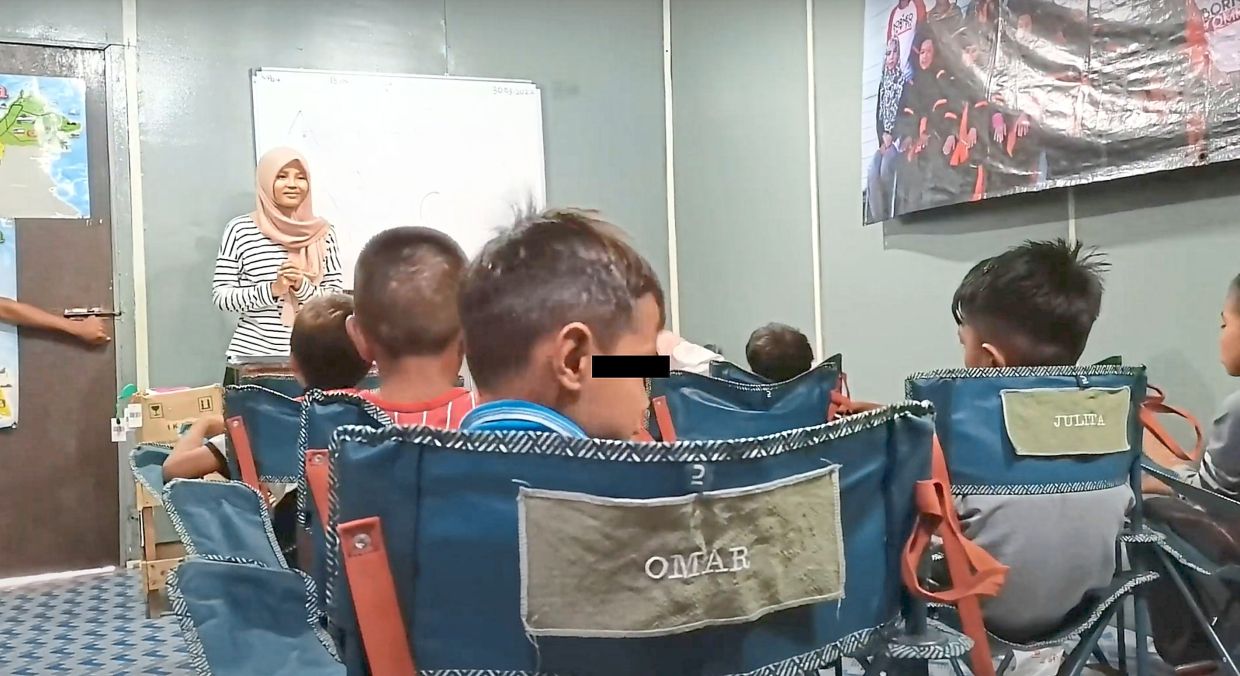
A troubling paradox lies at the heart of Malaysian citizenship law, one illustrated vividly in two recent Court of Appeal cases. Children who were born in Malaysia, educated here, and have spent their entire lives with no connection to any other country have been denied Malaysian citizenship because their parents were not married at the time of birth. Despite DNA confirmation establishing their biological relationship to Malaysian fathers, the court upheld a constitutional interpretation that makes marital status the decisive factor in determining a child's nationality. This raises an uncomfortable question for a nation claiming to prioritise the welfare of its young: should the accident of a child's parentage override their lived reality as a Malaysian?
The constitutional framework governing citizenship, drafted decades ago, established that for children born outside wedlock to foreign mothers, nationality should follow the mother's citizenship. In the cases under review, both mothers were from neighbouring countries—Indonesia and the Philippines—and had departed Malaysia while their children were still young. The fathers who remained became the primary caregivers, raising their sons in Malaysian schools, within Malaysian communities, with no meaningful ties to their mothers' homelands. Yet the court's interpretation of the Constitution deemed these biographical circumstances irrelevant. The law's language, it reasoned, admitted no discretion where parental marital status differed from constitutional expectations.
This approach reflects legal thinking from an earlier era, when societies routinely stigmatised children born outside marriage and embedded that stigma into law. Modern medical science has fundamentally altered the landscape of such disputes. DNA testing can now establish paternity with near-absolute certainty, rendering the historical reliance on marriage certificates as a proxy for biological connection obsolete. The question that demands serious consideration is whether courts should continue to privilege a formal ceremony—a choice made by adults—over biological fact and the documented, continuous relationship between father and child. The constitutional architects could not have anticipated a world where such scientific clarity would be possible.
Child rights organisations and civil society groups, including DHRRA (Development of Human Resources for Rural Areas), have criticised the ruling for failing to centre the best interests of the child. They highlight that Malaysia occupies an unusual and regrettable position: it is one of only two countries globally where fathers cannot confer citizenship to their children in such circumstances. This isolation on the international stage suggests that Malaysia's legal position is increasingly out of step with global consensus about how citizenship should function. The advocacy community points out that the court's reasoning creates a perverse incentive structure—it effectively punishes Malaysian fathers and disadvantages their children, while offering no corrective mechanism for situations where marital circumstances change or where parents' relationships fail to conform to traditional patterns.
The broader philosophical tension becomes clearer when citizenship is examined alongside other areas of law. Legal systems typically attach consequences to the choices and actions of adults, not to their children. A person who breaks the speed limit faces a fine; their child does not. A business owner convicted of fraud loses their license; their family members do not lose their nationality. Yet in these citizenship cases, the law imposes a lifetime consequence—potential statelessness—upon a child for a decision entirely beyond their control. The child cannot choose whether their parents marry, nor can they choose where to be born. To make their fundamental legal status contingent on such factors represents a categorical departure from how modern law generally allocates responsibility and burden.
The reality of human relationships, as experienced across all societies, resists neat legal categorisation. Adults fall in love and form partnerships regardless of cultural, religious, or national boundaries. Some relationships are formalised through marriage; others are not. Some produce children who are planned; others surprise their parents. Some relationships endure; others dissolve. These patterns have existed throughout human history and remain prevalent today, particularly in a globalised world where migration and cross-border relationships are commonplace. Laws designed to regulate society must account for this lived reality, not enforce an increasingly narrow conception of how families should be structured.
Marriage and citizenship serve fundamentally different purposes and should not be conflated. Marriage is a voluntary contract between consenting adults, establishing legal recognition for their relationship and governing property rights, inheritance, and social entitlements. Citizenship, by contrast, determines a child's fundamental legal identity and belonging. A child cannot consent to their own citizenship status; it is imposed by law at birth. Conflating these two concepts means that a child's access to fundamental legal protection becomes dependent on whether their parents chose to formalise their relationship through a state-recognised ceremony. This represents a category error that burdens children for choices that were theirs to make neither before nor after birth.
The practical consequences of statelessness extend far beyond questions of abstract legal principle. A child without recognised citizenship faces concrete, material hardships throughout their life. Educational access becomes uncertain; some institutions require proof of citizenship status. Healthcare systems that fund care through national insurance schemes may deny coverage. Legal employment becomes precarious when employers face regulatory uncertainty. Basic services that others take for granted—opening a bank account, obtaining a driving license, securing stable housing—become obstacles that require workarounds and create vulnerability. Such individuals often become trapped in informal economies, unable to participate fully in society's institutions, frequently remaining in or cycling back into poverty. The social cost of maintaining such exclusion arguably outweighs any theoretical benefit the current law provides.
This is not a new or isolated problem within Malaysia's legal system. Similar issues have surfaced repeatedly over the years, affecting different categories of vulnerable children. Foundlings with no recorded parentage, children born in undocumented circumstances, and youngsters from remote indigenous communities where formal birth registration remains difficult—all face legal uncertainty about their nationality status. While the specific circumstances vary, the underlying pattern is consistent: children end up in legal limbo through no fault of their own, bearing the consequences of administrative or personal circumstances beyond their control. The pattern suggests a systemic deficiency rather than an isolated edge case requiring exceptional handling.
Recent constitutional amendment demonstrates that Malaysian legislators and lawmakers recognise the need to modernise citizenship law. In 2024, Parliament amended the Constitution to allow Malaysian mothers to automatically transmit citizenship to their children born abroad, rectifying a longstanding gender inequality in the law. That reform explicitly acknowledged that citizenship laws should reflect contemporary realities and principles of gender equality. The same logic should apply to the situation of children born out of wedlock to Malaysian fathers. If citizenship law can evolve to recognise that mothers should have equal capacity to confer nationality, then it should equally recognise that a child's biological connection to a Malaysian parent—confirmed through modern science and demonstrated through years of residence, education, and family life—should not be negated by parental marital status.
The fundamental question is whether Malaysia's citizenship law should continue to function as a tool for moral judgment of adult behaviour, or whether it should instead answer a straightforward practical question: does this child belong here, and will they otherwise risk statelessness? A child born and raised in Malaysia, with a documented biological connection to a Malaysian parent and no meaningful ties elsewhere, has a compelling claim to belong to this country. Denying that claim serves no evident public interest and inflicts genuine harm. The law can be reformed to vest courts with discretion to consider the best interests of the child, the child's lived experience in Malaysia, and the consequences of statelessness, without abandoning all legal standards around citizenship. Such reform would align Malaysia with international child welfare principles and with the direction that its own legislators have already begun to move.
Every child deserves to begin life with a fair chance and a clear legal identity. Citizenship should facilitate that opportunity, not obstruct it. Malaysia has the capacity to recognise that modern realities—from cross-border relationships to scientific advances in establishing paternity—demand legal frameworks that prioritise children's welfare over formalised distinctions rooted in an earlier era. The question before policymakers is whether the nation will seise this opportunity to ensure that all children born and raised in Malaysia have the chance to claim it as their own.

