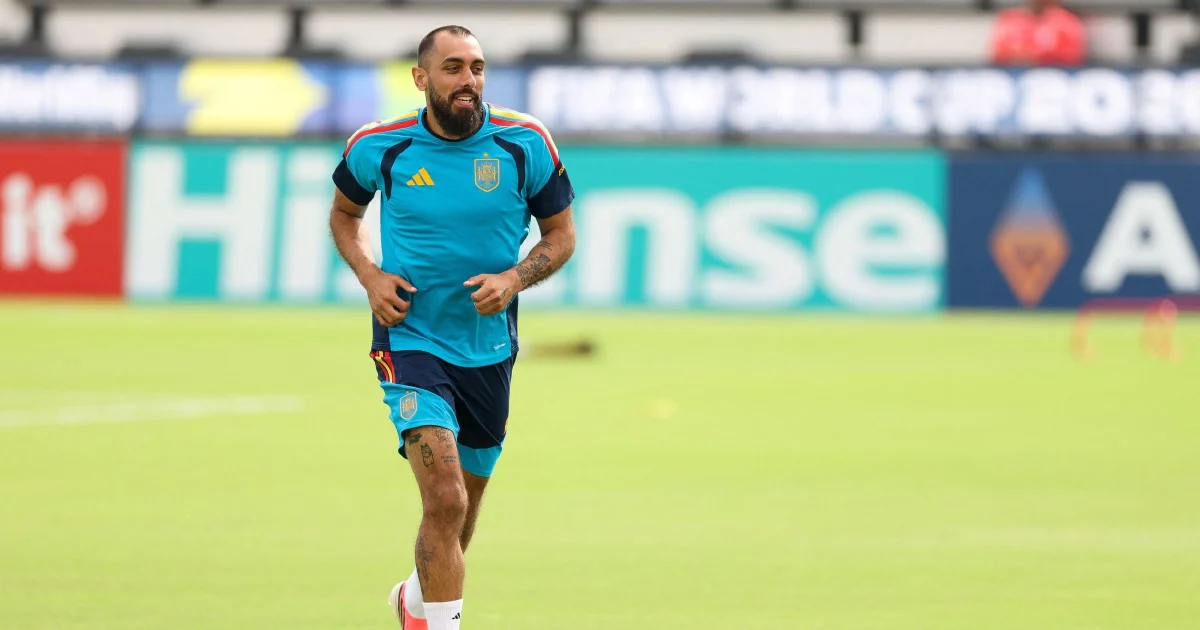
Borja Iglesias represents a rare breed within professional football—an athlete willing to forfeit the safety of neutrality in favour of speaking plainly on matters of conscience. The Spanish striker, a key figure in his nation's World Cup campaigns, has cultivated a public persona that deliberately disrupts football's carefully maintained silence on geopolitical conflict and social injustice. His willingness to engage with controversial topics has made him something of an outsider within the sport, earning him the unusual epithet of "the alien of football" from those both supportive and dismissive of his approach.
The footballer's choice to paint his nails and publicly discuss his views on Gaza represents more than mere aesthetics or idle commentary. In a sporting landscape where uniformity of appearance and political neutrality are traditionally enforced through subtle social pressure and explicit corporate expectation, such visible acts of self-expression carry real professional risk. Iglesias has chosen to accept this risk as the price of authenticity, refusing to compartmentalise his personal convictions from his public role. This stance positions him at odds with the broader football industry, which has long preferred its athletes to remain apolitical vessels for corporate messaging.
His commentary on Gaza specifically demonstrates how athletes from wealthy European nations increasingly feel compelled to engage with Middle Eastern conflicts despite the inevitable backlash. Iglesias has not confined himself to safe, universally approved causes, but has instead waded into territorial disputes that pit different factions of international opinion directly against one another. The courage required for this approach should not be underestimated; major sponsors and media outlets can quickly withdraw support from athletes perceived as taking controversial political positions.
Within Spanish football culture, Iglesias's outspokenness carries particular weight. Spain has its own complex history of regional identity, linguistic rights, and political expression, which may inform his comfort with challenging the status quo. His willingness to speak about homophobia in football specifically addresses a structural problem within the sport that most major leagues and governing bodies have treated with remarkable passivity. Despite increased visibility for LGBTQ+ athletes in many other professional sports, football remains a space where homophobia persists both among players and within supporter cultures.
The phenomenon of labelling him "the alien of football" reveals much about the sport's relationship with dissent. Rather than engaging substantively with his arguments, the dismissive terminology suggests that football prefers to frame moral engagement as aberration rather than engage with its substance. This rhetorical strategy allows the sport to maintain its preferred image of apolitical universality whilst simultaneously rendering activists invisible or ridiculous. Iglesias's persistence in speaking despite this framing demonstrates considerable personal conviction.
For Malaysian readers and Southeast Asian football enthusiasts, Iglesias's example carries particular resonance. The region's footballing cultures similarly enforce conformity regarding political expression, yet face their own challenges around homophobia in sport and geopolitical alignment on contentious issues. Iglesias's model offers an alternative approach to the assumed necessity of political silence, though it comes with genuine career costs that athletes in smaller markets may find even more prohibitive.
The striker's approach also reflects shifting generational attitudes within European football. Younger players increasingly question the assumption that sporting success requires complete disassociation from social consciousness. This generational divide manifests in debates about athlete activism, with established gatekeepers viewing such engagement as distraction or self-promotion whilst emerging voices see silence as complicity. Iglesias stands within this emerging cohort of footballers who have rejected the false binary between professional excellence and ethical engagement.
His prominence as a World Cup player amplifies the impact of his activism. Athletes at the highest level of their sports possess platforms that grant their words disproportionate reach and influence. Iglesias has chosen to deploy this platform not for commercial endorsements or safe charitable causes, but to address structural injustices. This choice distinguishes him from countless athletes who perform activism in ways that ultimately reinforce existing power structures.
The cost of Iglesias's conviction remains tangible within professional football's ecosystem. Media outlets may frame him as eccentric rather than principled; sponsors may quietly distance themselves; peers may regard him with suspicion rather than solidarity. Yet his persistence suggests that some athletes have calculated that authenticity carries value beyond the financial metrics typically dominating professional sport. Whether his example proves influential in shifting football's broader culture toward greater acceptance of athlete activism remains an open question, but his willingness to bear the costs of conscience offers a compelling challenge to the sport's enforced silence on injustice.

