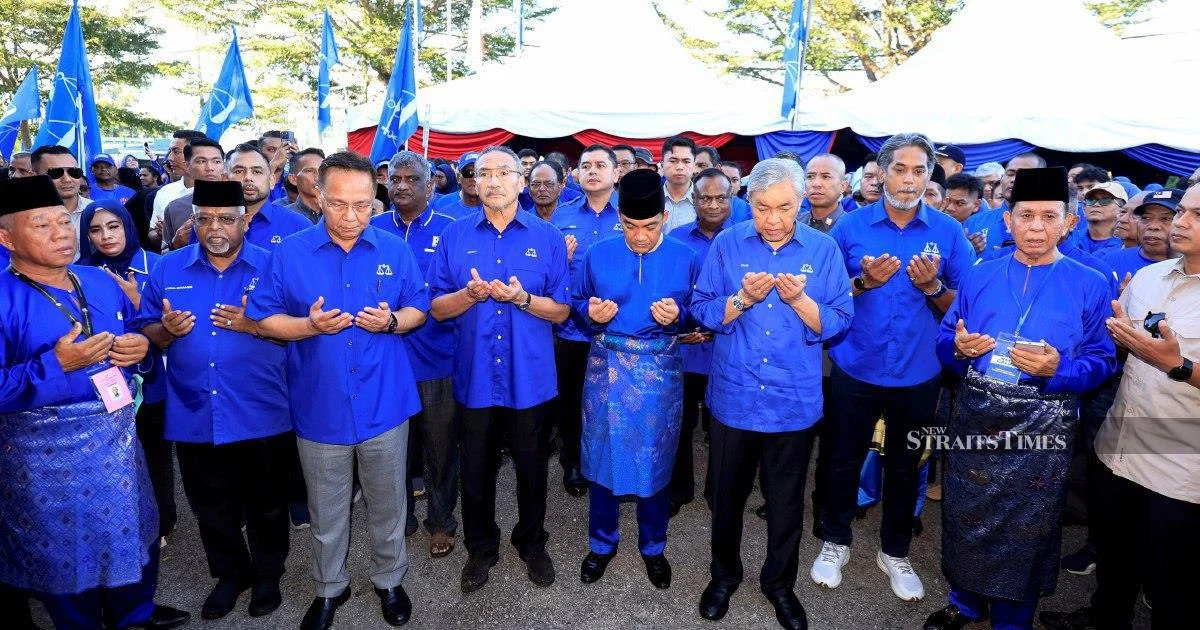
The Barisan Nasional coalition mobilised its most prominent figures at Simpang Renggam District Council in a calculated display of organisational muscle and political cohesion around Datuk Onn Hafiz Ghazi. The gathering underscored BN's determination to project unified backing for the Johor leadership during a critical electoral period.
The appearance of multiple senior BN personalities at a single event carries significant symbolic weight in Malaysian politics. Such shows of force traditionally serve dual purposes: they publicly validate the candidate while simultaneously signalling internal party discipline and consensus around electoral strategy. For BN, which has faced fragmentation and internal tensions in recent years, demonstrating this level of coordination reflects calculated efforts to project institutional strength to both members and the broader electorate.
Datuk Onn Hafiz Ghazi, as Johor's chief minister, occupies a position of substantial political importance. Johor remains one of Malaysia's largest and most economically significant states, and control of the state government carries implications extending well beyond regional boundaries. The state's development trajectory, infrastructure investments, and economic policies influence the broader Southeast Asian region's business environment. BN's visible commitment to Onn Hafiz therefore signals confidence in his administration and forward electoral planning.
The Johor political landscape has undergone considerable shifts in recent years, reflecting broader national trends. The state has experienced periods of intense competition between BN and opposition coalitions, making leadership stability a persistent concern. By bringing prominent party members into Simpang Renggam, BN sought to address any perception of weakness or internal division that might invite opposition challenges. The gathering functioned as reassurance to party members and government officials across the state that leadership remains secure.
Simpang Renggam's selection as the venue held particular significance. As a district council location, it represented engagement with local administrative structures rather than a purely ceremonial gathering in the capital. This approach suggested BN's intent to connect elite-level party strategy with grassroots governance apparatus. District councils serve as administrative interfaces between state government and local communities, and demonstrating that support extends to these operational levels reinforces institutional presence throughout the state.
The political economy of such gatherings extends beyond immediate symbolism. BN heavyweights commanding substantial party machinery, financial resources, and media access bring tangible organisational benefits. Their presence amplifies campaign messaging, facilitates resource mobilisation, and demonstrates to lower-ranking party members which figures merit continued loyalty and support. In Malaysian politics, where hierarchical party structures remain influential despite democratic processes, such visible endorsements shape internal power dynamics substantially.
For Datuk Onn Hafiz personally, assembling prominent BN figures reinforced his position as a figure around whom the coalition can coalesce. Leadership in Malaysian politics frequently depends on demonstrating ability to command respect from party peers and maintain internal relationships. Public gatherings showcasing multiparty support serve to validate candidates as leaders capable of steering broader coalitions, an essential credential given Malaysia's multiparty parliamentary system and history of coalition governance.
The timing of such displays typically correlates with electoral calendars and anticipated political developments. BN's decision to stage this event suggested calculations about upcoming election schedules or potential challenges to existing arrangements. Malaysian state governments, while theoretically secure between scheduled elections, can face midterm changes through defection, resignation, or dissolution triggered by political crises. Public demonstrations of united support preempt such contingencies by establishing clear expectations about party commitment to existing leadership.
For Southeast Asian political observers, BN's approach to leadership consolidation illustrates broader patterns in how established parties manage internal cohesion amid competitive pressures. The coalition, which has governed Malaysia for extended periods, employs hierarchical coordination mechanisms and public endorsements to maintain the elaborate internal relationships that sustain multiparty systems. These practices extend across administrations at federal, state, and local levels, creating interconnected political ecosystems that depend on visible, repeated reinforcement of party unity.
The implications for Malaysian governance extend beyond campaign mechanics. When major coalitions demonstrate unified backing for specific leaders, they establish expectations about administrative continuity and resource allocation. Economic actors, government officials, and investor communities interpret such signals as indicators of political stability, which influences business decisions and development planning. Johor's status as a major economic hub means that perceptions of political stability ripple through supply chains and investment decisions affecting the broader region.
Government effectiveness in Malaysian states often correlates with internal party stability and leadership security. When leaders operate under clear party backing and absence of internal challenges, they typically enjoy greater latitude to implement policies and make long-term commitments. Conversely, leaders facing internal party uncertainty often adopt more cautious approaches, deferring major decisions pending resolution of political questions. By solidifying Datuk Onn Hafiz's position through visible multiparty support, BN attempted to create conditions where he could pursue his administrative agenda without constant attention to succession or internal party management.
The event also reflected BN's adaptation to evolving media landscapes and information dissemination. While traditional media coverage remains important, such gatherings generate digital content and social media amplification that extends reach beyond Simpang Renggam. Party members, supporters, and interested observers across Malaysia and abroad receive curated messages about coalition unity and leadership endorsement through multiple channels. This multimedia reinforcement strengthens the political narratives that BN seeks to establish regarding competence, stability, and organisational capacity.
Looking forward, such demonstrations serve as benchmarks for measuring coalition cohesion. Analysts monitor whether figures who appeared alongside Datuk Onn Hafiz continue coordinating on subsequent initiatives, whether tensions emerge between particular leaders, and whether opposition forces manage to exploit any visible fissures. In Malaysian politics, where alignments frequently shift and party discipline varies across circumstances, tracking the durability of publicly demonstrated unity provides insight into actual underlying relationships.

