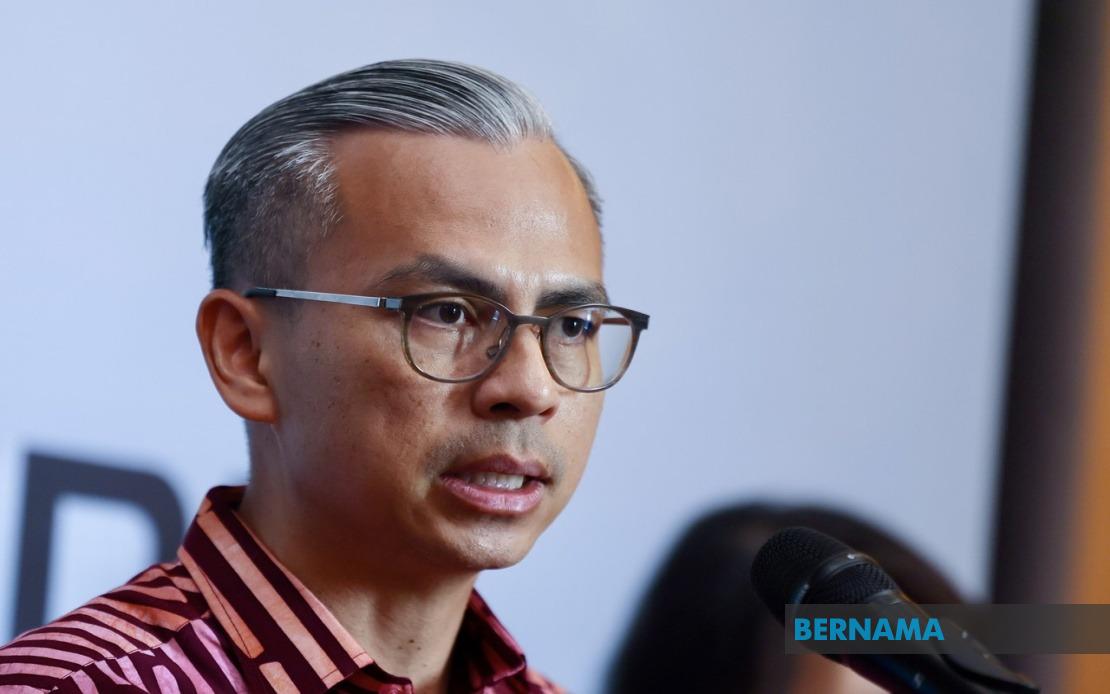
Bank customers across Malaysia who continue to encounter charges for interbank cash withdrawals at bank-owned automated teller machines should escalate their complaints directly to Bank Negara Malaysia, according to Communications Minister Datuk Fahmi Fadzil. The directive comes as a nationwide waiver of the RM1 fee commenced yesterday, signalling the government's commitment to reducing transaction costs for ordinary Malaysians navigating the banking system.
Fahmi, serving as the MADANI Government's official spokesman, emphasised that the central bank possesses regulatory authority to pursue enforcement action against any financial institution that breaches the new fee waiver arrangement. Speaking during the Communications Ministry's regular press briefing in Kuala Lumpur on Tuesday, he underscored the importance of customer vigilance in ensuring compliance across the sector. This proactive stance reflects growing public concern about hidden banking charges and their cumulative impact on household finances.
The fee waiver framework extends specifically to ATMs owned and operated by banks participating in Malaysia's shared automated teller machine network—a system designed to promote financial inclusion by permitting depositors to withdraw funds from any member institution's machines without additional penalties. BNM's clarification acknowledged that this arrangement differs markedly from ATMs maintained by alternative operators, preventing potential customer confusion about which machines qualify under the new dispensation. The precision of this distinction matters considerably for ordinary users attempting to navigate their banking options in real time.
Statistically, the initiative captures approximately 84 per cent of all bank-owned automated teller machines nationwide, translating to nearly 16,000 machines where customers can now transact without incurring the controversial RM1 surcharge. This substantial coverage represents a significant expansion of fee-free banking infrastructure across urban and suburban areas throughout the country. However, the remaining 16 per cent of machines—those operated by non-banking private sector companies under independent commercial arrangements—will continue levying the standard withdrawal fee, maintaining the necessity for customer awareness about machine operators.
Fahmi advised customers to identify qualifying bank-owned ATMs by carefully examining the logos displayed on each machine's fascia, rather than making assumptions based on machine location or appearance. This straightforward verification method empowers users to make informed decisions about their banking transactions and avoid unexpected charges. The clarity offered by physical branding proves especially valuable in shopping malls, transportation hubs, and other high-traffic locations where multiple ATM operators coexist in proximity.
Public enquiries flooding social media platforms prompted the need for this comprehensive clarification, demonstrating the confusion that emerged during the policy's initial rollout phases. The disconnect between announcement and implementation often creates friction for consumers attempting to understand regulatory changes affecting their daily financial dealings. BNM's decision to provide explicit guidance reflects the agency's recognition that transparent communication represents an essential component of effective policy implementation.
The Association of Banks in Malaysia and the Malaysian Islamic Banking and Financial Institutions Association are expected to jointly publish a detailed statement providing supplementary implementation guidance in coming days. This coordinated approach between industry associations and regulatory bodies signals commitment to ensuring uniform compliance and customer understanding across both conventional and Islamic banking sectors. Such cooperation proves essential in an increasingly complex financial ecosystem where multiple stakeholders must coordinate messaging to prevent further public confusion.
Beyond the ATM fee matter, Fahmi highlighted what he characterised as another significant validation of Malaysia's investment attractiveness. An international financial technology enterprise has established a Global Development Centre at Tun Razak Exchange, a decision that Fahmi presented as evidence of strengthened investor confidence in the nation's economic trajectory. This development centre, focused particularly on Agentic Artificial Intelligence applications, positions Malaysia within global conversations about emerging technologies and digital innovation.
The technology company's decision to locate its inaugural global facility of this nature in Malaysia rather than competing financial hubs carries symbolic and practical significance for the broader investment community. Fahmi attributed this choice explicitly to perceptions of political stability and economic policy consistency under the MADANI administration, suggesting that foreign investors increasingly view Malaysia as a relatively secure jurisdiction for substantial capital commitments. The establishment of such a centre could generate employment opportunities for Malaysian technology professionals and enhance the nation's profile in fintech circles.
For Southeast Asian observers, Malaysia's success in attracting foreign technology investment while simultaneously addressing consumer grievances around banking fees illustrates the multifaceted nature of contemporary economic governance. Policymakers must simultaneously create conditions attracting multinational enterprises whilst demonstrating responsiveness to ordinary citizens' frustrations with service delivery and transaction costs. The MADANI Government's dual emphasis on investment promotion and consumer protection suggests an attempt to balance competing economic priorities within the region's evolving competitive landscape.

