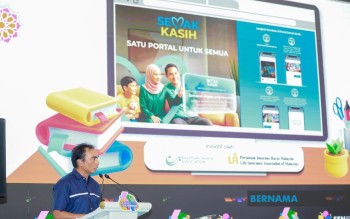
Bank Negara Malaysia has introduced a digital platform designed to simplify the process of identifying unclaimed insurance policies and takaful certificates, addressing a persistent gap in Malaysia's financial protection landscape. The 'Semak Kasih' portal, unveiled at the Terengganu Financial Literacy Carnival, represents a collaborative effort to bridge the disconnect between beneficiaries and their rightful claims. BNM Deputy Governor Adnan Zaylani Mohamad Zahid explained that the initiative stems from recognition that many families remain unaware of coverage their deceased relatives had secured, potentially leaving substantial benefits unclaimed and families without crucial financial support during periods of hardship.
The scale of the problem is significant. Industry estimates from the Life Insurance Association of Malaysia and Malaysian Takaful Association indicate approximately 50,000 insurance policies and takaful certificates carrying death benefits remain in limbo, unclaimed by intended beneficiaries. These dormant policies represent a substantial pool of financial protection that should serve its original purpose: providing families with resources to manage medical expenses, replace lost income, or recover from catastrophic events. The disconnect between policyholders and their beneficiaries underscores a broader challenge in Malaysia's financial ecosystem where documentation practices and family communication around financial arrangements remain inconsistent across income levels and demographic segments.
The portal addresses this problem by creating a centralised, accessible mechanism for beneficiaries to verify whether deceased relatives held active coverage and to initiate contact with relevant providers. Rather than requiring families to navigate multiple insurance companies or takaful operators independently, the platform consolidates information and streamlines the verification process. This approach acknowledges the practical difficulties beneficiaries face: they may not know which companies their relatives used, may lack access to original policy documents, or may be uncertain about policy types and coverage details. By reducing these procedural barriers, the portal aims to accelerate the claims process and ensure benefits reach qualified family members promptly.
Insurance and takaful protection serves critical functions within Malaysian household financial planning, yet uptake and awareness remain inconsistent. Protection mechanisms help families navigate medical crises, income loss from accidents or disability, and catastrophic property damage. However, coverage only delivers value when claims are actually submitted and processed. The problem of unclaimed benefits reflects not merely administrative inefficiency but a deeper issue: insufficient financial literacy regarding what coverage exists, how to access it, and the importance of maintaining family-level awareness of financial protection arrangements. Adnan Zaylani emphasised that families should not dismiss insurance and takaful considerations as peripheral concerns but recognise them as foundational elements of financial security that activate precisely when households face their most vulnerable moments.
The launch coincides with BNM's broader financial literacy agenda, which extends beyond insurance to encompass broader skills in digital financial management and prudent spending. The central bank's research findings reveal troubling patterns in Malaysian consumer behaviour: approximately 37 per cent of Malaysians engage in impulsive online purchases, while 26 per cent carry unsustainably high debt burdens. These statistics suggest that despite growing access to digital financial tools and products, significant gaps persist in financial discipline and decision-making skills. The 'Semak Kasih' portal sits within a larger ecosystem of BNM initiatives designed to strengthen household financial resilience, from microfinance programmes supporting small enterprises to educational programmes targeting students and workers.
Beyond the portal itself, BNM has implemented complementary strategies to enhance financial protection accessibility across Malaysian society. The iTekad initiative has engaged more than 14,000 participants nationally—including approximately 600 in Terengganu—providing training and support that has measurably improved participant incomes and living standards. The Financial Education Forum, meanwhile, represents a commitment to ensuring financial knowledge reaches all demographic segments, including persons with disabilities, through the development of an inclusive, user-friendly digital education platform. These initiatives recognise that financial resilience requires sustained effort across multiple dimensions: access to protective products, knowledge to utilise them effectively, and platforms to verify and claim benefits.
Support mechanisms for micro, small, and medium enterprises form another pillar of BNM's strategy to strengthen the broader Malaysian financial ecosystem. The central bank continues to facilitate access to financing through various schemes, including microfinance products offering up to RM100,000 without collateral requirements, reducing barriers for operators lacking substantial assets. More recently, the SME Stabilisation Relief Facility allocated RM5 billion to assist companies affected by regional geopolitical disruptions, with working capital financing available up to RM750,000. These measures recognise that small enterprise resilience directly impacts employment stability and household income security across Malaysia, particularly in regions like Terengganu dependent on diverse small business activity.
The emphasis on financial education from childhood onwards reflects international research demonstrating that savings behaviours and financial discipline established early generate compounding benefits across lifespans. Consistent saving from youth, even in modest amounts, produces substantially larger accumulated resources by retirement than sporadic saving undertaken later. This principle underpins BNM's support for initiatives such as the MyDuitStory competition and the FEN Proaktif 2.0 Programme developed with Universiti Malaysia Terengganu, both designed to embed financial management competencies within formal education. By equipping students with practical knowledge before entering the workforce, these programmes aim to establish better-informed, more deliberate financial decision-making patterns that can persist throughout working lives.
Digitalisation has fundamentally transformed Malaysian financial access and opportunity, yet simultaneously introduced new risks. Greater online access enables faster transactions and broader product selection, but simultaneously increases exposure to fraud, cybersecurity breaches, and behavioural spending pressures inherent in frictionless digital commerce. Adnan Zaylani stressed the importance of conscientious digital financial behaviour, acknowledging that while external economic conditions and technological change remain beyond individual control, personal financial decisions remain subject to deliberate choice. This framing—emphasising agency and responsibility—positions financial resilience not merely as a matter of product access but as an outcome of consistent, thoughtful decision-making sustained across time.
For Malaysian households and small business operators, the 'Semak Kasih' portal represents a tangible opportunity to recover financial benefits that existing family members may have overlooked or forgotten. More broadly, the platform exemplifies BNM's approach to addressing financial system inefficiencies: identifying genuine problems affecting substantial populations, developing practical technological solutions, and embedding these within broader educational and support frameworks. The initiative recognises that financial protection and security extend beyond individual product purchase decisions to encompass family communication, documentation practices, and systematic mechanisms to ensure benefits ultimately reach intended recipients. As Malaysia navigates persistent economic uncertainty and rising living costs, ensuring that existing protective mechanisms function effectively—rather than remaining dormant—constitutes an essential but often overlooked element of household financial strategy.

