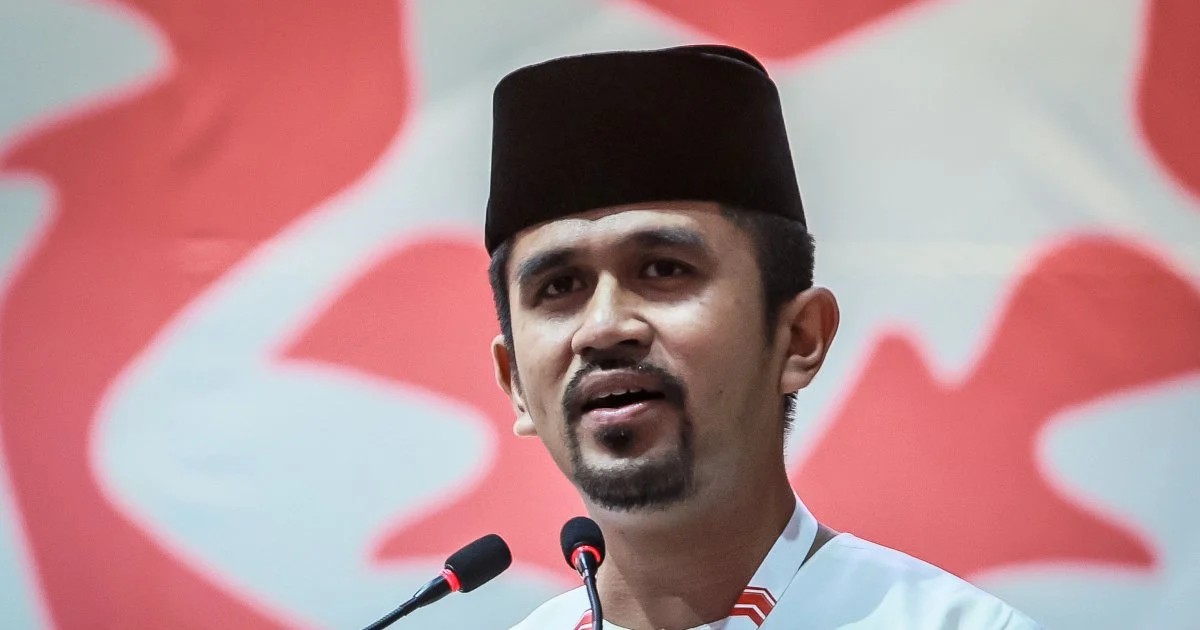
The Barisan Nasional Youth movement has thrown down a challenge to Pakatan Harapan, questioning why several prominent figures within the coalition's Johor ranks have been excluded from the candidate line-up for the July 11 state election. The broadside came from Umno Youth secretary-general Hafiz Ariffin, who seized on what he characterizes as a conspicuous absence of heavyweight PH personalities in the electoral battle, using the omission as ammunition to suggest internal weakness within the opposition coalition.
This intervention by BN Youth represents a tactical shift in the state election campaign, moving beyond simple policy disagreements into personality-driven critiques of the opposition. By highlighting which established political figures have not made the candidate cut, Hafiz Ariffin is attempting to plant questions in voters' minds about the stability and confidence within the PH machinery. The strategy reflects a broader electoral playbook where a party seeks to expose internal contradictions in its opponents, reasoning that voters may hesitate to back a coalition that appears unsure of its own leadership lineup.
For Malaysian political observers, the timing of this challenge merits attention. The July 11 Johor state election marks a critical test of support for both BN and PH in one of the country's largest and most strategically important states. Johor has traditionally been a Umno stronghold, and maintaining that dominance remains central to BN's broader political objectives. Any successful PH inroads into the state would represent a significant breakthrough for the opposition and potentially reshape the national political landscape ahead of the next general election.
The absence of top-tier PH personalities from the Johor candidate roster could indeed reflect genuine strategic calculations by the coalition's leadership, rather than forced exclusions or internal discord. Opposition parties sometimes retain senior figures in advisory or supporting roles while fielding fresh or younger candidates to project dynamism and renewal. This approach allows established leaders to maintain influence without necessarily standing for election themselves, a practice not uncommon in competitive political environments.
Yet Hafiz Ariffin's questioning also touches on a real tension within PH's Johor operations. The coalition has long struggled to build deep organizational roots in a state where BN's machinery remains formidable and where Umno retains significant grassroots loyalty despite recent national setbacks. If the prominent voices are genuinely stepping back from the election contest, it could signal either confidence that a younger bench is ready to lead, or alternatively, a lack of confidence that familiar faces can secure victory in a challenging political terrain.
The commentary from BN Youth deserves scrutiny also for what it reveals about Barisan Nasional's own mindset. Rather than focusing exclusively on articulating its own vision for Johor's future, BN appears increasingly inclined to interpret PH's electoral strategy through a lens of weakness or vulnerability. This defensive posturing, albeit dressed in aggressive rhetoric, may itself indicate some nervousness within BN's hierarchy about the state election outcome and the broader political trajectory.
Johor's importance to both coalitions cannot be overstated. The state accounts for over 50 state assembly seats and has served as a crucial financial and political resource base for Umno and BN historically. Any loss of ground in Johor would reverberate far beyond the state's borders, affecting both the national balance of power and the psychological momentum heading into future elections. BN's leadership has consistently emphasized the need to protect its Johor heartland as essential to maintaining federal-level dominance.
For PH, meanwhile, the Johor state election represents an opportunity to demonstrate that its 2022 general election success and subsequent entry into the Pakatan Merah coalition at the federal level translate into genuine electoral appeal across Malaysia's regions. Success in Johor would validate PH's claim to be a genuinely national political force rather than one concentrated in specific strongholds. Conversely, a poor showing would reinforce criticisms that PH remains unable to break substantially into traditionally BN-held territory.
The question raised by Hafiz Ariffin about candidate selections ultimately reflects the high stakes involved in this electoral contest. Both coalitions are making calculated decisions about which personalities to field and which to keep in reserve, with each choice carrying implications for how voters perceive party strength and unity. That these decisions are becoming fodder for inter-coalition messaging demonstrates how closely the two sides are watching each other's moves, with every tactical choice subject to intense scrutiny and reinterpretation.
As the July 11 election approaches, such exchanges between BN and PH will likely intensify. The battle for Johor will be won or lost less by abstract arguments about party identity and more through the concrete effectiveness of campaign machinery, local constituency organization, and the ability of candidates on the ground to connect with voters. Yet the psychological dimension—questions about confidence, unity, and leadership strength—will undoubtedly influence how undecided voters assess their options. Hafiz Ariffin's challenge to PH represents an attempt to inject doubt into that crucial middle segment of the electorate, regardless of the substantive reasons behind any leadership absences from the candidate line-up.