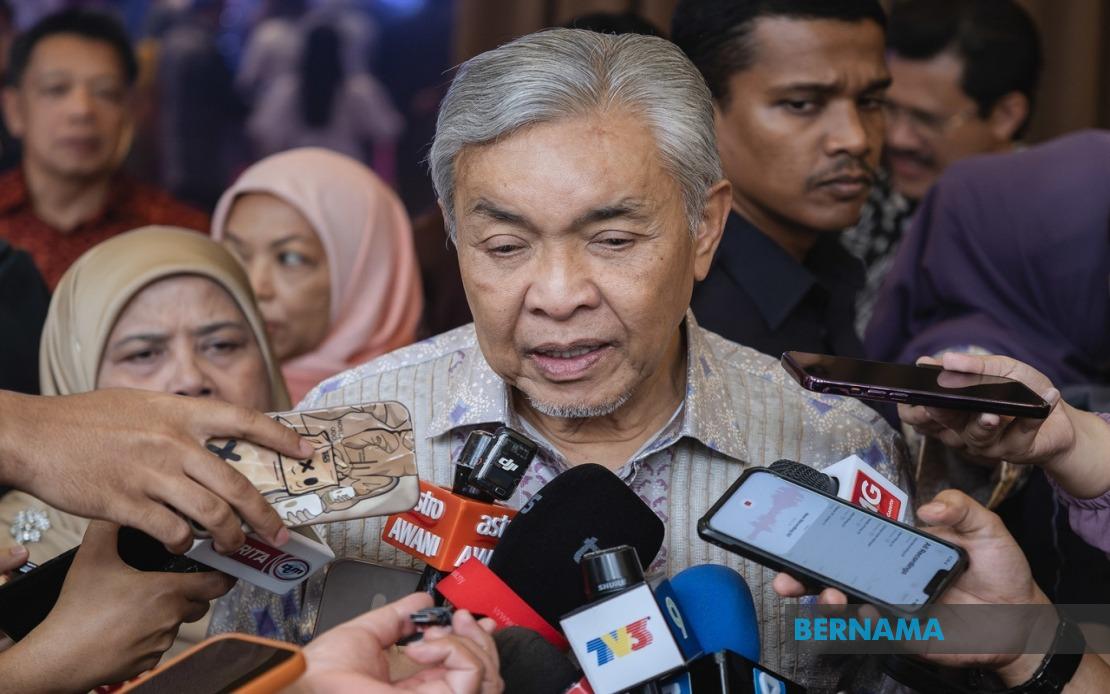
Barisan Nasional has committed to maintaining a clear boundary between party politics and the royal institution in Negeri Sembilan, Deputy Prime Minister Datuk Seri Dr Ahmad Zahid Hamidi declared during remarks at a government service recognition event in Kuala Lumpur. The statement represents an important clarification of the coalition's approach as the state gears up for its 16th general election scheduled for August 1, drawing a careful distinction between electoral competition and matters that fall within the purview of constitutional and legal authorities.
Ahmad Zahid, who simultaneously holds the presidency of UMNO, the dominant component party within Barisan Nasional, outlined this position following consultations with the state party machinery aimed at coordinating campaign efforts. His emphasis on non-interference with the Negeri Sembilan Council of Justice and Laws (DKU) and related royal matters signals an attempt by the coalition to avoid becoming entangled in constitutional or judicial controversies that could complicate its electoral prospects. The explicit commitment underscores a recognition that overreach into these sensitive domains could alienate voters and undermine the party's broader campaign message.
The pledge carries particular significance given Malaysia's constitutional framework, wherein state rulers and their advisory bodies hold considerable authority over matters of governance and law within their respective territories. For Negeri Sembilan, the DKU functions as a crucial advisory mechanism to the Sultan, and any appearance of political interference with such institutions could trigger substantial public backlash and constitutional complications. By publicly distancing Barisan Nasional from these affairs, Ahmad Zahid appears intent on reassuring both the palace establishment and ordinary voters that his party respects the constitutional order and is not seeking to subordinate legal or royal prerogatives to electoral advantage.
Ahmad Zahid elaborated that internal party cohesion represents the coalition's primary focus in the lead-up to the election. Unifying UMNO members and allied party cadres across all organizational levels has become a cornerstone of the campaign strategy, reflecting broader concerns about fractures within Barisan Nasional's traditional base. Negeri Sembilan, with 36 state seats at stake, represents a meaningful test of the coalition's ability to consolidate support and mobilize voters effectively. The emphasis on grassroots unity suggests that campaign strategists recognize the election will not simply be decided by top-level positioning but rather by the effectiveness of local-level organization and messaging.
A critical departure from previous electoral contests lies in the coalition's changed partnership structure. During the 15th Negeri Sembilan state election, Barisan Nasional operated in tandem with components of Pakatan Harapan, creating a consolidated opposition to competing blocs. This collaborative arrangement will not be replicated in the forthcoming contest, marking a fundamental shift in the electoral landscape. The reconfiguration suggests either altered political calculations at the federal level or recognition that previous coalition arrangements have become unstable or electorally counterproductive. Ahmad Zahid's statement that internal unity will now suffice, rather than expanded multi-coalition partnerships, indicates confidence that Barisan Nasional can contest effectively on its own merits.
The timing of Ahmad Zahid's remarks, made while he was present at the Ministry of Rural and Regional Development's service excellence ceremony alongside Deputy Minister Datuk Rubiah Wang, reflects the integration of campaign positioning into routine governmental activities. Such settings provide platforms for senior leaders to communicate policy priorities and electoral intentions while maintaining the appearance of conducting official business. The event itself, focused on recognizing excellence in rural development services, aligns thematically with Barisan Nasional's traditional messaging around infrastructure development and service provision, areas where the coalition has historically sought to build electoral support.
For Malaysian political observers, the Negeri Sembilan contest represents a consequential barometer of voter sentiment heading into potential federal-level electoral cycles. The state sits geographically and politically between Selangor and other central regions, making it a natural battleground where different coalitions test messaging and organizational effectiveness. A strong performance by Barisan Nasional would reinforce the coalition's recovery narrative following the 2018 federal election setback, while conversely, losses would raise questions about the durability of recent polling improvements and the coalition's ability to retain traditional strongholds.
The composition of Negeri Sembilan's electorate reflects broader Malaysian demographic patterns, combining urban constituencies with more rural areas. This mix demands that any competitive party craft messages addressing both urban concerns around economic opportunity and governance standards, as well as rural priorities centered on agricultural support and infrastructure. Barisan Nasional's reliance on internal party unity rather than external coalition partnerships suggests confidence that its traditional message regarding economic development and stable governance will resonate sufficiently across these diverse constituencies without requiring supplementary partners to broaden electoral appeal.
The explicit commitment to avoid interference in royal and legal matters also carries implications for how federal-state relations may evolve should Barisan Nasional retain or expand its representation in the state assembly. Clear delineation between electoral politics and constitutional spheres establishes framework within which state and federal authorities can operate, reducing potential sources of conflict between different levels of governance. This clarity becomes particularly important in a Malaysian context where federal and state governments sometimes operate under different political control, necessitating functional relationships that transcend party affiliation.
Looking forward, Ahmad Zahid's statements will likely set the tone for how other Barisan Nasional leaders approach the Negeri Sembilan campaign. By establishing respect for royal institutions and legal processes as non-negotiable principles, he has created boundaries that should discipline campaign rhetoric and prevent candidates from crossing into constitutionally sensitive terrain. Such discipline, if maintained throughout the campaign period, could serve the coalition's interests by maintaining the appearance of institutional respect while focusing partisan competition on policy and performance records rather than on challenges to established authority.
The August 1 election will reveal whether Barisan Nasional's strategy of internal consolidation, respectful non-interference with royal and legal matters, and reliance on its own organizational capacities proves sufficient to satisfy Negeri Sembilan voters. The results will provide important indicators of whether the coalition's recent modest improvements in polling reflect genuine recovery or temporary fluctuations, and whether voters in this strategically positioned state view the coalition's traditional approaches to governance and development as relevant responses to contemporary concerns.

