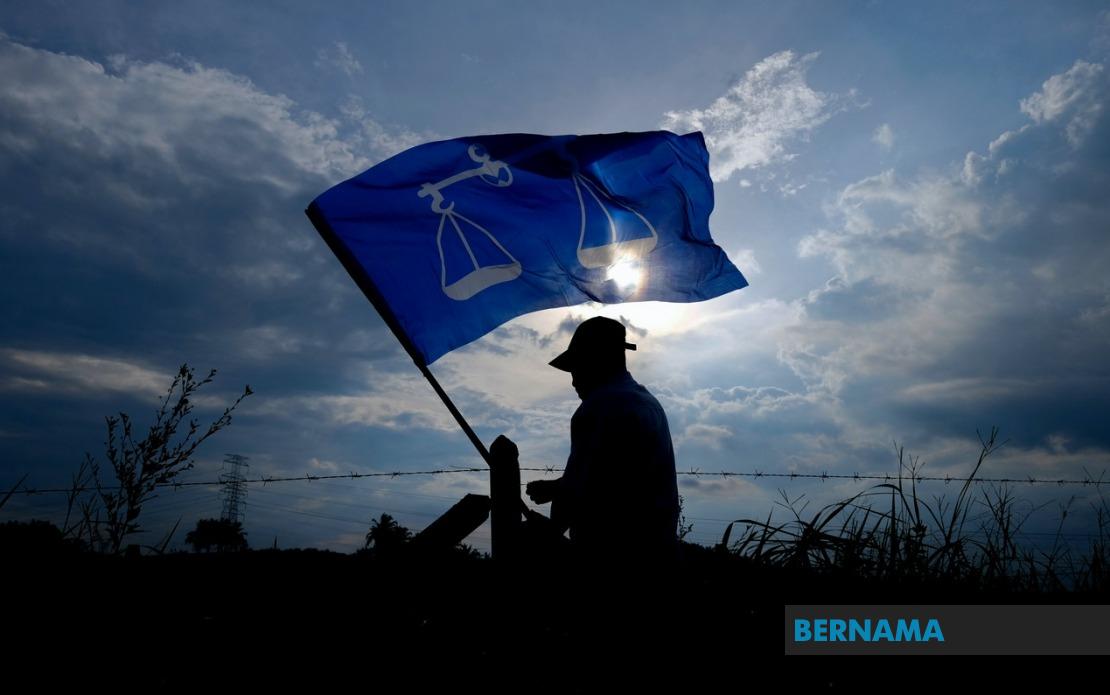
Barisan Nasional intends to recalibrate its political strategy and candidate selection process for the forthcoming Negeri Sembilan state election, taking into account the state's unique demographic profile and established voting patterns. This declaration came from BN chairman Datuk Seri Dr Ahmad Zahid Hamidi, who also holds the Deputy Prime Minister portfolio, during remarks to the press in Kuala Lumpur on July 13.
Ahmad Zahid's emphasis on customisation reflects a recognition that Negeri Sembilan presents a distinctly different political terrain compared to other states in the federation. The state's combination of seat distribution, population composition, and historical voting preferences demands a tailored rather than standardised approach. Rather than applying a blanket formula across all states where BN contests, the coalition plans to develop a strategy calibrated specifically to Negeri Sembilan's circumstances. This more granular approach suggests a shift towards data-driven campaign planning within BN's strategic framework.
The timing of this announcement carries significance given BN's recent electoral performance. The coalition achieved victory in the Johor state election just days prior, and Ahmad Zahid attributed that success to what he characterised as mental resilience and emotional creativity in navigating campaign difficulties. This emphasis on psychological and creative factors, rather than merely organisational or policy-based advantages, hints at BN's evolving understanding of contemporary electoral dynamics. The lessons drawn from Johor's campaign are now being applied to prepare for the Negeri Sembilan contest, suggesting the coalition is actively learning from recent experiences.
Candidate announcements are expected within the week following Ahmad Zahid's statement, indicating that discussions and deliberations around the selection formula have advanced considerably. This timeline places the candidate slate announcement at the centre of BN's immediate political calendar for the state. The formula's refinement is not merely a technical exercise but reflects broader coalition dynamics, particularly regarding power-sharing arrangements and the balancing of interests among BN's component parties in a state context.
The question of cooperation with PAS, particularly concerning the proposed candidate for Negeri Sembilan Menteri Besar, remains fluid and unresolved at the formal level. Ahmad Zahid was notably cautious in his language, emphasising that no binding agreement exists between BN and PAS on this matter. Rather, discussions between the two coalitions reflect preliminary understandings that have not yet crystallised into formal commitments. This distinction carries practical implications for candidate selection, as it suggests ongoing negotiations rather than predetermined outcomes. The lack of a finalised agreement indicates that discussions remain open and subject to further refinement, with no agreement should be prematurely treated as settled fact.
Ahmad Zahid's comments regarding Housing and Local Government Minister Nga Kor Ming, the DAP deputy chairman, reflect the delicate balance required within the Unity Government at the federal level. Calls for Nga's resignation on certain policy matters prompted Ahmad Zahid to defend the principle of collegial governance within the ruling administration. His argument that such public criticism becomes inappropriate once parties enter government together underscores the fundamental tension within Malaysia's multi-party coalition model. The statement conveys a message that coalition partners must exercise restraint in public criticism of one another to preserve governmental cohesion, regardless of underlying policy disagreements.
Ahmad Zahid's assertion that he maintains a personal friendship with Nga Kor Ming, coupled with his commitment to meet him further, serves to humanise coalition relationships beyond mere political calculation. This approach emphasises the interpersonal dimension of coalition management, suggesting that relationships among Unity Government leaders remain grounded in mutual respect despite inevitable policy differences. The framing of his response suggests that Ahmad Zahid views personal relationships and professional cooperation as interdependent rather than separate concerns.
Broader context for Negeri Sembilan's electoral prospects must account for the state's distinct political character within Malaysia's federal system. Negeri Sembilan has historically demonstrated voting patterns that sometimes diverge from national trends, reflecting both its geographic position in the Klang Valley periphery and its unique demographic mix. The state's relatively modest seat count compared to major states like Selangor or Johor means that electoral contests here can significantly influence the overall BN performance narrative, even if they affect fewer parliamentary seats and positions. Understanding these nuances is essential for effective campaign targeting.
The Unity Government's cohesion remains a critical factor in BN's ability to execute a sophisticated, state-specific strategy for Negeri Sembilan. Unlike opposition coalitions, which can afford public recriminations and blame-shifting, governing coalitions must project unity while managing internal disputes. Ahmad Zahid's defence of the government's collective interests against what he perceives as inappropriate public criticism reflects this operational necessity. The strength of cooperation among federal-level coalition partners directly influences their ability to project confidence and coordination at the state electoral level.
For Malaysian voters and observers, the Negeri Sembilan contest represents a significant barometer of BN's political momentum following the Johor victory. The coalition's willingness to invest intellectual effort in crafting state-specific strategies, rather than deploying generic formulas, suggests confidence tempered by analytical rigour. The emphasis on demographic and voting pattern analysis indicates that BN views electoral success as contingent upon sophisticated targeting and tailored messaging rather than relying solely on organisational machinery or brand recognition. This methodological shift reflects broader trends in Malaysian political competition towards more professionalised and data-informed campaign approaches.

