Barisan Nasional is banking heavily on FELDA communities to deliver decisive support in the Kulai parliamentary constituency during the 16th Johor state election on July 11, with party leaders pointing to improved welfare initiatives and resolved grievances as factors bolstering their prospects. The coalition oversees nearly 7,000 voters spread across four Federal Land Development Authority settlements within the constituency, representing a potentially significant bloc in what is shaping as a tightly contested political battle for control of the state.
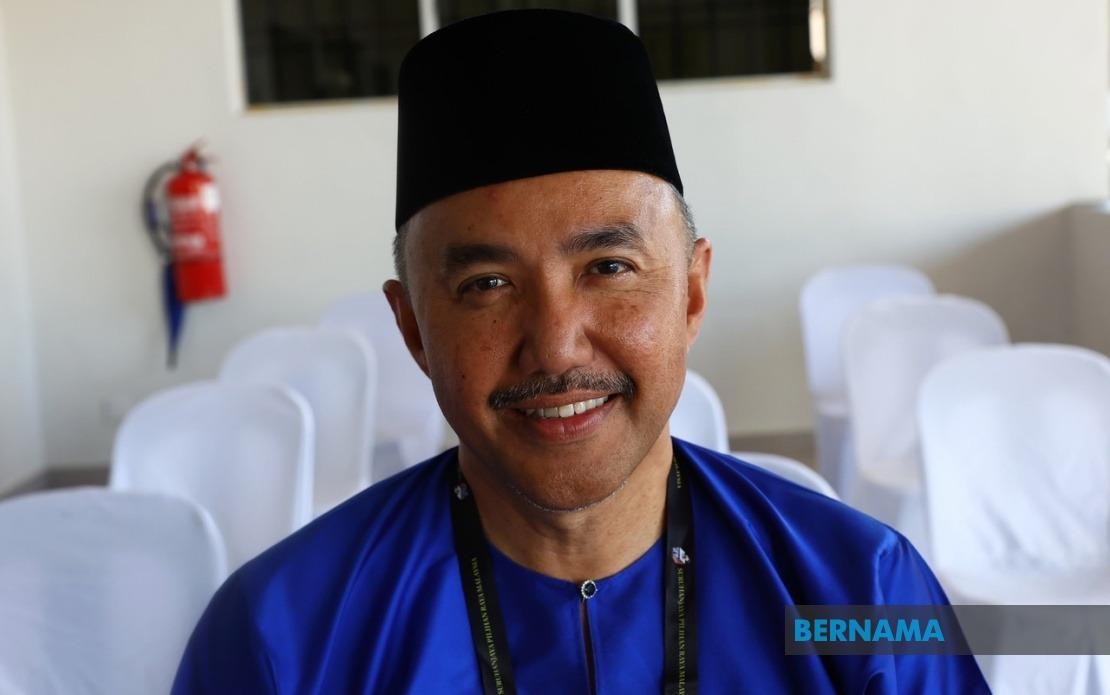
Datuk Mohd Jafni Md Shukor, who chairs BN operations in Kulai and is personally defending the Bukit Permai state seat, identified the four settlements as FELDA Taib Andak, FELDA Inas, FELDA Bukit Permai, and FELDA Bukit Batu. The first three are situated within the Bukit Permai state constituency, whilst the fourth occupies its own electoral division. His assessment of coalition prospects in these areas reflects a deliberate strategy to reclaim ground that FELDA communities have traditionally anchored.
The political calculus has shifted markedly since 2018, when BN suffered a substantial erosion of support among FELDA voters—a demographic that once formed a bedrock of the coalition's electoral machinery. Jafni attributed this reversal to grievances accumulated over years of neglected development and unresolved community concerns. However, the 2022 election indicated a tentative recovery, suggesting that corrective measures undertaken by the Menteri Besar Datuk Onn Hafiz Ghazi administration had begun resonating with settlers and their families.
Central to BN's pitch is the Johor government's four-year track record of addressing longstanding issues within FELDA communities. Jafni highlighted the resolution of a protracted land title dispute affecting thousands of settlers, with 99.9 per cent of ownership applications now finalised. This achievement carries symbolic weight beyond its administrative significance; land security remains foundational to FELDA settler confidence and their sense of government responsiveness to their material interests.
The coalition has also channelled educational support through the Johor Education Foundation (YPJ), which provides assistance to FELDA children navigating secondary and tertiary pathways. Such targeted welfare measures operate at the intersection of immediate family concerns and broader social mobility aspirations. By framing education funding as a direct government investment in FELDA youth futures, BN seeks to build political capital that extends beyond individual beneficiaries to encompass entire household units.
Jafni's emphasis on continuity and unfinished business introduces a familiar narrative in Malaysian state politics: the notion that a single electoral mandate proves insufficient to entrench developmental gains. By appealing to voters to grant a second term, he positions the upcoming election not as a referendum on current performance but as a choice between sustained momentum and potential disruption. This framing carries particular weight in constituencies where visible infrastructure projects or welfare programmes remain incomplete.
The political contest in Bukit Permai has broadened into a four-cornered fight involving Muhammad Aidil Riduan Mohd Yusof of Parti Bersama Malaysia (Bersama), Mohamad Shafwan Ani representing Pakatan Harapan (PH), and M. Lina Manoh of Perikatan Nasional (PN). Jafni's 4,755-vote majority in 2022 provided a comfortable buffer, yet the fragmentation of the opposition into three distinct camps potentially works in his favour by dividing anti-BN sentiment across multiple candidatures. Nevertheless, each challenger carries distinct appeals to different segments of the electorate, necessitating a disciplined ground operation across the entire Kulai parliamentary zone.
BN's ambitions extend beyond merely defending Bukit Permai; the coalition aims to capture the neighbouring Bukit Batu and Senai state seats, which together with Bukit Permai comprise the three legislative divisions within Kulai. Such a sweep would constitute a decisive mandate within this particular parliamentary constituency and reinforce the messaging that swing constituencies are solidifying behind the coalition. The symbolic importance of this particular electoral zone transcends its numerical contribution to the Johor state assembly, as victories here would validate BN's broader campaign narrative of recovery and regional consolidation.
For FELDA communities, this election represents an opportunity to exercise meaningful influence over the direction of state policy affecting their welfare. The settlements within Kulai have historically demonstrated an ability to move decisively as a bloc, making them a proving ground for broader FELDA sentiment across Johor. Whether the improvements outlined by Jafni prove substantial enough to overcome the institutional memory of past disappointments remains a critical variable in determining the election outcome.
The Johor state election occurs within a broader context of repositioning for federal politics and renewed competition between BN and its rivals for control of crucial states. Success in constituencies like Kulai, where FELDA voters represent a meaningful demographic, carries implications extending well beyond state-level governance. A strong FELDA vote in BN's favour would reinforce the coalition's capacity to mobilise traditional support bases and offer reassurance to rural constituencies that BN remains their preferred political vehicle for advancing sectional interests.

