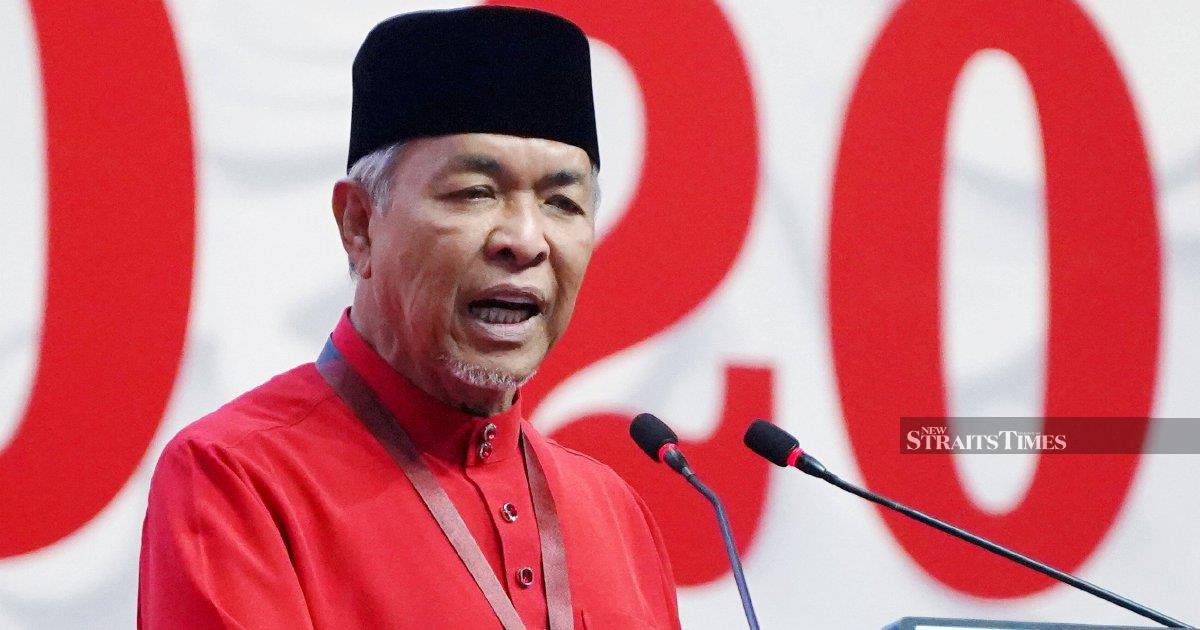
Malaysia's political leadership is bracing for potential accountability measures following a Royal Commission of Inquiry into Tabung Haji operations. Barisan Nasional chairman and Umno president Datuk Seri Dr Ahmad Zahid Hamidi has made clear that neither the ruling coalition nor his party will shield members from consequences should the investigation uncover misconduct. This signal of willingness to pursue internal accountability marks a significant moment as the inquiry proceeds into the Islamic pilgrimage fund's management and governance structures.
The Royal Commission of Inquiry represents a critical juncture for one of Malaysia's most important institutions. Tabung Haji, which manages pilgrimage savings for hundreds of thousands of Malaysians, has faced scrutiny regarding its operational transparency and financial stewardship. The establishment of the RCI itself reflects public and political concern about how the fund has been administered, and whether existing safeguards have adequately protected contributor interests. For many Malaysians, particularly those from rural and lower-income communities, Tabung Haji represents accumulated savings earmarked for one of Islam's five pillars.
Zahid's declaration carries weight within Malaysia's political context, where party loyalty and internal protection have historically complicated investigations into misconduct by senior figures. By publicly committing BN and Umno to non-interference, the party leadership appears to be acknowledging that institutional credibility depends on demonstrable accountability rather than partisan shielding. This approach represents a tactical pivot from past patterns where political affiliations sometimes influenced the trajectory of investigations into party members.
The implications for Southeast Asia's largest Muslim-majority nation extend beyond Tabung Haji itself. Malaysia's financial institutions and government-linked companies operate in an increasingly complex global environment where transparency standards are rising. International investors and regulatory bodies closely monitor how major emerging markets handle internal investigations and governance failures. A rigorous and impartial RCI process, followed by genuine consequences regardless of political affiliation, would reinforce Malaysia's institutional credibility in an era when governance standards significantly influence foreign capital flows and international confidence.
For the broader BN coalition, which includes parties beyond Umno, accepting accountability mechanisms creates a governance framework that could serve as template for other institutional inquiries. The ruling coalition's legitimacy rests partly on demonstrating capacity for self-correction and transparent institutional management. In a regional context where neighbouring governments face criticism over governance deficits, Malaysia's willingness to pursue internal inquiries with genuine independence becomes a competitive advantage in the international marketplace of confidence and investment.
The criminal breach of trust dimension mentioned by Zahid carries particular significance. Malaysian law contains provisions addressing misappropriation of public funds and abuse of fiduciary responsibilities, and if the RCI discovers evidence meeting these thresholds, referral to prosecutorial authorities would represent a logical endpoint. The fact that Zahid has explicitly acknowledged this possibility suggests an acceptance that political status may not insulate individuals from legal proceedings—a principle that Malaysian society has struggled to institutionalize consistently.
Umno's political position also informs this stance. As the largest component of BN and a party that has dominated Malaysian politics for decades, Umno's reputation carries significant weight in coalition dynamics. Public perception of fairness in handling party members' misconduct directly impacts voter confidence. For Umno specifically, demonstrating that internal accountability mechanisms function independently of party protection could reshape narratives around institutional integrity that have been contested in recent political cycles.
The Tabung Haji fund itself serves approximately 10 million contributors nationwide, making it one of Malaysia's most widely utilized financial institutions. Governance failures at this scale create ripple effects through communities dependent on reliable pilgrimage savings mechanisms. Rural contributors, particularly in states with lower average incomes, represent a demographic whose trust in financial institutions is essential for broader economic participation. An inquiry that identifies and addresses systemic governance weaknesses would serve these constituents' fundamental interests in asset security and transparent management.
Regional observers have noted that institutional accountability varies significantly across Southeast Asia, with some nations developing stronger mechanisms than others. Malaysia's approach to the Tabung Haji RCI may influence how other countries in the region structure investigations into large government-linked entities. The precedent of allowing inquiries to proceed without partisan interference, while ensuring consequences flow from genuine findings rather than political calculation, contributes to regional governance standards that ultimately benefit all participating nations through enhanced investor confidence and institutional stability.
The investigative process itself will likely examine decision-making structures, fund allocation mechanisms, risk management protocols, and financial reporting practices. If the RCI identifies areas where governance protocols were circumvented or inadequately supervised, recommendations would presumably include structural reforms alongside accountability measures for individuals involved. Zahid's public commitment to non-interference suggests willingness to implement findings, though the actual scope of consequences will ultimately depend on what the inquiry discovers and how referring authorities act on those discoveries.

