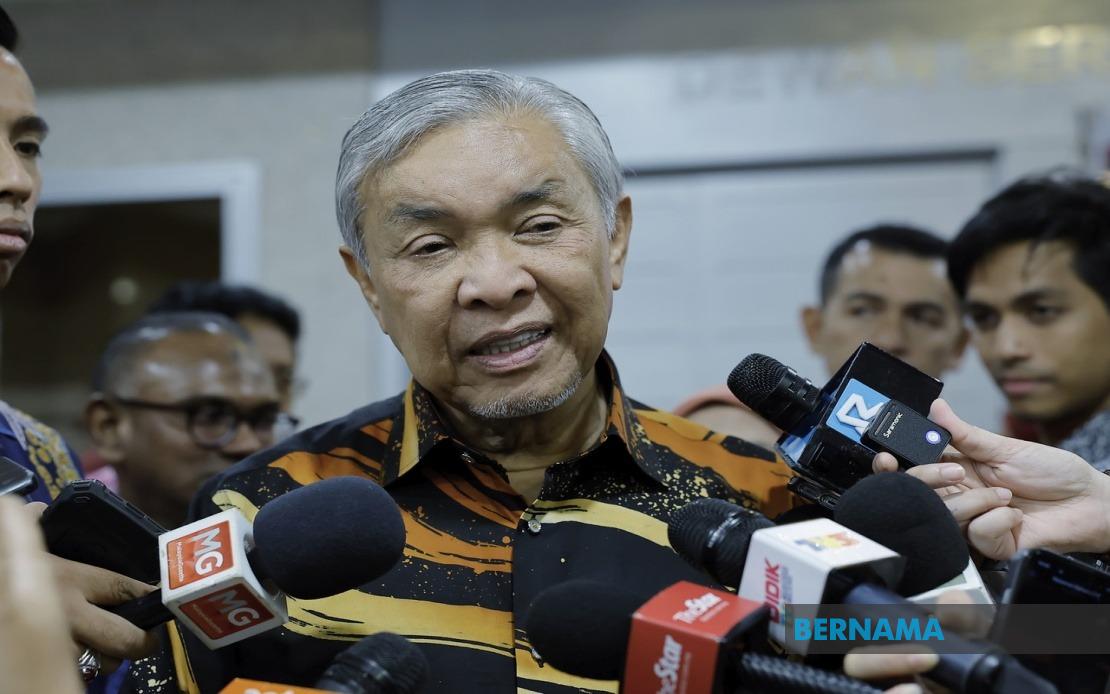
Barisan Nasional and UMNO have adopted an uncompromising stance on financial impropriety within Tabung Haji, with BN chairman Datuk Seri Dr Ahmad Zahid Hamidi declaring that the coalition will pursue accountability for anyone implicated in wrongdoing at the pilgrim fund management body. Speaking in Putrajaya on August 6, Ahmad Zahid—who also holds the position of Deputy Prime Minister—underscored his party's commitment to governance standards, emphasising that breaches of trust and mismanagement within government agencies and statutory bodies cannot be overlooked or excused.
The firm statement comes at a critical juncture for Tabung Haji, which has faced sustained scrutiny following the release of a damaging Royal Commission of Inquiry report on July 29. That comprehensive investigation, which examined the fund's stewardship and administrative practices across the 2014 to 2020 period, identified troubling patterns of suspicious financial dealings and deliberate concealment of material information. The findings triggered immediate calls for deeper investigation, setting the stage for intensified political and public pressure on those responsible for the pilgrim fund's operations during the examined period.
Ahmad Zahid's remarks reflect an apparent recalibration within BN's messaging on governance failures, particularly as the coalition seeks to rehabilitate its image following years of corruption scandals involving government-linked institutions and senior party figures. His assertion that wrongdoers "must face the consequences" and that "we should not compromise" on such matters signals an effort to distance the current BN-UMNO leadership from the reputational damage inflicted by previous scandals. The language carries implicit recognition that public tolerance for institutional malfeasance has diminished considerably, and political credibility increasingly depends on demonstrable action rather than rhetorical commitment to integrity.
The Royal Commission's investigation unearthed systemic vulnerabilities within Tabung Haji's investment governance framework. Significantly, the inquiry identified questionable investment decisions that precipitated a substantial erosion of the fund's asset base—a particularly grave concern given that Tabung Haji serves approximately 1.8 million Malaysian Muslims as the official savings and investment vehicle for those undertaking the Hajj pilgrimage. The fund's depleted financial position directly threatens its capacity to fulfil its fiduciary obligations to members, many of whom are lower-income Malaysians who have accumulated savings over years specifically for their religious obligation.
The RCI's recommendation for a forensic audit into previous investment choices points toward a systematic attempt to reconstruct decision-making processes and trace the chain of accountability. Such audits typically extend beyond conventional financial reviews, employing specialised investigative techniques to uncover intentional concealment, improper documentation, and deliberate obfuscation of records. For Tabung Haji members and the broader Malaysian public, this recommendation signals an acknowledgment that ordinary auditing procedures proved insufficient to detect or prevent the mismanagement that occurred, warranting more intensive investigative scrutiny.
The scheduled parliamentary debate on August 11 will provide a legislative platform for examination of the RCI's findings and will likely determine the trajectory of subsequent investigations and potential enforcement actions. Parliamentary proceedings on such matters typically generate detailed questioning of government officials and agency leadership, creating opportunities for cross-party scrutiny that can either accelerate accountability processes or, conversely, become mired in political posturing. The debate's outcome may shape public confidence in the government's willingness to pursue consequences against those responsible, regardless of their political connections or standing within UMNO and BN structures.
Ahmad Zahid's public positioning on the matter must be contextualised within broader Malaysian political dynamics. The statement demonstrates an awareness that anti-corruption sentiment has become a significant electoral and governance issue, particularly among younger voters and urban constituencies that have demonstrated capacity to vote across traditional party lines. By articulating principled opposition to institutional malfeasance, BN-UMNO leadership attempts to preempt opposition criticism while signalling institutional reform to an increasingly discerning electorate. However, the credibility of such commitments rests ultimately on observable enforcement outcomes rather than declaratory statements.
For Southeast Asian financial oversight frameworks more broadly, the Tabung Haji situation underscores recurring vulnerabilities in government-linked institutional governance. Across the region, similar funds managing public savings for specific demographic groups or religious purposes frequently face comparable challenges related to investment transparency, conflict of interest management, and board-level accountability. The Malaysian case thus carries instructive implications for regulatory harmonisation and best practice adoption across ASEAN member states, particularly regarding mechanisms for independent oversight of large institutional fund managers.
The implications for Malaysian pilgrims and their families extend beyond questions of political accountability to encompass immediate practical concerns about fund security and investment strategy. Members whose contributions have been invested through compromised decision-making processes may face delayed pilgrimage access or reduced financial assistance, generating potential grievances that could crystallise into broader political consequences if not addressed transparently. The government's handling of remediation for affected members will test its sincerity regarding the accountability principles Ahmad Zahid articulated.
Looking forward, the success of forthcoming investigations will depend substantially on investigative independence, adequate resourcing of forensic audit processes, and political protection for investigating agencies from external pressure. Malaysia's historical experience with institutional investigations suggests that initial momentum frequently dissipates when inconvenient conclusions emerge concerning politically connected individuals. The government's ability to maintain investigative integrity through completion, particularly should findings implicate senior UMNO or BN figures, will determine whether this episode represents genuine institutional reform or another cycle of accountability theatre followed by limited consequences.

