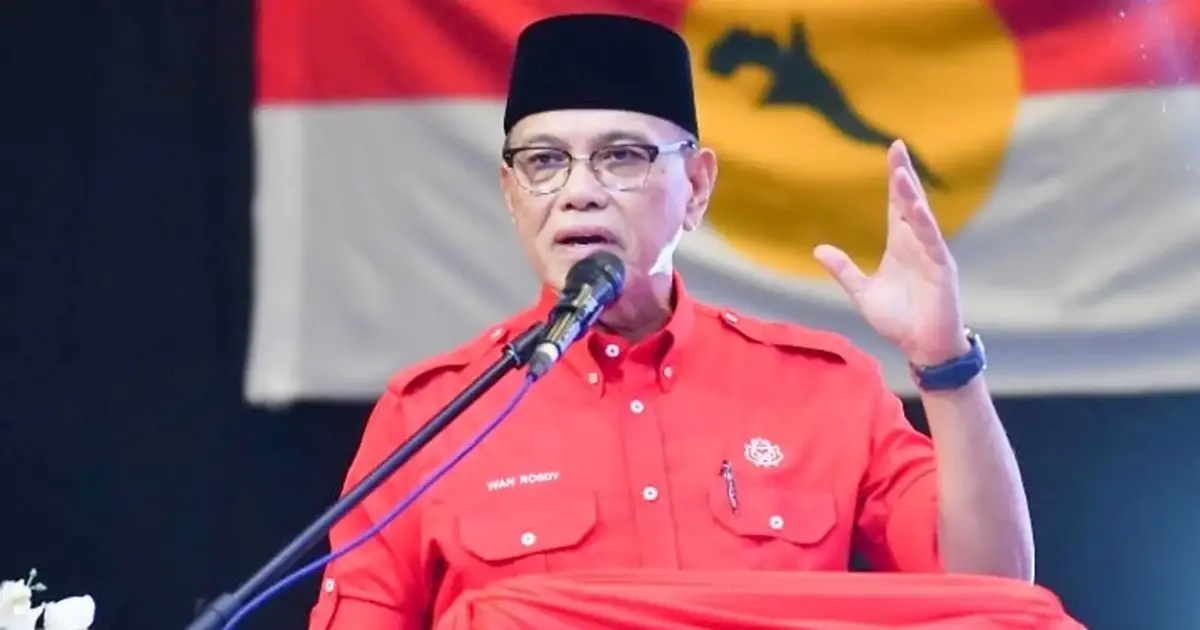
The political landscape surrounding Malaysia's anticipated 2028 general election remains unsettled, with no formal discussions yet underway between the country's two major coalition blocs on potential electoral cooperation, according to Umno vice-president Wan Rosdy Wan Ismail. The clarification comes as speculation mounts about possible alignments between Barisan Nasional and Perikatan Nasional ahead of what many analysts expect to be a closely contested national poll.
Wan Rosdy's statement represents an important circuit-breaker in the rumour mill that has swirled around Malaysian political circles in recent months. While observers and commentators have repeatedly suggested that some form of alliance between BN and PN might be desirable—or even inevitable—to counter the influence of other political forces, the senior Umno figure has now put official distance between speculation and reality. His remarks suggest that any discussion of such a partnership remains firmly in the realm of possibility rather than active negotiation.
The timing of Wan Rosdy's comments reflects broader preoccupations within the BN coalition and its constituent parties. Rather than plotting long-term electoral strategies at the national level, leadership figures have indicated their focus remains on more immediate challenges, particularly the stabilisation and consolidation of recently formed or restructured state governments. This prioritisation underscores the reality that Malaysian politics operates simultaneously across multiple levels, with state-level administration often proving as consequential as federal political manoeuvring.
Negeri Sembilan has emerged as a particular focal point for the Umno establishment's current attention. The state has undergone significant political transition in recent months, with new power structures now requiring careful management and reinforcement. Building a stable administrative foundation in the state takes precedence, in Wan Rosdy's view, over initiating complex negotiations about federal-level electoral pacts that might not materialise for several more years.
This incremental approach to political positioning reflects a wider strategic calculation within BN circles. Rather than rushing into binding agreements with PN—which might constrain flexibility or create internal divisions within BN's own coalition partners—the current approach favours a period of observation and consolidation. The major parties appear content to maintain existing working relationships while preserving room to adapt their strategies as circumstances evolve and as the 2028 election draws gradually closer.
For Malaysian voters and observers attempting to gauge the trajectory of national politics, Wan Rosdy's intervention offers clarity on at least one front. It establishes that no architecture for BN-PN cooperation currently exists at the leadership level, though it simultaneously leaves the door conspicuously open to future developments. This ambiguity is not accidental; it reflects the calculated positions of leaders who prefer to avoid premature commitments while maintaining strategic flexibility.
The absence of formal talks carries implications for the broader political ecosystem. Other coalitions and independent political forces continue developing their own strategies without facing the immediate prospect of a consolidated BN-PN juggernaut. This window of opportunity may prove significant for parties seeking to differentiate themselves or build alternative political narratives ahead of the general election cycle.
Within the Umno-led establishment, the choice to deprioritise GE16 electoral planning in favour of state-level consolidation speaks to party leadership's assessment of where immediate risks and opportunities lie. Managing succession dynamics, preventing defections, and demonstrating effective governance at the state level arguably matter more to Umno's institutional health than distant federal calculations. Losing ground in state administration could prove far more damaging to BN's long-term position than failing to secure an ideal national election alliance.
For Perikatan Nasional, Wan Rosdy's statement simultaneously clarifies BN's current position while leaving open questions about PN's own strategic direction. PN leaders have maintained their own independent political positioning and organisational ambitions. Whether PN views eventual BN cooperation as desirable or preferable to contesting the general election independently remains an open question that will likely evolve as the election approaches.
The practical implications extend beyond high-level political strategy into Malaysia's governance structures and citizen expectations. Voters across the peninsula observe these various political movements with attention to how different parties and coalitions might shape policy priorities, resource allocation, and institutional direction. The current absence of formalised BN-PN cooperation frameworks means that electoral campaigns and policy platforms will likely develop organically rather than through predetermined coalition blueprints.
Analysts tracking Malaysian political developments have noted that the 2028 election timeline remains sufficient for political positions to shift substantially. Leadership transitions, unexpected electoral outcomes at by-elections, or significant shifts in public sentiment could all alter calculations about the desirability and feasibility of different coalition arrangements. Wan Rosdy's statement essentially signals that BN intends to preserve optionality rather than foreclosing possibilities through early commitments.
Moving forward, Malaysian political observers should expect continued evolution in the relationships between BN, PN, and other political entities. The current focus on state-level consolidation represents a pragmatic interim posture rather than a definitive foreclosure of federal-level cooperation discussions. As state governments bed in and stabilise, attention will gradually shift back toward the preparations and positioning that precede any general election campaign.

