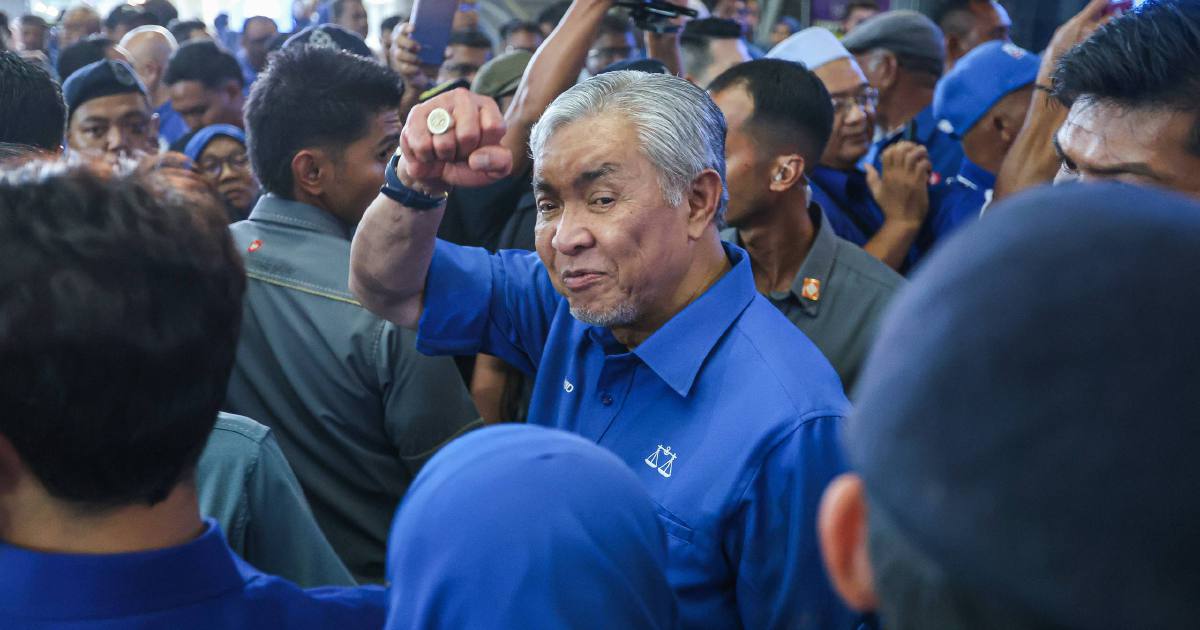
Datuk Seri Dr Ahmad Zahid Hamidi, chairman of Barisan Nasional, has declared that the ruling coalition intends to capture a larger share of seats in the forthcoming Johor state election, raising the stakes for what promises to be a keenly contested political battle in Malaysia's southern heartland.
The announcement, made at Simpang Renggam, reflects BN's determination to consolidate and expand its grip on Johor, one of the nation's most politically significant states. For decades, Johor has served as a strategic powerbase for BN, with the coalition controlling the state government through much of Malaysia's post-independence history. The coalition's ambitions for increased representation suggest confidence in its ground organisation and appeal among voters in a state that has shown considerable electoral volatility in recent years.
BN's push for enhanced seat numbers carries particular weight given the transformations that Malaysian politics has undergone since 2018. The federal coalition faced significant losses during that watershed election cycle and has since embarked on a gradual rehabilitation of its political fortunes. In Johor specifically, the state election in 2023 saw a complex three-way contest involving BN, the opposition Pakatan Harapan alliance, and the increasingly assertive Perikatan Nasional bloc. The results reflected Malaysia's shifting electoral landscape, with voters demonstrating reduced loyalty to traditional parties and greater willingness to experiment with alternative political offerings.
Zahid's comments must be understood within the context of BN's broader national strategy. The coalition has been methodically working to repair its public image following the 1Malaysia Development Berhad scandal and years of governance questions. Recent state and federal-level performance has shown modest improvements for BN, particularly through the Anwar Ibrahim administration's decision to include BN in the federal government structure through a unity arrangement. This partnership, while occasionally fraught with internal tensions, has provided BN with both governmental responsibility and the platform to demonstrate administrative capability at the federal level.
Johor's political dynamics are particularly complex because the state government does not operate entirely independently of federal considerations. The outcome of any Johor election reverberates through national politics, affecting the stability of federal coalitions and the balance of power in parliament. A stronger BN performance in Johor would reinforce the coalition's role within the current government arrangement and potentially strengthen Zahid's hand in future coalition negotiations.
The previous Johor election, held in 2023, resulted in a fragmented outcome where no single coalition commanded overwhelming dominance. BN secured a respectable showing but found itself sharing influence with other political forces. Zahid's current target of increasing seat numbers indicates that the coalition believes conditions are now more favourable for electoral expansion, whether through improved campaign performance, weakening opposition unity, or shifts in voter sentiment regarding BN's governance record.
Important contextual factors support BN's optimism. Johor remains economically significant as an industrial and commercial hub, and voters there are sensitive to bread-and-butter issues such as employment, development, and infrastructure. BN's federal partnership gives it the capacity to channel development resources toward Johor, a traditional strength of the coalition. Additionally, BN maintains deep institutional roots in the state, with established party machinery, longstanding relationships with community leaders, and historical associations with the Johor royal household.
However, BN faces genuine challenges in achieving its ambitions. Perikatan Nasional has made substantial inroads in Johor and continues to position itself as a fresh alternative to established coalitions. The opposition Pakatan Harapan, while fragmented in some areas, maintains pockets of significant support, particularly in urban constituencies. Additionally, there remains a cohort of swing voters in Johor who have demonstrated willingness to vote against BN in recent years, and convincing them to return to the coalition requires both effective messaging and tangible delivery on promises.
Zahid's public articulation of BN's seat targets serves multiple political purposes. It establishes clear expectations that the coalition intends to improve its position, which can energise party machinery and supporters. It also signals to coalition partners, federal government stakeholders, and international observers that BN remains a viable political force capable of electoral revival. Conversely, it raises the bar for what would be considered success, meaning that merely matching previous performance would be perceived as falling short of stated objectives.
For Malaysian observers and particularly for Johor residents, the significance extends beyond factional politics. State elections influence the quality of governance, the direction of development spending, and the effectiveness of state institutions in addressing public needs. Whether BN achieves its seat targets will say much about the appetite among Johor voters for maintaining traditional political arrangements or continuing to experiment with alternative coalitions and leadership.
The road to the Johor election will involve intensive campaigning, significant resource deployment, and considerable political manoeuvring among various coalitions. Zahid's declaration marks the formal opening of this phase, with BN positioning itself as a coalition worthy of renewed voter confidence. Whether Johor voters will validate this optimism remains an open question that will be answered only through the ballot box.

