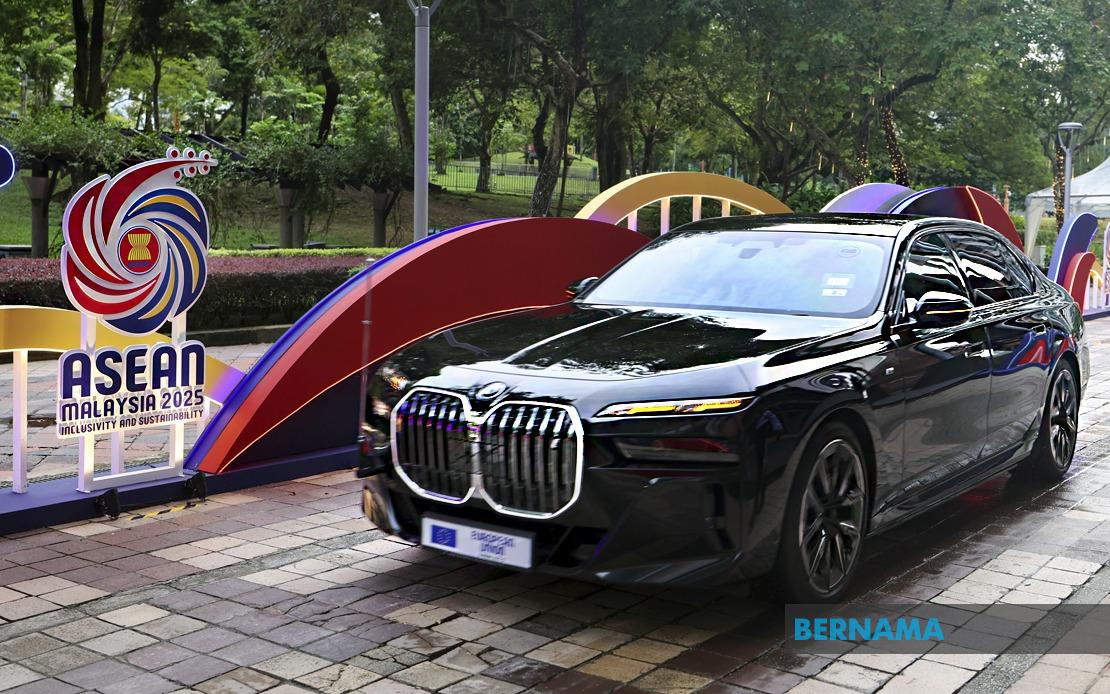
The Prime Minister's Department (JPM) moved swiftly to address public speculation about a luxury BMW vehicle spotted in Prime Minister Datuk Seri Anwar Ibrahim's recent movements, issuing a statement through the Ceremonial and International Conference Secretariat Division (BIUPA) to confirm it is an existing government asset rather than a newly procured official car.
The vehicle has long been held within the government's fleet and falls under BIUPA's direct supervision, reserved exclusively for Malaysia's diplomatic and official logistics requirements. Its primary function relates to the country's international obligations when hosting state visits and high-level governmental meetings, particularly when heads of state and presidents or prime ministers arrive in Malaysia for official engagements.
The specifications of such vehicles demand extraordinary engineering and protective capabilities that go far beyond standard automotive manufacturing. These machines are built to withstand ballistic threats from high-caliber weaponry, resist explosive devices, and defend against contemporary security hazards including drone-based attacks. Such sophisticated protective engineering represents a substantial investment and explains why governments maintain dedicated fleets rather than acquiring new vehicles for each occasion.
According to JPM's statement, the current deployment of the BMW for the Prime Minister's use is temporary in nature and follows a formal security assessment and recommendation from the Royal Malaysian Police (PDRM). This distinction is important—the decision to utilize this particular vehicle was not arbitrary but based on professional security evaluation of potential threats and protective requirements. The advisory represents standard operational practice when circumstances warrant elevated security measures.
The clarification addresses an immediate practical necessity affecting the Prime Minister's official transportation arrangements. His primary official vehicle, which was graciously gifted by Yang di-Pertuan Agong, is presently undergoing routine maintenance and servicing. Rather than compromise security protocols during this maintenance window, the government elected to deploy an alternative armored vehicle from its existing inventory that meets the same rigorous protective standards.
The Facebook announcement directly responds to a cascade of social media speculation and allegations questioning the vehicle's ownership status and suggesting impropriety in its use. Such rumors had circulated across online platforms, with various claims about the legitimacy and sourcing of the BMW. By issuing a coordinated statement through official channels, JPM sought to establish a clear factual record and prevent misinformation from taking deeper root in public discourse.
The broader context reveals how international security protocols create practical demands on government vehicle fleets that may appear unusual to the general public. When Malaysia welcomes visiting dignitaries of presidential or prime ministerial rank, it must provide transportation that meets their home countries' security expectations and international best practices. This reciprocal obligation means maintaining a fleet of specially equipped vehicles, even when they are not in constant use.
The transparency of this explanation reflects changing expectations around government communications in Malaysia. Rather than allowing speculation to persist, the decision to publicly clarify the vehicle's status and explain the security rationale demonstrates an attempt to maintain public trust through openness. Such proactive communication, while increasingly expected, represents a shift from earlier governmental practices that often maintained silence on security matters.
For Malaysian observers, this incident illustrates the complex intersection of security requirements, international diplomacy, and public perception. The need for armored vehicles capable of withstanding modern threats is a reality of contemporary governance, yet public understanding of such necessities remains variable. The government's decision to explain rather than obscure the practical reasons for the BMW's deployment suggests recognition that informed citizenry serves the nation's interests better than uninformed speculation.
The maintenance of such specialized vehicles carries significant ongoing costs that merit public awareness. Unlike ordinary government vehicles, armored cars designed to international security standards require specialized technicians, rare replacement parts, and enhanced insurance provisions. These expenses occur whether the vehicles are actively deployed or held in reserve, representing a genuine operational necessity rather than luxury expenditure. Understanding these realities helps contextualize decisions about official transportation.
Moving forward, this episode underscores the value of timely official communication regarding matters that capture public attention. The speed with which JPM addressed the speculation demonstrates institutional capacity to engage directly with public discourse through social media platforms where rumors originate. As Malaysian governance continues evolving in the digital age, such responsiveness to public questions appears likely to become standard practice across government departments and agencies.

