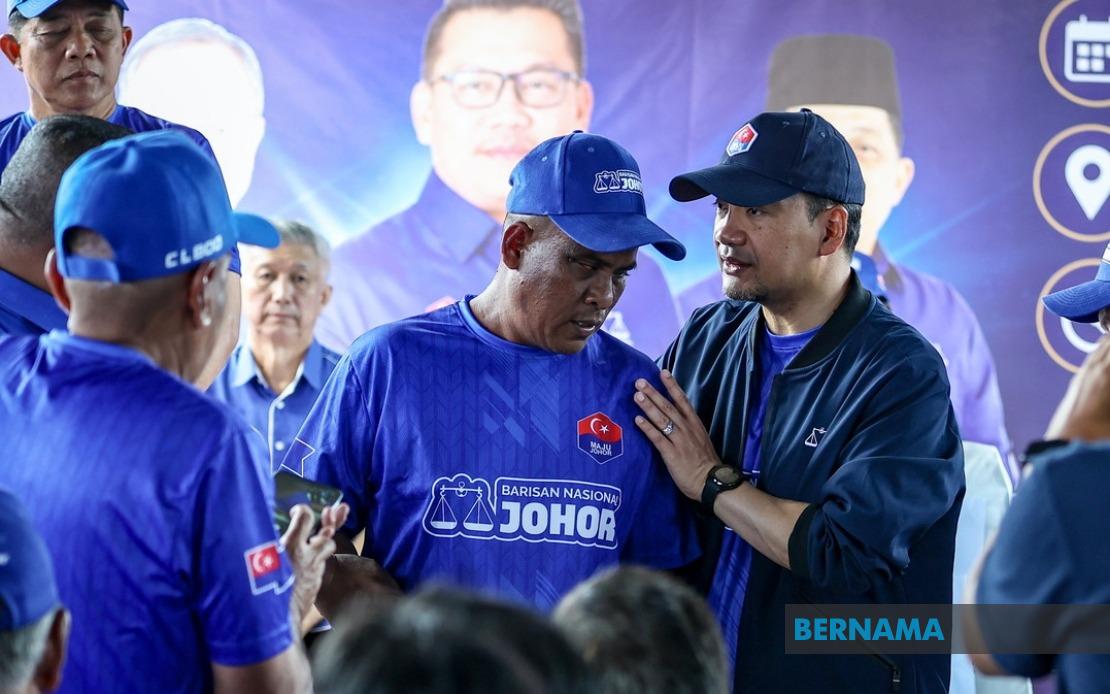
Mohd Hairol Leman's congenital blindness has never deterred him from participating in Malaysia's electoral process. The 46-year-old resident of Kampung Sri Pantai in Senggarang is set to cast his ballot in the 16th Johor State Election on July 11, marking his sixth voting experience since he first exercised his franchise during the 12th General Election in 2008. His unwavering commitment to the ballot box challenges assumptions about disability and civic engagement, demonstrating that physical limitations need not prevent citizens from contributing to democratic processes.
For Mohd Hairol, voting represents far more than a procedural obligation. He views it as an essential responsibility that every citizen, regardless of ability status, should embrace without hesitation. Throughout his voting history spanning 16 years, he has maintained perfect attendance at elections, participating in both general elections and state polls whenever the opportunity arose. This consistency reveals a deeply held conviction that democratic participation constitutes a fundamental aspect of citizenship, one that should not be abandoned or delegated simply because navigating the voting process requires additional support.
The upcoming Johor election will see 172 candidates vying for 56 State Legislative Assembly seats, with polling scheduled for July 11 and early voting available on July 7. Within this electoral landscape, Mohd Hairol represents a segment of Malaysia's disabled population whose political participation often goes unrecognised. Working with Election Commission officials who facilitate his voting process, he has managed to overcome practical barriers that might otherwise exclude persons with disabilities from direct democratic participation. His approach underscores both the importance of accessible electoral procedures and the determination of individual citizens to engage politically on their own terms.
Mohd Hairol's motivation extends beyond abstract democratic principles to encompass personal gratitude for government support systems that have sustained him over many years. As a beneficiary of both the Department of Social Welfare and the Johor State Islamic Religious Council's Baitulmal programme, he has experienced firsthand how state leadership decisions translate into material improvements in the lives of vulnerable citizens. This experiential understanding of governance's real-world consequences informs his electoral choices and reinforces his belief that voting constitutes a meaningful way to influence the direction of policy and leadership priorities.
His eagerness to participate in the July 11 election reflects a desire to ensure that future leadership maintains or strengthens the welfare infrastructure that has supported him. Rather than viewing voting as a burden or an exercise rendered pointless by his circumstances, Mohd Hairol regards it as an opportunity to shape the composition of the government that will make decisions affecting his livelihood and dignity. This perspective offers a powerful counternarrative to narratives of disability as inherently limiting or disempowering, demonstrating instead how persons with disabilities can exercise agency within existing political structures.
The broader context of Malaysian electoral accessibility remains uneven across the country. While Mohd Hairol has successfully voted six times with EC support, many disabled Malaysians face undocumented barriers to participation, whether logistical, informational, or attitudinal. The availability of assistance mechanisms in his constituency suggests progress, yet comprehensive data on disabled voter participation rates remains limited. His individual story highlights both existing accommodations and the broader need for systematic improvements in electoral accessibility as Malaysia matures its democratic institutions.
Mohd Hairol's narrative also intersects with broader Southeast Asian conversations about disability rights and political inclusion. Many countries in the region continue to grapple with questions of how to ensure that persons with disabilities can participate meaningfully in democratic processes. Malaysia's experience, reflected through individuals like Mohd Hairol, offers lessons in both practical accommodation and the importance of cultivating attitudes that view disabled citizens as full participants in political life rather than exceptional cases requiring charity.
His comments during the Batu Pahat Barisan Nasional election machinery briefing session reveal strategic thinking about electoral outcomes. Rather than simply voting, he emphasised the importance of selecting leaders specifically capable of protecting welfare interests of marginalised communities. This suggests that disabled voters, like other voter cohorts, approach elections with particular policy priorities and performance expectations. Understanding these constituency-specific concerns remains crucial for political parties seeking to build inclusive coalitions and develop responsive policy platforms.
The six voting experiences spanning from 2008 to 2024 represent a significant chronological arc in Malaysian political life, encompassing periods of major political realignment and shifting governance priorities. That Mohd Hairol has maintained consistent electoral participation throughout this turbulent period speaks to deeply embedded civic values transcending individual political preferences or outcomes. His statement that he "can't wait" to fulfil his responsibility once again carries an enthusiasm often absent from contemporary democratic discourse, suggesting that sustained engagement with electoral processes reflects genuine commitment rather than resignation to procedural obligation.
Looking forward, Mohd Hairol's participation in the Johor election offers an opportunity for deeper reflection on disability representation within Malaysian politics writ large. While his individual story merits celebration, a truly inclusive political system would ensure that such participation becomes ordinary rather than noteworthy. The fact that a visually impaired voter's commitment to democratic participation requires newspaper documentation suggests continued need for normalising disabled civic engagement across Malaysian society. His example ultimately challenges fellow citizens, election administrators, and political leaders to consider how structural and attitudinal barriers might be further dismantled, enabling the widest possible democratic participation.

