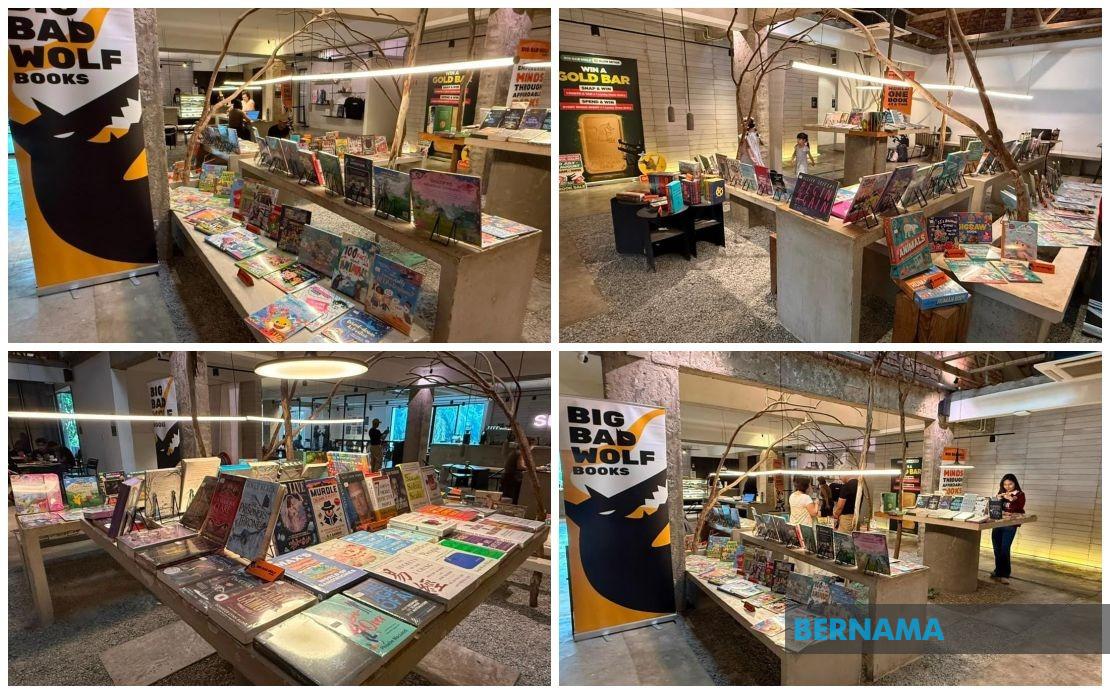
Malaysia's largest book fair, Big Bad Wolf Books, is set to make a return to Kedah's capital with an expanded offering that reflects the operator's commitment to deepening the reading habit across the country. The event will run from July 30 to August 9 at Sultan Abdul Halim Stadium in Alor Setar, maintaining the accessible pricing model that has become the brand's hallmark. According to Chloe Lim Sooi Yee, the representative overseeing the Alor Setar edition, the selection has been deliberately curated to introduce fresh content to the local market while maintaining affordability as a core principle.
The refreshed inventory represents a deliberate diversification strategy aimed at broadening reader demographics across the northern region. Forty percent of the titles on offer will be new to the Alor Setar market, an intentional decision to prevent repetition and encourage repeat visits from those who attended previous editions. This approach acknowledges that book fairs operate in a competitive leisure environment and must continually provide reasons for consumers to allocate their time and money toward the event rather than alternative entertainment or retail options.
A particularly significant addition for this year's fair is the debut of the "Little Ummah" Islamic children's book collection in Kedah. This represents the first occasion these titles have been brought to the state, suggesting a recognition of market demand within the local Muslim community for religiously-themed educational materials for young readers. The inclusion reflects broader industry trends toward culturally and religiously sensitive publishing that serves diverse readership communities across Malaysia.
Pricing remains remarkably competitive, with books starting from as low as RM3 and deep discounts of up to 95 percent available throughout the fair. The operator estimates that approximately one million books will be available for purchase, creating an inventory scale that makes even niche titles likely to be discoverable. This pricing strategy functions as both a commercial draw and a cultural intervention, removing cost as a barrier to literacy for lower-income households while maintaining sufficient margins to sustain the business model.
The venue, Sultan Abdul Halim Stadium, will operate extended hours from 10 am to 10 pm daily across the eleven-day period, with free admission removing any gatekeeping threshold for entry. This operational choice signals confidence in foot traffic volume and suggests that the revenue model depends primarily on book sales rather than entrance fees. The extended daily window accommodates different work and school schedules, allowing both working professionals and students to participate.
Big Bad Wolf Books positions itself as a cultural infrastructure project with explicit aspirations to foster reading practices among Kedah residents. The organisation frames the fair not merely as a commercial transaction but as a contribution to literacy development and the broader knowledge ecosystem of the region. This positioning carries particular significance in Malaysia, where public discourse increasingly emphasises the importance of cultivating reading habits and reducing screen dependency among younger generations.
The company is implementing targeted promotional activities in schools, recognising that educators represent both influential gatekeepers and concentrated pools of potential customers. Students and teachers purchasing a minimum of three books qualify for an additional five percent discount, a modest incentive that encourages bulk purchasing and creates an institution-based marketing channel. This strategy leverages existing social structures rather than relying purely on mass media advertising.
Incentive mechanisms have been designed to drive foot traffic and encourage spending beyond initial book purchases. The "spend and win" and "snap and win" campaigns offer chances to win gold bars of ten grammes, introducing a gamification element that appeals to the reward-seeking psychology of consumers. These campaigns represent relatively low-cost promotional tools that generate excitement and social media discussion, extending the fair's reach beyond those who physically attend.
The target audience for this edition comprises 35,000 visitors across the eleven-day period, suggesting anticipated daily attendance of approximately 3,000 people. This projection indicates a belief in demonstrated demand from the Alor Setar market, presumably based on attendance figures from previous editions held in the state. Achieving this target would require sustained marketing efforts and positive word-of-mouth, as well as favourable weather conditions during the operational period.
For Malaysian readers and the broader Southeast Asian publishing industry, Big Bad Wolf Books' continued expansion into regional markets like Alor Setar represents an important development in democratic access to published material. The model challenges traditional retail structures that depend on geographic proximity to major metropolitan centres, instead bringing inventory directly to state capitals. This approach has implications for regional literacy policies and the commercial sustainability of independent bookstores, which may struggle to match the pricing and selection power of aggregated fair operators.
The Alor Setar iteration also reflects Malaysia's uneven cultural infrastructure, where book availability and pricing vary significantly between Kuala Lumpur and outlying regions. By positioning itself as a solution to this geographic inequality, Big Bad Wolf Books occupies a valuable niche between commercial publisher interests and public library systems. The initiative demonstrates that large-scale book distribution, when organised efficiently and priced accessibly, can reach audiences who might otherwise have limited exposure to contemporary published material.

