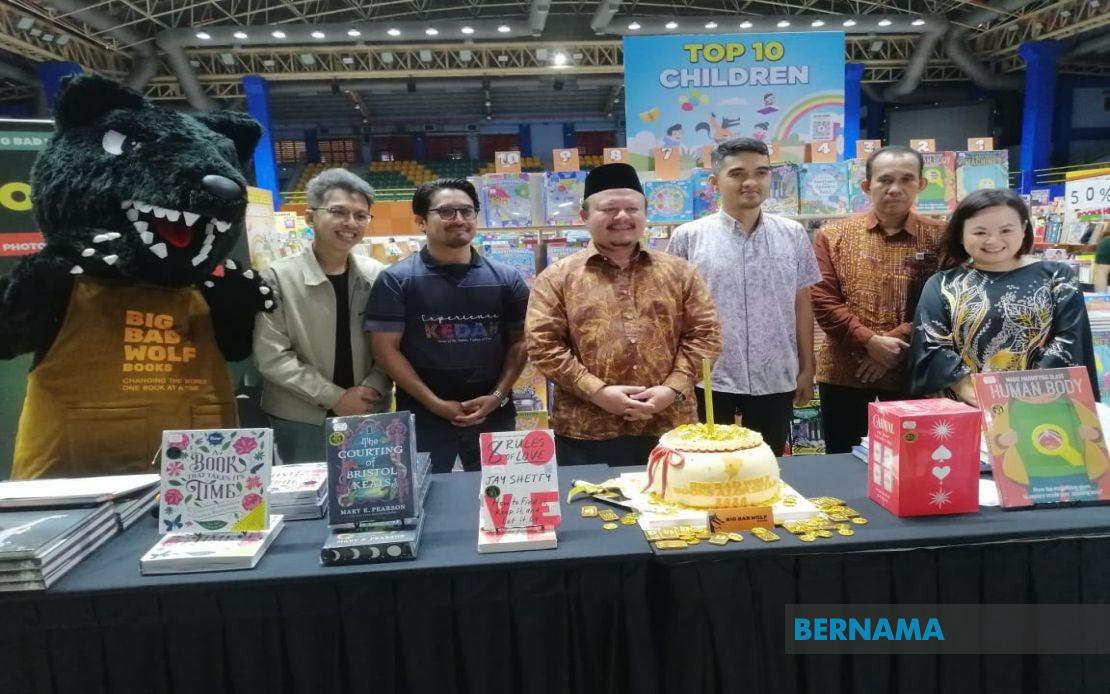
Malaysia's largest book fair, Big Bad Wolf (BBW), has opened its doors in Alor Setar as a vital initiative to strengthen reading habits and English language competency across Kedah, with particular focus on younger audiences who represent the state's intellectual future. The event, which will operate from late July through early August at Stadium Sultan Abdul Halim, reflects growing recognition among state policymakers that cultivating a reading culture remains essential for developing an informed, capable citizenry equipped to tackle contemporary challenges.
Datuk Mohd Azam Abd Samat, chairman of Kedah's Education, Religion, Communications and Information Committee, underscored the critical importance of introducing reading practices to children during their formative years. His remarks highlight a strategic shift in how regional governments approach educational development beyond formal classroom settings. By endorsing the book fair as a complementary platform, the state government acknowledges that literacy initiatives must operate across multiple channels—combining institutional education with community-level cultural engagement—to achieve meaningful, sustained impact.
The English-language collection at this year's BBW holds particular significance for Malaysian educators and parents navigating an increasingly multilingual economy. Mohd Azam specifically noted that the fair's English titles feature interactive visual elements designed to demystify the language and make learning more intuitive and enjoyable for young readers. This pedagogical approach aligns with international best practices in language acquisition, where visual scaffolding and engagement substantially improve retention and vocabulary development among primary learners.
Beyond individual skill-building, the book fair represents a coordinated effort by state-level institutions to foster collective cultural transformation. Kedah authorities have mobilised multiple agencies and community stakeholders to reinforce the message that reading development constitutes a shared responsibility rather than a burden solely borne by schools or families. This systems-level thinking demonstrates how regional administrations can leverage commercial events and public spaces to advance broader developmental objectives.
Chloe Lim Sooi Yee, representing the Big Bad Wolf organisation, disclosed that the fair anticipates attracting 50,000 visitors during its 11-day run, a target the company expects to achieve through close partnership with the state government. The ambitious visitor projection reflects confidence in Kedah's appetite for affordable, accessible cultural programming—a particularly meaningful consideration for families in lower-income brackets who may lack regular exposure to diverse reading materials. By maintaining free admission throughout, the fair removes financial barriers that traditionally exclude economically disadvantaged groups from cultural participation.
The event's programming demonstrates sophisticated cross-promotional strategy, capitalising on the concurrent Temasya Orang Kedah festival at Stadium Darul Aman to amplify reach and foot traffic. This dual-venue approach leverages existing cultural momentum, ensuring that residents already engaged in celebratory activities encounter book-fair marketing and promotional content. The deployment of the BBW mascot across festival grounds, coupled with social media engagement incentives offering cash vouchers and prizes including gold bars, transforms traditional marketing into an interactive experience that resonates with digitally native audiences.
From a practical standpoint, the fair's operational model—extending from 10 am to 10 pm across 11 consecutive days—accommodates diverse visitor schedules, whether students, working professionals, or parents managing household responsibilities. This extended accessibility window removes temporal constraints that might otherwise prevent participation, particularly among individuals working non-standard shifts or managing multiple commitments.
The inventory composition carries strategic weight as well. Featuring 40 percent new titles, the fair guarantees that a substantial portion of available stock introduces readers to contemporary works and emerging authors rather than stocking predominantly backlist inventory. This emphasis on fresh content encourages repeat visitation among serious readers seeking latest releases, while providing first-time visitors with curated selections reflecting current literary trends and commercial appeal.
For Malaysian policymakers observing Kedah's approach, the Big Bad Wolf initiative offers instructive lessons about leveraging private-sector scale and expertise to advance public-interest objectives around literacy and language development. The model demonstrates that without compromising commercial viability, book fairs can function as instruments of educational policy, reaching populations—particularly youth in smaller urban centres—who might otherwise lack consistent exposure to diverse reading materials and international literature in English.
The emphasis on English proficiency responds to pragmatic economic considerations facing Kedah and Malaysia broadly. English remains instrumental for accessing international markets, participating in knowledge economies, and engaging with digital-era information systems. By normalising English reading among younger audiences through an attractive, low-stakes cultural event, the state indirectly strengthens human capital that will prove increasingly valuable as the regional economy continues its technological transition.
Looking forward, the success metrics for this book fair extend beyond simple attendance figures. The real measure lies in whether visitors, particularly younger readers, maintain sustained engagement with reading materials post-event, whether English proficiency demonstrably improves among participants, and whether the event catalyses broader cultural shifts around leisure reading versus passive media consumption. If effective, such initiatives might inspire similar programming in other Malaysian states, gradually establishing book fairs as regular institutional features of regional cultural calendars rather than episodic commercial events.

